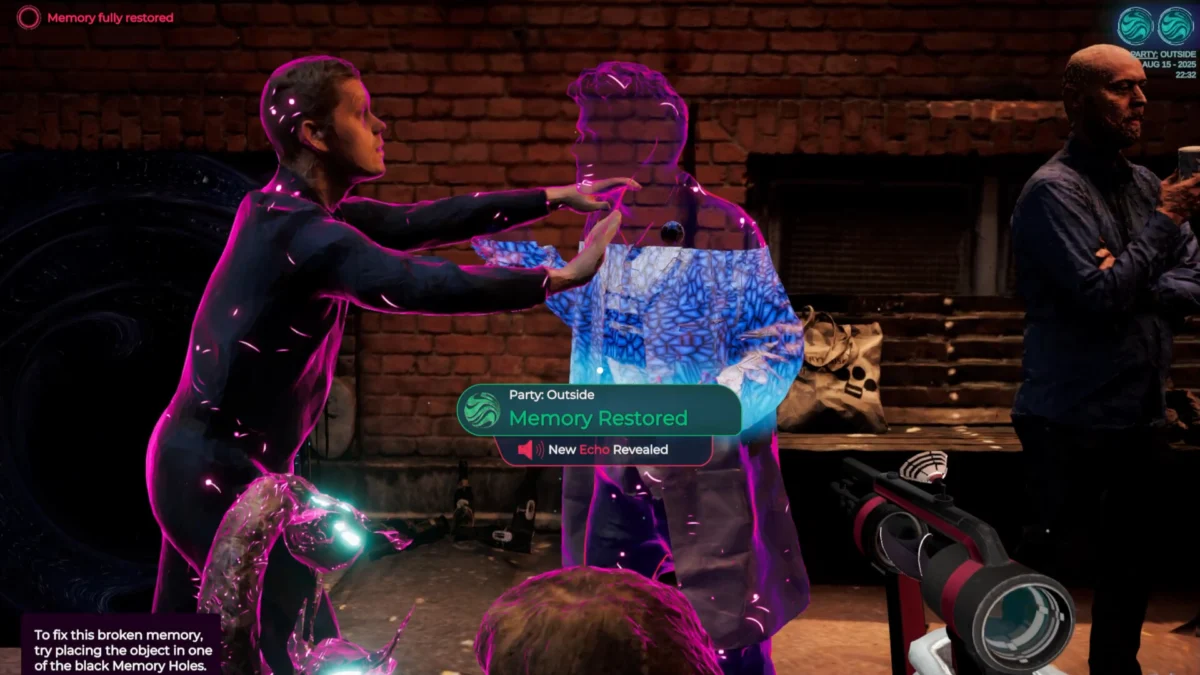
In the landscape of modern detective games, the standard gameplay loop has become firmly established: collect physical evidence, interview unreliable witnesses, and piece together a timeline of events. However, the recently released title Mind Diver seeks to dismantle these conventions entirely. By eschewing the traditional interrogation room in favor of the abstract, often volatile landscape of the human subconscious, Mind Diver invites players to act not as a police officer, but as a forensic architect of the mind.
Developed as a deep, psychological puzzle experience, Mind Diver challenges players to navigate the fractured recollections of a woman named Lina. It is an invasive, atmospheric, and highly original title that forces us to question the nature of truth itself: if our memories are dictated by our emotions and priorities at the time of an event, can an objective truth ever truly exist?
The Anatomy of an Investigation: Main Facts
At its core, Mind Diver is a mystery-thriller that trades the grit of a crime scene for the surrealism of memory. The premise is deceptively simple: you are an investigator tasked with solving a missing person’s case. However, the "crime scene" is not a physical location, but the mind of the primary subject, Lina.
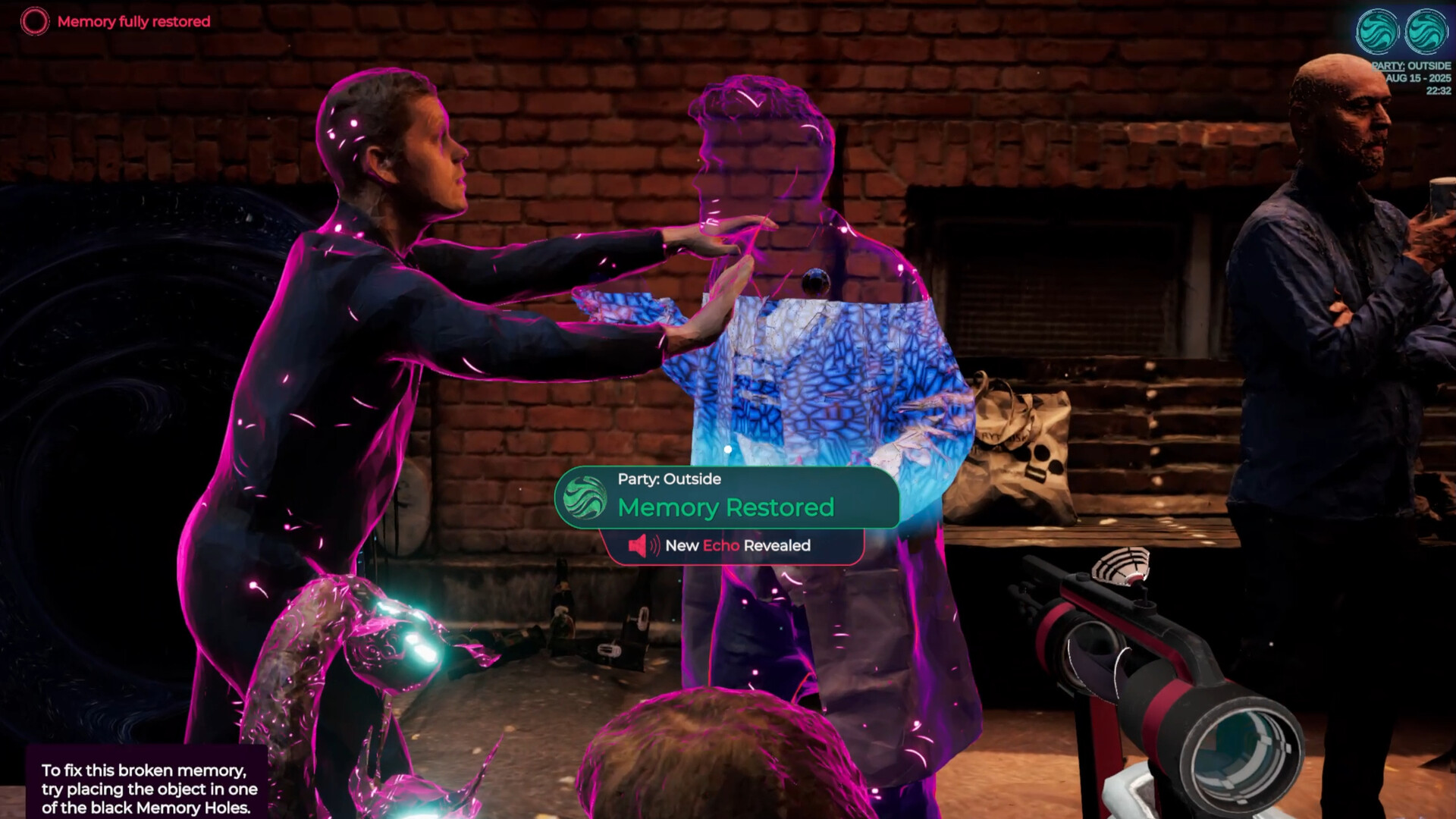
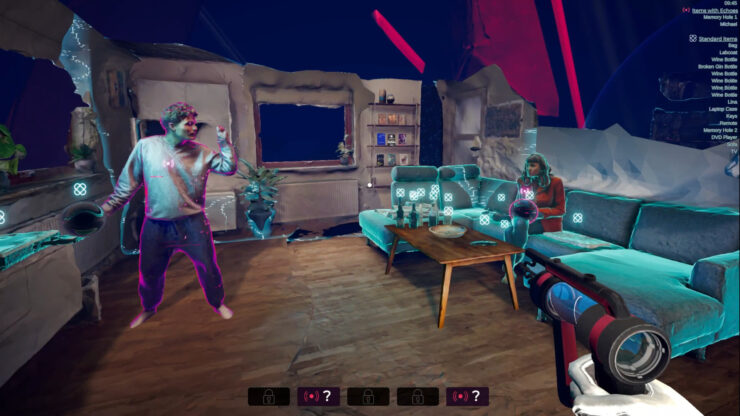
The game functions on the principle that memories are not static recordings; they are fluid, subjective, and prone to decay. As players explore Lina’s mind, they encounter "memory capsules"—snapshots of her life that are often incomplete, distorted, or misplaced. To progress, the player must physically manipulate these fragments. This involves retrieving objects from one memory and placing them into another, or realigning disjointed snippets of conversations to restore the narrative coherence of her past.
The game is a masterclass in environmental storytelling. Every interaction feels heavy with consequence because the player is constantly aware of the intrusion they are committing. By entering Lina’s mind, the player gains access to her most intimate fears, her relationship dynamics, and the traumatic moments she may have subconsciously buried.
A Chronology of a Fractured Mind
The narrative structure of Mind Diver is non-linear, reflecting the way trauma and human memory actually function. Players do not start with a clear picture; they begin in a fog of confusion, much like the protagonist they are investigating.
Initially, information is sparse. The player is presented with a series of disparate, flickering memories that hint at a broader tragedy. Through careful exploration, the timeline begins to coalesce:
- The Initial Entry: The player gains access to Lina’s mind, encountering fragmented scenes that hint at a troubled relationship with her partner.
- The Discovery of Discrepancies: The player identifies that certain objects—a photograph, a specific line of dialogue, or a misplaced item—do not belong in their current memory capsule.
- The Reassembly Phase: By solving environmental puzzles, the player "restores" segments of the narrative. During this stage, the player learns that Lina sought help at a police station, signaling a turning point in her ordeal.
- The Revelation of Unreliability: As the case deepens, the player realizes that Lina’s memories are not just repressed; they are fundamentally unstable. Some memories are "wrong" not because of a technical glitch, but because Lina herself has rewritten them to cope with the pain of the missing person’s case.
- The Climax: The final resolution requires the player to reconcile the objective facts of the case with the subjective, painful truth that Lina has constructed for herself.
Supporting Data and Gameplay Mechanics
What sets Mind Diver apart from its peers in the "detective sim" genre is its reliance on logical environmental manipulation rather than dialogue trees. While other games might have you press a witness until they break, Mind Diver asks you to play the role of a puzzle solver.
The Mechanics of Memory
The game’s core loop involves three primary actions:
- Object Placement: Finding a key item in one memory segment that acts as the "missing piece" to unlock another segment. This emphasizes the interconnected nature of our experiences.
- Dialogue Synchronization: Players must listen to the ambient chatter within memory capsules and align the audio to match the visual context. If the timing is off, the memory remains opaque.
- Environmental Deduction: Not everything is a puzzle in the traditional sense. Sometimes, the player must observe the environment and deduce why a room looks the way it does. The architecture of a memory often reveals the emotional state of the subject at that specific time.
The complexity lies in the fact that these solutions are not always straightforward. The player is often required to look beyond the obvious. If a memory feels "too perfect," it is likely a construct designed to hide something darker. The game rewards curiosity and rewards the player for thinking laterally.
Official Perspectives and Critical Reception
Mind Diver has garnered significant attention following its showcase at the BIG Conference in Bilbao. For those who attended the event, the demo offered a glimpse into the game’s unique pacing and its haunting visual language.
Early feedback from the indie gaming community highlights the game’s emotional depth. Critics have noted that while the puzzles are rigorous, they never feel like a chore because they are so deeply integrated into the narrative. As one attendee noted, "It is a rare feat to make the act of ‘organizing thoughts’ feel like a high-stakes detective thriller. You aren’t just solving a case; you are witnessing a psyche struggle to heal itself."
The developer has emphasized that the game was built around the philosophy that "the truth is a memory you have to build." By keeping the focus on the emotional stakes, the developers ensured that the mechanical difficulty of the puzzles never overshadows the human story at the center of the game.
Implications for the Genre
The release of Mind Diver suggests a shift in the detective genre. For years, the gold standard has been the "detective as a hunter" trope—the lone wolf pursuing a killer in a dark alley. Mind Diver moves the genre toward the "detective as a healer" archetype.
This transition has several implications:
- Increased Focus on Mental Health: By treating the mind as a physical space to be explored, the game provides a compelling metaphor for the ways we process trauma. It suggests that detective work can be a form of empathy.
- Narrative Innovation: The game proves that you don’t need combat or high-speed chases to create tension. The tension here is intellectual and emotional; the fear of uncovering a truth you aren’t prepared for is far more potent than any physical threat.
- The Subjectivity of Truth: Mind Diver is a philosophical game. It posits that there is no such thing as an "unbiased" witness. Every piece of evidence we find is colored by the perspective of the person who experienced it. This challenges players to be more critical of the "clues" they find, as they must determine if what they are seeing is a historical fact or a protective illusion.
Conclusion: A Must-Play for the Inquisitive Mind
Mind Diver is not a game for those seeking fast-paced action or simple point-and-click solutions. It is a slow-burn psychological odyssey that demands patience, observation, and a willingness to engage with uncomfortable truths. It is a thorough, detailed, and masterfully crafted experience that lingers in the mind long after the final memory has been restored.
Whether you are a seasoned veteran of the detective genre or a newcomer looking for a story that challenges the intellect, Mind Diver offers a refreshing, if haunting, perspective on the human condition. The case is open, the memories are waiting, and the truth—however fragmented it may be—is tucked away in the corners of a mind in crisis.
Mind Diver is available now on Steam. It stands as a testament to the power of indie development, proving that some of the most complex mysteries are those found within.
About the Author: Jupiter Hadley
Jupiter Hadley is a prolific indie game journalist, writing for Metro UK, Big Boss Battle, AlphaBetaGamer, and many more, all with a focus on smaller indie gems. She covers thousands of game jams and indie games on her YouTube channel, letting every game have a moment in the spotlight. She runs indiegamejams.com, a calendar of all of the game jams going on in the world, and serves as a judge for many industry events.