Lina Irawan
The landscape of the action-game genre is undergoing a shift. For years, the industry has been dominated by the "soulslike" philosophy—a design ethos that prioritizes punishing difficulty, frame-perfect parries, and the kind of mechanical mastery that often feels like a second job. However, a new challenger is rising from the depths, spearheaded by a veteran of the very industry that defined the high-octane action era.
Stupid Never Dies, the debut title from GPTRACK50, is not just a game; it is a manifesto. Led by Hiroyuki Kobayashi—a name synonymous with Capcom’s golden age of Resident Evil, Devil May Cry, and Dragon’s Dogma—the studio is looking to reclaim the "blazing fast" fun of classic arcade-style action while folding in modern RPG progression and roguelike pacing. With a targeted release date of 2026, the project has already begun turning heads, offering a distinct alternative to the industry’s current obsession with masochistic difficulty.
The Genesis of GPTRACK50: A Legacy Reimagined
To understand the philosophy behind Stupid Never Dies, one must look at the pedigree of its creator. Hiroyuki Kobayashi spent decades in the trenches of Capcom, overseeing some of the most influential franchises in gaming history. His departure from the legendary Japanese publisher to form GPTRACK50 under the umbrella of NetEase Games was a signal to the industry: a new vision for action gaming was being incubated.
The studio is not a collection of newcomers; it is a assembly of industry veterans who have cut their teeth on the very DNA of modern action games. By combining the stylish, combo-heavy sensibilities of Devil May Cry with a refreshed, player-first approach to accessibility, GPTRACK50 aims to bridge the gap between "hardcore" action and satisfying, accessible growth.
The Narrative Hook: A Love Story from the Grave
At the heart of Stupid Never Dies is an unconventional protagonist named Davy. A man who has been granted a "second life" as a zombie, Davy is not interested in brain-eating or terrorizing local villages. Instead, he is a man on a mission of the heart. To save the love of his life—and, incidentally, the rest of humanity—Davy must descend into the labyrinthine dungeons of hell.
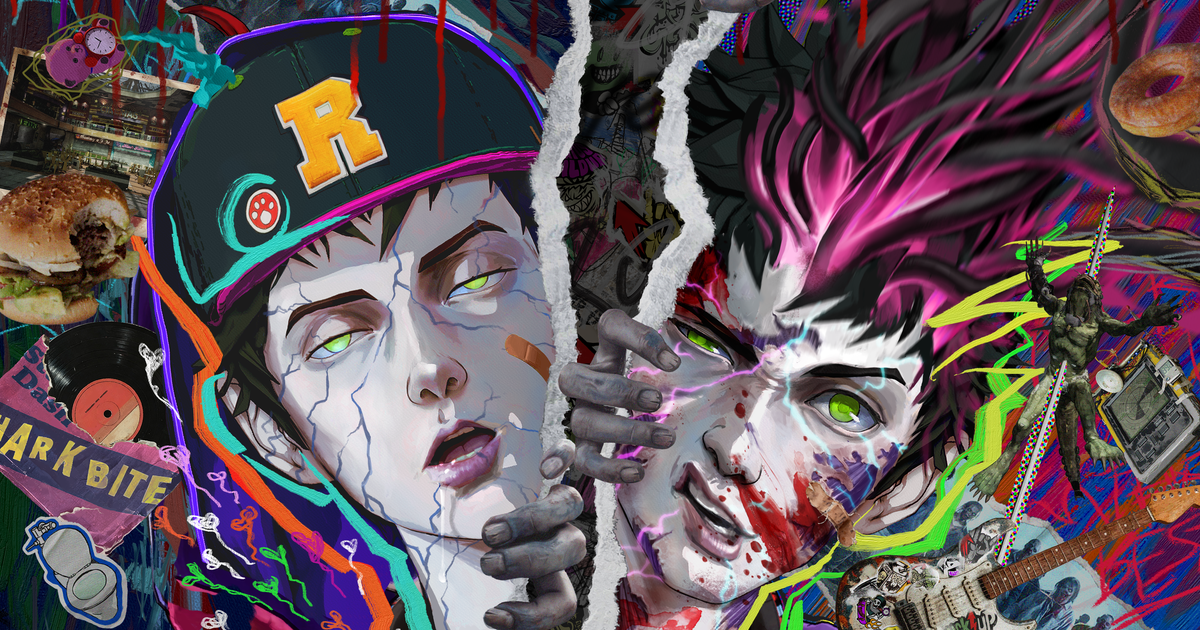
This journey is defined by "Over-Technology," a strange, sci-fi-meets-supernatural power source that allows Davy to augment his decaying form. The narrative premise provides a "spooky-but-fun" backdrop that allows for a wide array of visual styles, moving away from the grim-dark aesthetics that have saturated the market in favor of something more vibrant, energetic, and uniquely bizarre.
Gameplay Mechanics: The "Blazing Fast" Philosophy
The core loop of Stupid Never Dies is built around the concept of "Blazing Fast" growth. Unlike traditional action games where the player learns to master a single moveset over twenty hours, this title encourages rapid iteration. Players are given a strict time limit to clear floors of the dungeon, creating an inherent sense of tension and momentum.
The Style System: A Monster Mash
The combat system is where the Devil May Cry lineage is most apparent, yet it functions with a twist. Davy can tap into 11 distinct combat styles, each inspired by classic universal monsters and twisted, mechanical machinery. These styles are not just cosmetic; they represent fundamentally different ways to interact with the game’s combat systems:
- The Golem: A heavy-hitting tank style designed for crowd control and durability.
- The Lich: A magic-wielding archetype that manipulates the battlefield with dark energies.
- The Harpy: Focused on verticality, mobility, and aerial superiority.
- The Werewolf: A feral, high-damage melee style built for shredding through individual targets.
- The Demon: A strategic powerhouse that utilizes gravity traps and whips to zone enemies.
The genius of the system lies in the ability to swap these styles on the fly. Players can launch an enemy into the air as the Creature from the Black Lagoon, switch to a Vampire style to drain the foe’s health mid-juggle, and finally finish them with a bone-crunching slam as a Skeleton. This "juggle-heavy" combat is designed to be accessible, prioritizing fluid combo-building over rigid, frame-perfect input requirements.
Strategic Growth Over Mechanical Mastery
Perhaps the most significant departure from recent industry trends is the game’s stance on difficulty. In a landscape where "git gud" has become a mantra, Kobayashi is pushing for a different kind of satisfaction:

"There have been many ‘high-difficulty’ games in recent years," Kobayashi noted in an exclusive interview with VG247. "We wanted to differentiate ourselves from that trend. Rather than creating an action game where players overcome difficulty purely through technical skill, we felt it would be more accessible… if players could tackle challenging situations through strategy and character progression."
By positioning the title as an action-RPG first, GPTRACK50 allows players to mitigate difficulty spikes through leveling, equipment upgrades, and intelligent loadout management. The "difficulty" is not a wall to be climbed, but a puzzle to be solved through customization and smart play.
Chronology and Development Status
- Formation (2022-2023): GPTRACK50 is established under NetEase Games, bringing together talent from the Resident Evil and Devil May Cry teams.
- Concept Development (2023-2024): The studio focuses on refining the "Blazing Fast" loop and the 11-style combat system.
- Trailer Reveal (2024): The first full trailer debuts, showcasing the high-octane, combo-busting combat and introducing the world to Davy.
- Targeted Release (2026): The studio aims for a full launch, with development resources currently prioritized for PlayStation and PC.
Platform Strategy and Accessibility
The studio has been transparent about its development roadmap. Due to resource allocation, the team is currently focusing on PlayStation and PC platforms. Interestingly, the developers have stated that they are actively considering Steam Deck compatibility, a move that aligns perfectly with the game’s design goal of "short, well-defined play sessions."
While an Xbox or Nintendo Switch release has not been ruled out, it remains on the table as a potential post-launch expansion rather than an initial priority. This targeted approach ensures that the "blazing fast" performance—critical for a game that prizes speed and fluid combat—is optimized before expansion.
Implications for the Industry
Stupid Never Dies represents a potential pivot point for mid-to-large-scale action titles. If GPTRACK50 can prove that there is a massive, underserved market for action games that offer deep, expressive combat without the barrier of entry-level masochism, it could spark a shift in how major publishers greenlight projects.

Furthermore, the game’s "time-limited" structure acknowledges the realities of the modern gamer. By designing a game that fits into busy schedules rather than demanding 100-hour commitments, the team is catering to a demographic that has been largely ignored by the "open-world, massive time-sink" trend that has dominated the last decade of AAA gaming.
Conclusion: A New Standard?
With the pedigree of Hiroyuki Kobayashi at the helm and the backing of NetEase, Stupid Never Dies is shaping up to be one of the most intriguing projects of the coming years. It manages to balance nostalgia for the glory days of Capcom action with a forward-thinking design philosophy that prioritizes player enjoyment, accessibility, and strategic depth.
Whether it will successfully disrupt the current "soulslike" dominance remains to be seen, but one thing is certain: the industry is ready for something that feels as fast, fresh, and unapologetically fun as what GPTRACK50 is building. As we look toward 2026, the question is not just whether Davy will save his love, but whether Stupid Never Dies will save the spirit of pure, unadulterated action gaming.


 Asro
Asro
 Muslim