

In the crowded landscape of contemporary prestige television, the "spinoff" remains one of the most volatile creative ventures. Networks and streamers frequently attempt to mine the equity of established, beloved franchises, yet the success rate is notoriously slim. For every Better Call Saul, which managed to transcend the shadow of its predecessor, there are countless misfires—series that either fail to capture the original’s magic or become shackled by the weight of their own lore. These projects face a triple-threat mandate: they must function as standalone narratives, satisfy the insatiable hunger of existing fans, and remain accessible to newcomers. It is a delicate balancing act that often results in narrative collapse.
However, Apple TV+’s Star City approaches this challenge with a distinct, gritty confidence. As a companion piece to the critically acclaimed alternate-history drama For All Mankind, Star City turns the gaze of the viewer away from the American narrative of the "Apollo" era and toward the Soviet Union. By interrogating the same point of divergence that launched the flagship series—what if the Soviet Union had reached the moon first in 1969?—Star City provides a claustrophobic, high-stakes exploration of a world defined by its secrets.
The Architecture of an Alternate History
For All Mankind has spent five seasons charting the ripple effects of a Soviet lunar victory, evolving from the early 1970s space race into a grand, sweeping saga that includes Martian colonies and the search for life in Saturn’s moons. While the original series is an optimistic (if fraught) look at humanity’s outward expansion, Star City serves as a stark, terrestrial counterpoint.
Set against the backdrop of the Yuri Gagarin Cosmonaut Training Center—the real-world facility near Moscow—the show begins with the historic lunar landing of cosmonaut Alexei Leonov. While audiences familiar with the franchise recognize this milestone, Star City refuses to retread the familiar ground of the space race. Instead, it dives into the mechanics of the Soviet state. The series functions as an espionage thriller, documenting the lives of the scientists, engineers, and intelligence officers who orchestrated a monumental triumph while operating under a regime that demanded total, often crushing, subservience.

Chronology and the Mechanics of Control
The narrative trajectory of Star City is primarily focused on the immediate aftermath of the lunar landing, a period of immense pride for the Soviet state but one of increasing instability for its architects.
The Rise and Fall of the Chief Designer
At the heart of the series is the Chief Designer (played by Rhys Ifans), a character clearly modeled after the historical figure Sergei Korolev. In the series, he is the visionary behind the Soviet space program, a man whose grand ambitions for humanity are constantly thwarted by a bureaucracy that values political optics over scientific discovery.
- The Early Phase: The series introduces the Chief Designer as a national hero in the shadows—a man whose identity must remain anonymous to the public, preventing him from even attending the victory parades for his own mission. This sets the tone for his arc: he is an architect of the stars who is, in effect, a prisoner of the state.
- The Mid-Season Conflict: As the plot progresses, the Chief Designer faces a shift in priorities. His superiors, uninterested in the long-term exploration of the solar system, demand he focus solely on a mission to put the first woman on the moon—a goal designed specifically to humiliate the United States on the global stage.
- The Espionage Thread: Paralleling the scientific struggle is the hunt for a mole. The introduction of Lyudmilla Raskova (Anna Maxwell Martin), the head of KGB surveillance, brings the series into the realm of the high-stakes thriller. Raskova, who oversees a squad of informants, creates a climate of pervasive paranoia, forcing the Chief Designer to navigate a minefield of betrayal and surveillance.
Supporting Data: The Cast and the Cost of Ambition
The character work in Star City is perhaps its most compelling feature. The ensemble cast portrays individuals defined by "repressed ambition," forced to navigate a life where professional success is often inversely proportional to personal freedom.
- The "Eagles": The cosmonaut core—Yana Akhmatova, Sasha Polivanov, Valya Mironov, and Anastasia Belikova—represent the human face of the program. Their stories are tragic; they are historical icons who are often forbidden from informing their own families of their missions until the flight is complete.
- The KGB Influence: Anna Maxwell Martin’s Raskova is a standout. Her cold, calculating performance acts as the primary antagonist to the Chief Designer’s idealism. The scenes between Ifans and Maxwell Martin are arguably the most electric in the series, serving as a microcosm of the conflict between the creative spirit and the authoritarian machine.
- Franchise Continuity: Star City does not rely on cameos to justify its existence, yet it rewards long-term viewers. The presence of young engineer Sergei Nikulov and junior surveillance agent Irina Morozova provides origin stories that will prove vital to the timeline of For All Mankind. Furthermore, the surname "Polivanov" creates a tantalizing link to the current Governor of Mars in the flagship series, suggesting a multi-generational narrative scope.
Official Perspectives and Production Notes
Production insiders have noted that Star City was designed to be tonally distinct from its parent series. While For All Mankind leans into the "what if" optimism of the space age, Star City is intentionally colder, bleaker, and more grounded.

"We wanted to capture the feeling of living under the Iron Curtain," one production lead stated during the press junket. "The original series is about the horizon; this series is about the walls."
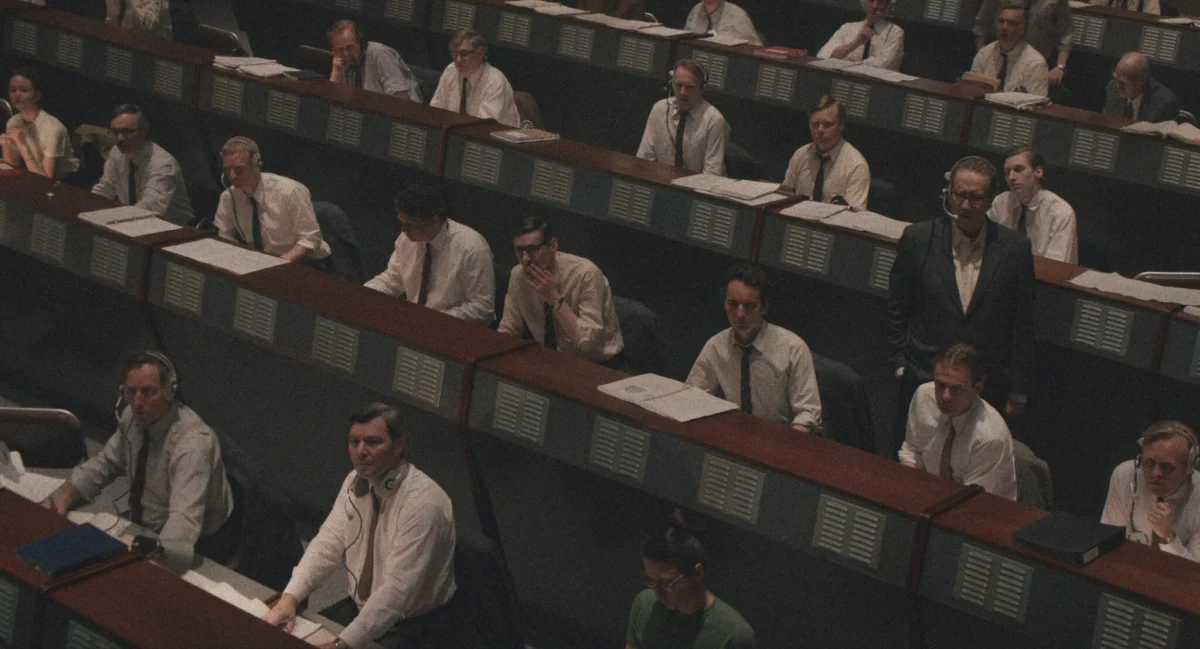
Critics who have screened the first five episodes of the eight-episode season have praised the technical fidelity of the show. The production design, which recreates the brutalist architecture and cramped, functional aesthetics of the Soviet space program, creates an atmosphere of suffocating tension. However, the feedback has also been measured regarding the pacing; by focusing so heavily on the interior, repressed lives of the cast, some reviewers feel the series lacks the emotional levity that makes the flagship show so enduring.
Implications for the Franchise
The implications of Star City for the broader "For All Mankind" universe are significant. By demonstrating that the franchise can pivot to different genres—from hard sci-fi to political espionage—Apple TV+ has effectively created a "prestige platform" that can host multiple, distinct stories within the same alternate timeline.
- World-Building: The series proves that the "butterfly effect" of the 1969 moon landing is a deep enough premise to support multiple shows.
- Narrative Flexibility: If Star City succeeds, it opens the door for other regional perspectives on the alternate space race, such as a look at the Chinese or European programs in this reality.
- The "Bleak" Factor: The main challenge for the series moving forward will be maintaining audience engagement in the face of its unrelenting tone. While the political thriller elements are masterfully executed, the series will eventually need to allow for moments of human triumph that are not filtered through the lens of state-sanctioned paranoia.
Conclusion: A Journey Worth Taking
Star City is not merely an exercise in brand extension; it is a thoughtful, if occasionally oppressive, examination of the personal cost of greatness. While it may lack the expansive, adventurous spirit of For All Mankind, it succeeds in its primary mission: to show the human cost of the race for the stars.

As the series moves toward its conclusion, the central question is whether the Chief Designer can preserve his vision for the future, or if the weight of the state will finally crush his "eagles." For those invested in the franchise, Star City is essential viewing. For those new to the world, it serves as a gripping, albeit harrowing, introduction to a reality that feels uncomfortably similar to our own. The journey, despite its darker turns, is undoubtedly worth the price of admission. Whether the show can sustain its momentum through the final three episodes remains to be seen, but the foundation laid thus far suggests that the For All Mankind universe is only just beginning to reach its full potential.











No comments yet. Be the first to join the conversation!