By Stephen Clark
Welcome to Edition 9.01 of the Rocket Report. As we cross the midpoint of 2026, the space industry serves as a stark reminder of the "law of constant delays." Back in January, we mapped out 20 major launches and landings expected to define the year. Now, six months later, only one of those milestones—NASA’s ambitious Artemis II mission in April—has been successfully crossed off the list. While the industry is far from stagnant, the shift of major programs into 2027 highlights the immense complexity of orbital mechanics, hardware integration, and the unpredictable nature of aerospace manufacturing.
Yet, amidst the delays, there is movement. From the final curtain call for the legendary Pegasus rocket to the rapid expansion of India’s private space sector and SpaceX’s historic engine manufacturing milestone, the landscape of spaceflight is undergoing a rapid, albeit bumpy, transition.
The Sunset of an Era: The Final Pegasus Flight
The "Swift Boost" mission reached orbit early Friday, marking a bittersweet moment in aerospace history. This was the final scheduled flight of the air-launched Pegasus XL rocket. Developed in the 1990s, the Pegasus pioneered the concept of launching small satellites from the belly of an L-1011 jetliner, providing a flexible, mobile launch platform for NASA and the Department of Defense.
However, the rise of lower-cost, high-cadence commercial launchers like SpaceX’s Falcon 9 and Rocket Lab’s Electron has rendered the unique but expensive air-launch method largely obsolete. The mission itself, facilitated by Katalyst Space Technologies, aimed to reboost the orbit of the aging Swift astronomy satellite. Launched in 2004, Swift was never designed for on-orbit servicing; the Link mission represents a daring attempt to extend the life of a scientific asset that would otherwise face atmospheric reentry later this year. The successful delivery of the Link satellite is a fitting final act for a rocket that served as the backbone of small-sat deployment for over two decades.
Global Emergence: India’s Private Sector Takes Flight
The international spotlight is now turning toward India, where Skyroot Aerospace is preparing for a landmark test flight of its Vikram-1 rocket. Scheduled for a window between July 12 and August 4 from the Satish Dhawan Space Center, this mission will be the first time a private Indian entity attempts to reach orbit.

The Rise of the Vikram-1
Skyroot has successfully raised approximately $160 million, pushing its valuation past the $1 billion mark. The Vikram-1 is a sophisticated launch vehicle, utilizing three stages of solid propellant and a liquid-fueled fourth stage for precise orbital injection. Designed to carry nearly half a ton into low-Earth orbit (LEO), the vehicle’s maiden flight will test critical systems: propulsion, stage separation, and guidance, navigation, and control (GNC). The flight will launch from a heritage pad previously reserved for India’s national space agency, symbolizing a transition from government-led spaceflight to a more robust, commercialized ecosystem.
NASA and the Commercial Partner Ecosystem
NASA continues to lean heavily on commercial partnerships to fill gaps in its scientific and exploration roadmap. This week, the agency announced a series of strategic awards and deliveries that highlight the shift toward outsourcing launch services and critical hardware.
Rocket Lab’s Expanding Portfolio
NASA has selected Rocket Lab for three dedicated Electron launches in 2027. These missions include the Polarized Submillimeter Ice-cloud Radiometer (PolSIR) project—two suitcase-sized satellites designed to study ice crystals in tropical clouds—and the Total and Spectral Solar Irradiance Sensor-2 (TSIS-2). The TSIS-2 mission is particularly notable: originally slated for a rideshare on a Falcon 9, it has been moved to a dedicated Electron launch, allowing NASA more control over the mission’s orbit and schedule.

Braking Engines for Rosalind Franklin
Progress is also being made on the European Space Agency’s (ESA) Rosalind Franklin Mars rover. NASA has officially delivered the braking engines required for the rover’s descent. Manufactured by L3Harris (formerly Aerojet Rocketdyne), these MR-80 hydrazine engines are identical to the flight-proven hardware used on the Curiosity and Perseverance rovers. With the launch window now pushed to late 2028, these engines represent a crucial piece of the puzzle for the first European mission to the Martian surface.
Industry Giants: SpaceX and the 1,000-Engine Milestone
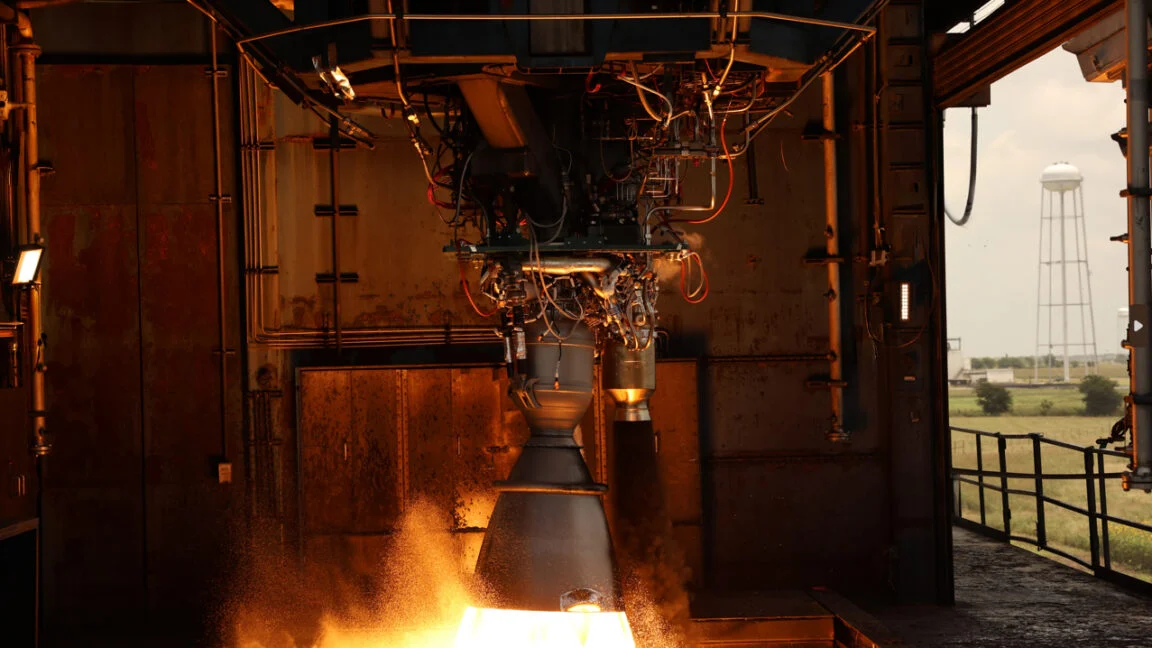
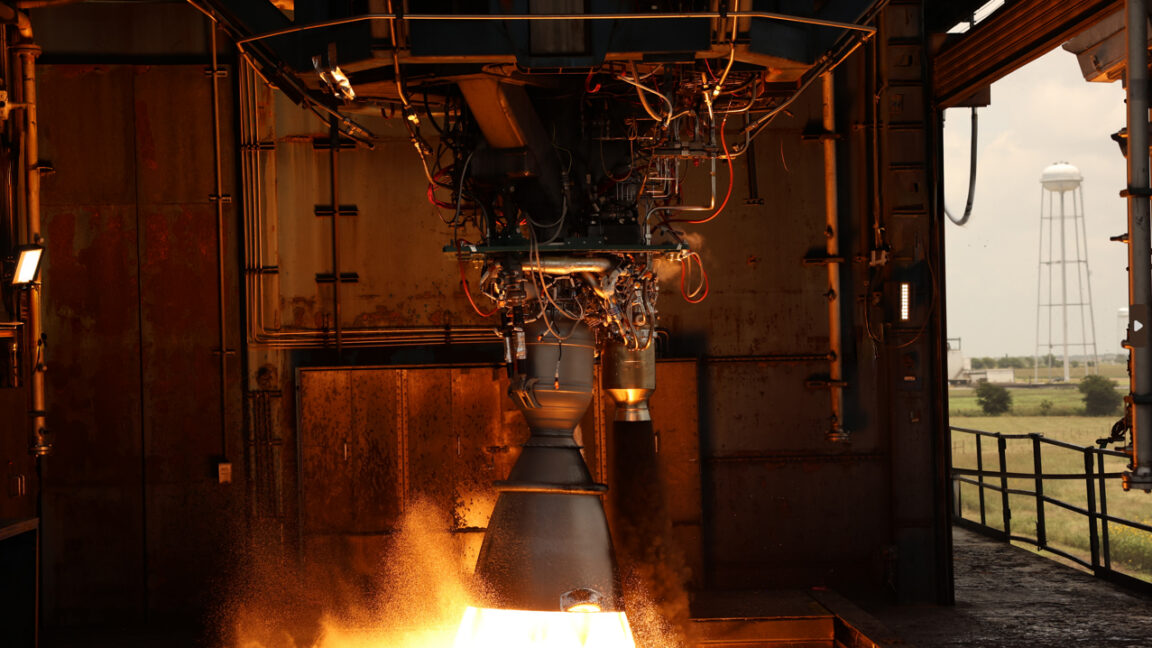
In the shadow of the smaller startups, SpaceX continues to set a pace that remains unmatched. The company recently announced the production of its 1,000th Merlin 1D engine. To put this into perspective, while a single-use rocket might require a new engine for every flight, the Falcon 9’s reliance on reusability has allowed these 1,000 engines to log over 6,000 individual flights.
This accomplishment positions the Merlin 1D among the most reliable engines in history, rivaling the legacy of the Russian RD-107/108 engines used in the R-7 family. By focusing on refurbishment rather than raw production volume, SpaceX has fundamentally altered the economics of orbital access, though the company’s focus is now shifting toward the even more ambitious Starship and its Raptor engine program.

Blue Origin’s Road to Recovery
The space industry has closely watched Blue Origin following the late-May explosion of its New Glenn rocket during a static fire test. NASA Administrator Jared Isaacman recently offered a rare, public commendation of the company’s cleanup and investigation efforts, stating that the response was "beyond impressive."
A New Concept of Operations
The explosion not only claimed the vehicle but also destroyed the lightning tower and the massive transporter-erector system. In a significant shift in operational strategy, Blue Origin will not rebuild the transporter-erector. Instead, they plan to transition to a crane-based lifting system. By simplifying the ground-support equipment, the company aims to streamline its return-to-flight schedule. While the investigation into the aft-section anomaly continues, Blue Origin remains committed to achieving flight before the end of the year—a deadline that, if met, would be a testament to their engineering resilience.
Implications for the Future
The state of the industry as of mid-2026 suggests three clear trends:

- Normalization of Reusability: The transition from the "expendable era" (exemplified by the retirement of the Pegasus) to the "reusable era" (exemplified by SpaceX’s Merlin milestones) is now complete. The industry is no longer judging success solely by the ability to reach orbit, but by the ability to do so sustainably and repeatedly.
- Increased Sovereign Capacity: The commitment from companies like Isar Aerospace to conduct "all-German" missions highlights a growing desire among nations to secure sovereign launch capabilities. Startups are no longer just competing for commercial contracts; they are becoming national assets.
- The Persistence of Mars Ambitions: Despite geopolitical tensions and recurring delays, the commitment to Mars—seen in the delivery of hardware for the Rosalind Franklin mission and the reliance on Blue Origin’s lunar landers—remains unshakable.
As we look toward the second half of 2026, the focus will shift from the design phase to the flight line. With the upcoming launches of the Long March 6A and the persistent high-cadence operations of SpaceX’s Falcon 9 fleet, the pace of activity shows no signs of slowing. Space remains a difficult, unforgiving environment, but for the companies currently navigating these technical and logistical hurdles, the view from the launch pad has never been clearer.
Chronology of Recent and Upcoming Milestones
- Late May 2026: New Glenn static fire anomaly at Blue Origin’s launch facility.
- June 2026: Final launch of the Atlas V with a payload fairing for Amazon Leo.
- Early July 2026: Successful orbital delivery of the Swift Boost mission via Pegasus XL.
- July 12–August 4, 2026: Launch window for Skyroot Aerospace’s Vikram-1 test flight.
- June 2027: Scheduled debut of the PolSIR mission on Rocket Lab’s Electron.
For more in-depth coverage of these events, subscribe to our weekly newsletter and join the conversation in our reader forums.