In the fast-paced world of digital marketing, one constant remains: social media platforms are in a perpetual state of flux. As algorithms evolve and user interfaces shift to prioritize new content formats, the technical requirements for visual assets undergo frequent, often unannounced, modifications. For brand managers, graphic designers, and social media strategists, keeping pace with these changes is not merely a matter of aesthetic preference—it is a fundamental requirement for maintaining brand authority and maximizing audience engagement.
Using the incorrect image dimensions can lead to disastrous results: automated cropping that decapitates your subjects, compression artifacts that render your high-resolution assets pixelated, or crucial call-to-action text being obscured by platform overlays. This guide provides the most current, comprehensive directory of social media image requirements for 2026, ensuring your content remains sharp, professional, and optimized for performance across every major network.
![Social media image sizes for all networks [July 2026]](https://blog.hootsuite.com/wp-content/uploads/2023/01/Social-Media-Image-Sizes-2023.png)
The Strategic Importance of Visual Optimization
In an era where the average attention span is measured in seconds, the visual "first impression" is the primary driver of scroll-stopping power. When an image is perfectly sized, it occupies the intended space on the screen, signaling to the viewer that your brand values quality and precision.
Conversely, poor optimization acts as a silent deterrent. When a header image is blurry or a carousel post is cut off, it signals a lack of professional oversight. Furthermore, social media algorithms prioritize high-quality, native-looking content. Assets that conform to platform-specific aspect ratios are more likely to be favored by the delivery systems of platforms like Instagram and TikTok, directly impacting your organic reach and conversion rates.
![Social media image sizes for all networks [July 2026]](https://blog.hootsuite.com/wp-content/uploads/2025/12/Social-media-image-sizes-for-all-networks-December-2025-556x556.png)
2026 Platform-by-Platform Dimension Standards
Instagram: The Visual Powerhouse
Instagram remains the premier destination for visual storytelling. However, the tension between feed grid aesthetics and full-screen vertical engagement requires a multi-layered strategy.
- Profile Pictures: 320 x 320 pixels. While displayed at a smaller size, the higher resolution ensures clarity on high-density displays.
- Feed Posts: 1080 x 1080 (square), 1080 x 1350 (vertical), and 1080 x 566 (landscape).
- Stories & Reels: 1080 x 1920 pixels. Always maintain a "safe zone" for text and logos, keeping them away from the edges where the UI overlays (like the like/comment buttons) may cover them.
X (Formerly Twitter): The Multimedia Pivot
X has moved beyond its text-only roots, increasingly emphasizing a media-rich feed.
![Social media image sizes for all networks [July 2026]](https://blog.hootsuite.com/wp-content/uploads/2025/12/Social-media-image-sizes-for-all-networks-January-2026-1-620x465.png)
- Profile Photo: 400 x 400 pixels.
- Header Image: 1500 x 500 pixels.
- In-Stream Photos: 1600 x 900 pixels is the gold standard for landscape, though 1:1 square formats remain highly effective for mobile visibility.
Facebook: The Multi-Device Challenge
Facebook’s unique challenge lies in the disparity between desktop and mobile rendering.
- Cover Photos: 851 x 315 pixels for desktop; mobile will crop this, so ensure your focal point is centered.
- Shared Links: 1200 x 627 pixels. This is a critical dimension for link previews; failing to use this size often leads to a poorly cropped, unattractive thumbnail that lowers click-through rates.
LinkedIn: The Professional Standard
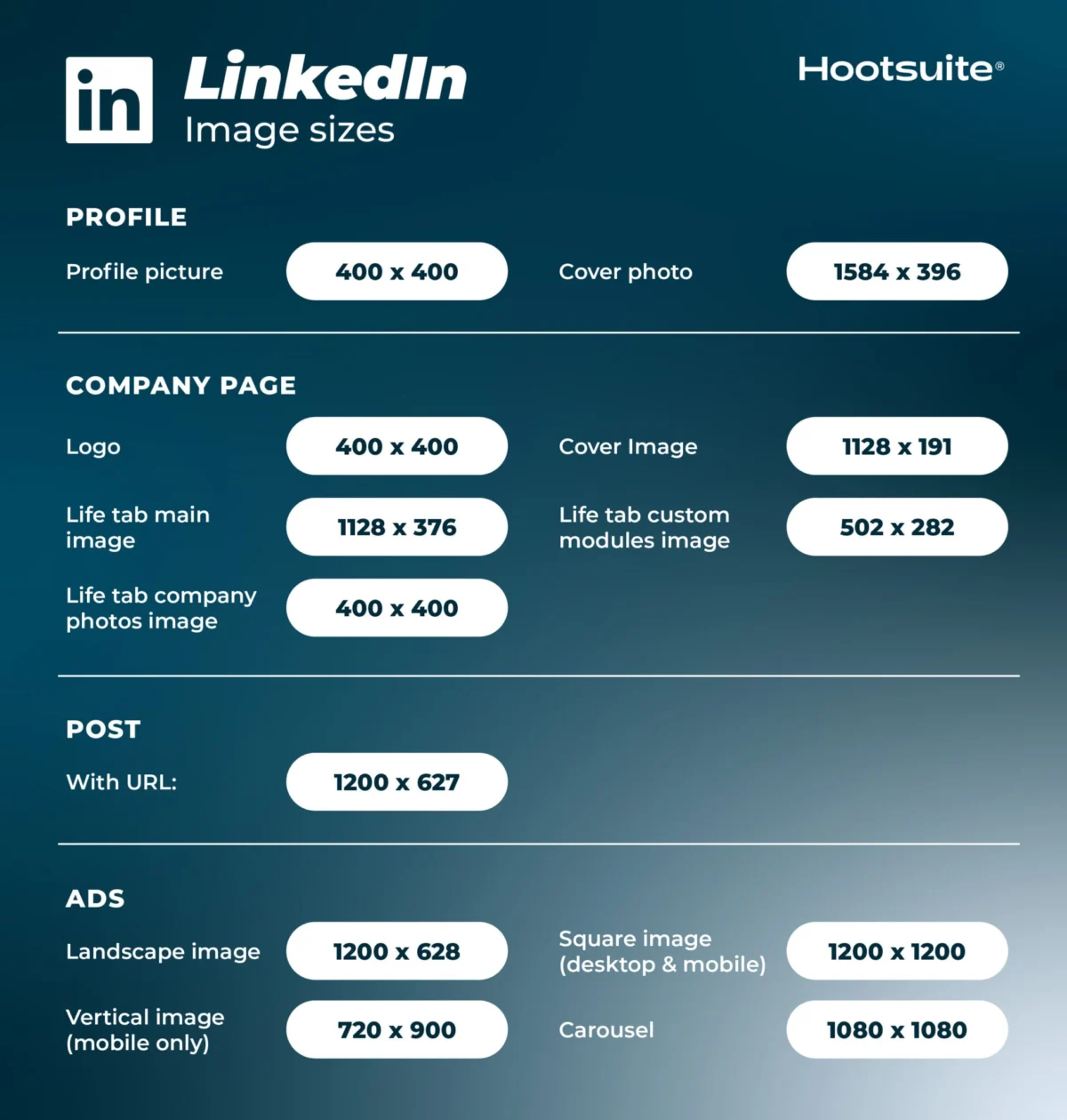
Professionalism is the currency of LinkedIn. Blurry or poorly formatted images on a company page can undermine your credibility with B2B prospects.
![Social media image sizes for all networks [July 2026]](https://blog.hootsuite.com/wp-content/uploads/2025/04/Social-media-image-sizes-Instagram-620x558.jpg)
- Company Logo: 300 x 300 pixels.
- Company Cover Image: 1128 x 191 pixels.
- Standard Post Image: 1200 x 627 pixels is the ideal ratio for articles and link-based updates.
TikTok: The Vertical Frontier
TikTok requires a mobile-first mindset. Because the platform is entirely vertical, any deviation from the 9:16 ratio results in "letterboxing," which significantly hurts your engagement metrics.
- Profile Picture: 200 x 200 pixels.
- Video/Carousel: 1080 x 1920 pixels.
Chronology of Changes: Why Dimensions Keep Shifting
If you feel like you are constantly updating your design templates, you aren’t imagining it. The evolution of social media image sizes follows a clear, two-decade trajectory:
![Social media image sizes for all networks [July 2026]](https://blog.hootsuite.com/wp-content/uploads/2025/12/Social-media-image-sizes-for-all-networks-January-2026-1-1-620x629.png)
- The "Web 2.0" Era (2005–2012): Platforms were desktop-first. Image sizes were smaller and horizontal, optimized for 1024×768 monitor resolutions.
- The Mobile Migration (2013–2018): As smartphones became the primary way to access social media, platforms pivoted to vertical aspect ratios. The introduction of "Stories" (Snapchat/Instagram) solidified the 9:16 vertical standard.
- The High-Density Era (2019–2025): The rise of Retina and OLED displays forced platforms to move away from 72dpi web-standard images to higher-resolution, larger-pixel-count files to prevent blurring.
- The Integrated Experience (2026 and Beyond): Current trends favor "unified" dimensions. Platforms are increasingly attempting to harmonize their ad formats so that a single asset can be recycled across Reels, TikToks, and YouTube Shorts with minimal manual adjustment.
Implications for Enterprise Content Strategy
For large organizations, managing these dimensions manually is impossible. The risk of human error is high, and the time cost of re-formatting assets for five different networks is prohibitive.
The Cost of Inconsistency
When an enterprise brand posts inconsistent image sizes, it breaks the "visual language" of the brand. Consumers perceive this lack of polish as a lack of stability. In competitive markets, a well-optimized, high-resolution graphic that fits the mobile screen perfectly acts as a silent endorsement of the brand’s quality.
![Social media image sizes for all networks [July 2026]](https://blog.hootsuite.com/wp-content/uploads/2025/12/Social-media-image-sizes-for-all-networks-January-2026-3-620x753.png)
Standardizing for Scale
Enterprises must move toward a Template-First Workflow. By using creative tools like Canva or Adobe Creative Cloud, design teams should create "Master Assets" at the highest required resolution (usually 1080 x 1920) and then use automated cropping tools to generate secondary assets for different platforms.
Official Recommendations and Best Practices
The consensus among social media engineers is clear: Quality is a ranking factor.
![Social media image sizes for all networks [July 2026]](https://blog.hootsuite.com/wp-content/uploads/2025/04/Social-media-image-sizes-LinkedIn-620x651.jpg)
Platforms like Meta and ByteDance utilize sophisticated machine learning models to analyze the quality of user-uploaded images. High-resolution images that meet the recommended pixel density are less likely to be aggressively compressed by the platform’s server-side algorithms.
Pro-Tip: Always export your images as WebP or high-quality JPEGs. While PNGs offer transparency, their larger file sizes can occasionally trigger slow load times on poor network connections, which causes the platform to prioritize other content over yours.
![Social media image sizes for all networks [July 2026]](https://blog.hootsuite.com/wp-content/uploads/2025/04/Social-media-image-sizes-Pinterest-620x517.jpg)
Conclusion: Staying Ahead of the Curve
As we move through 2026, the reliance on automation will be the deciding factor for successful social media teams. Relying on "memory" or "best guesses" for image sizes is no longer viable. Teams must integrate their social media management software—such as Perch by Hootsuite—directly into their design workflow. By using platforms that offer built-in, updated, network-optimized templates, marketers can ensure that their visual assets are perfectly sized, every single time.
The goal is to move from a mindset of "fighting the platform" to "leveraging the platform." By respecting the technical parameters of the digital spaces where your audience lives, you ensure that your message is heard, seen, and remembered, free from the distractions of poor cropping or pixelation.
![Social media image sizes for all networks [July 2026]](https://blog.hootsuite.com/wp-content/uploads/2025/04/Social-media-image-sizes-Snapchat-620x325.jpg)
To ensure your team stays updated, audit your design templates once every quarter. The social media landscape is an ever-shifting terrain, but with the right technical foundation, your brand’s visual presence will remain rock-solid.