

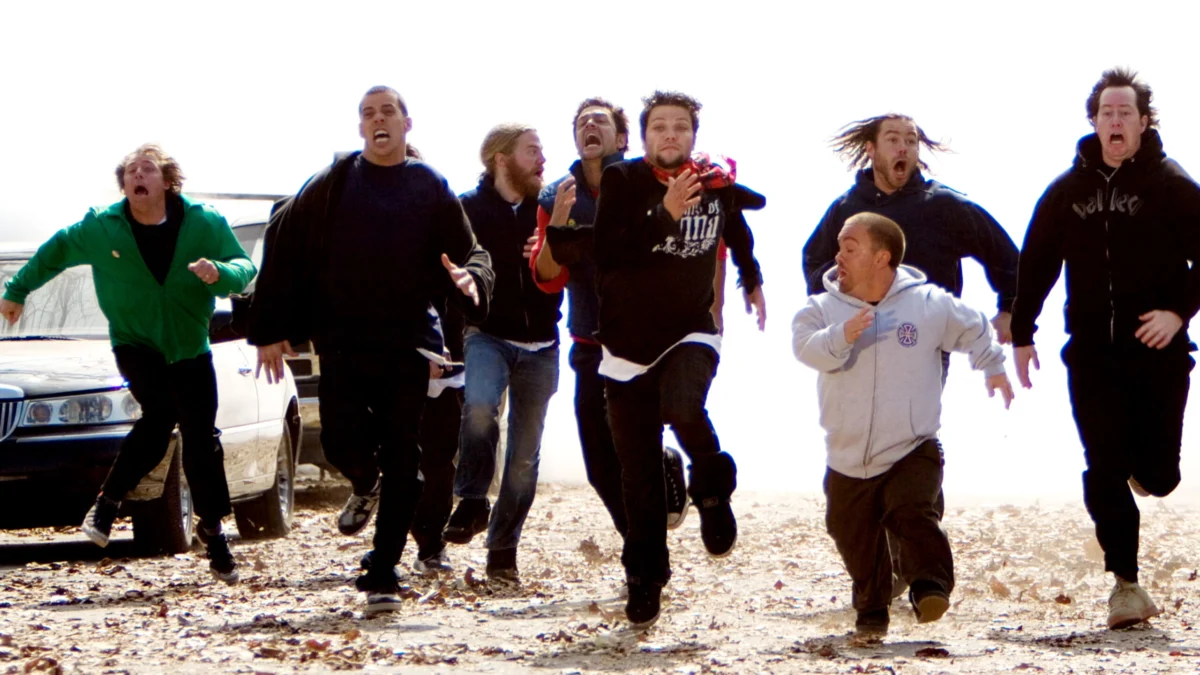
For over two decades, the name Bam Margera was synonymous with the chaotic, adrenaline-fueled anarchy of the Jackass franchise. From his humble beginnings as a teenage skate prodigy in West Chester, Pennsylvania, to becoming the face of MTV’s most profitable and controversial cultural phenomenon, Margera’s trajectory has been nothing short of a rollercoaster. Now, as the franchise closes its final chapter with the release of Jackass: Best and Last, the 46-year-old skater has offered a candid, albeit definitive, reflection on his relationship with his former crew and the future of his own life.
A Definitive Closing of the Door
In a recent, expansive interview with Rolling Stone, Margera addressed the elephant in the room: the possibility of a future reunion with the Jackass ensemble. Despite a highly public and litigious falling out that spanned several years, Margera maintains that he holds no "bad blood" toward his former colleagues. However, he is equally emphatic that the bridge between him and the leadership of the franchise—specifically Johnny Knoxville and director Jeff Tremaine—has been permanently burned.
"I’ll definitely check out the movie, and I hope it’s good," Margera told the publication, referring to Jackass: Best and Last, which is currently enjoying a theatrical run. "But as far as a reunion, it’s not going to happen, not in 10 million years. I don’t have any bad blood with the cast of Jackass. It’s just the decisions that Johnny Knoxville and Jeff Tremaine decided to make. I never want to see them ever again in my life. Enough is enough."
This statement marks a turning point in the public narrative surrounding the skater. For years, fans speculated about a potential reconciliation, fueled by the nostalgia of the original MTV era. Margera’s comments effectively shatter those expectations, signaling that while he harbors no malice, he has moved on to a chapter of his life that no longer includes the professional or personal orbit of the Jackass machine.
The Chronology of a Fallout
To understand the current state of affairs, one must examine the timeline of the rift that fundamentally altered the Jackass landscape.
The trouble began brewing in the years leading up to the production of 2022’s Jackass Forever. As Margera struggled publicly with substance abuse and mental health challenges, his participation in the film became a point of intense contention. In 2021, news broke that Margera would not be a full-fledged member of the Jackass Forever cast. This exclusion sparked a series of volatile social media outbursts from Margera, directed at the production team and his former friends.
By April 2022, the situation escalated into the legal arena. Margera filed a wrongful termination lawsuit against Paramount Pictures, MTV, Johnny Knoxville, Jeff Tremaine, and others. The core of the suit alleged that the studio had coerced him into signing a "Wellness Agreement" while he was in a rehabilitation facility. Margera claimed that this agreement required him to submit to multiple daily drug tests and adhere to a strict pharmaceutical regimen prescribed by the studio’s medical team.
According to the legal filing, the mandated medication left him "physically and mentally drained, depressed, and a shell of his former self." The suit sought damages for what he described as a violation of his rights and a systematic effort to strip him of his autonomy. While the lawsuit was eventually dismissed at Margera’s request, the legal maneuvering served as the definitive fracture in a friendship that had spanned nearly 25 years. The terms of any potential settlement remain private, leaving the industry to speculate on the final resolution of the conflict.
The Human Cost and the Road to Sobriety
Behind the headlines of lawsuits and professional feuds lies a deeply personal narrative of recovery. Margera has been open about the pivotal role his family has played in his current sobriety. He credits his wife, Dannie Marie, for providing the stability he lacked during his darkest years. Furthermore, he speaks with profound affection about his son, Phoenix Wolf, whom he shares with his ex-wife, Nicole Boyd.
"Phoenix made me fight for myself to save my own life because I need to be here for him," Margera stated. He reflects on his own past—specifically the antics of his hit show Viva La Bam—with a new perspective. When asked about the fear that his son might one day mirror his own rebellious behavior, Margera replied with characteristic humor and acceptance: "Everybody’s like, because you [tormented] your dad, Phoenix is gonna do that to you, and I’m totally cool with that."
This newfound clarity has shifted his focus back to his roots: skateboarding. Once described as a "shell of his former self" during the height of the litigation, the 46-year-old skater now describes his relationship with the board as his "therapy, my sanity, my medication." He has even expressed a desire to continue pushing the limits of his physical ability, noting that he is currently "learning and inventing new tricks" at an age when many professional athletes have long since retired.
Professional Implications: The Legacy of ‘Jackass’
The release of Jackass: Best and Last serves as a poignant bookend to the franchise that redefined stunt entertainment for the 21st century. While Margera is not an active participant in the promotional cycle for the film, his legacy remains embedded within it. He has confirmed that archival footage of his iconic stunts is featured in the movie, ensuring that his contributions to the franchise’s history are preserved for the final, definitive outing.
The implications of this transition are twofold. For the Jackass franchise, it marks the end of an era. With the original cast aging and the dynamics shifted, the brand must now decide whether it has a future beyond this final curtain call. For Margera, it represents a professional liberation. By distancing himself from the Jackass machine, he is attempting to rebrand himself as an individual—a skater, a father, and a man who has successfully navigated the pitfalls of reality television stardom to reclaim his own narrative.
Industry Perspectives and Future Outlook
Media analysts have noted that the Jackass phenomenon was always predicated on a sense of brotherhood that felt authentic to the audience. When that brotherhood fractured, it changed the way the public viewed the franchise. The legal battle between Margera and Paramount brought to light the complicated intersection of mental health and the demands of high-stakes reality television. It raised uncomfortable questions about the duty of care that production studios owe to their talent, particularly those struggling with addiction.
As of early 2026, there is no indication of further legal action, and the silence from the side of the Jackass producers suggests a mutual desire to let the dust settle. The industry is watching to see how Margera’s post-Jackass career develops. With his sobriety firmly established and his passion for skating renewed, there is a path forward for him to engage in projects that are more reflective of his current state of mind rather than the persona he was required to inhabit for two decades.
Conclusion: A New Horizon
The story of Bam Margera is a cautionary tale, a saga of extreme highs and crushing lows, but it is also a story of survival. As Jackass: Best and Last continues to play in theaters, it serves as a monument to what was—a time of youthful recklessness and, for many, a defining pop-culture experience.
For Margera, however, the movie is not a beginning, but a closure. He has made his peace with the past, effectively decoupling his identity from the franchise that made him famous. As he continues his journey into sobriety and focuses on his family and his skating, Margera appears to be finding a version of himself that is finally free from the pressures of the camera.
"All I want to do now is skateboard," he says, a sentiment that brings his life full circle. After the chaos, the fame, the lawsuits, and the recovery, the man who once invited the world to watch him destroy himself is now finding his greatest thrill in the simple, quiet act of mastering a trick. It is a quiet, steady transformation—one that may ultimately prove more impressive than any stunt he ever performed on screen.










