Lina Hope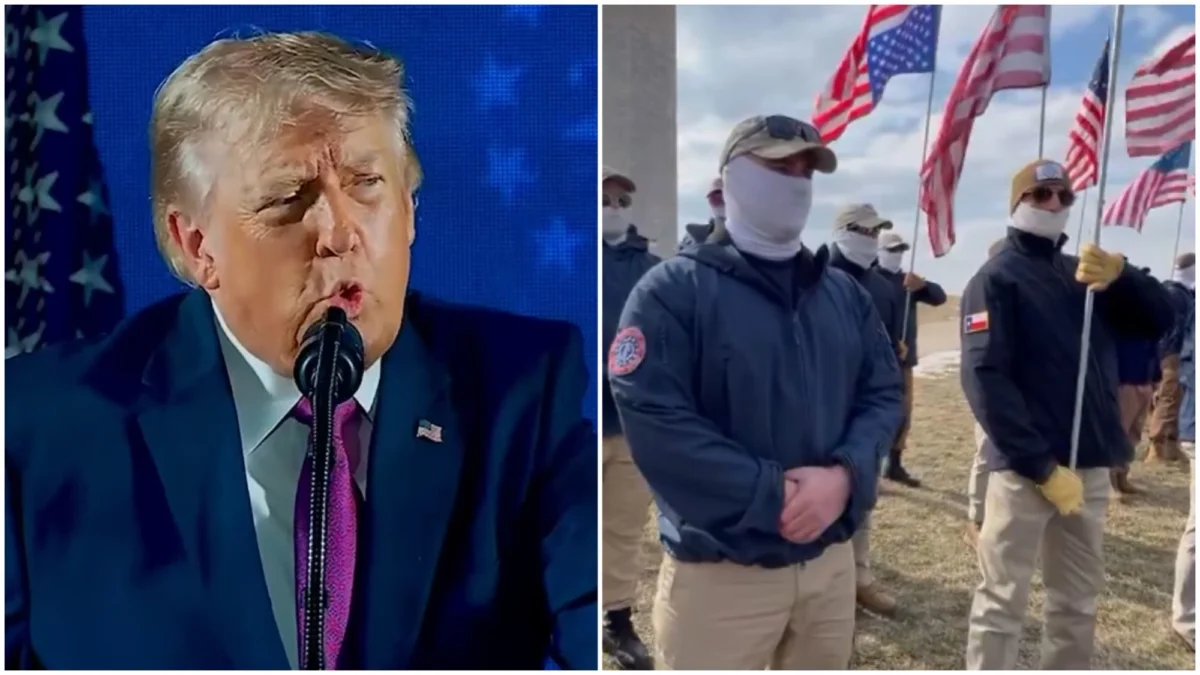
Introduction: A Fractured Celebration
The 250th anniversary of the United States—a milestone intended to be a unifying commemoration of American history and democratic resilience—found itself mired in controversy this July 4th. As cities across the nation hosted elaborate celebrations, the event branded as "Freedom250," heavily associated with the political movement surrounding former President Donald Trump, became the epicenter of a national debate. Critics have labeled the weeklong festivities as a "political spectacle" that failed to capture the public imagination, while the concurrent appearance of white supremacist groups in Washington, D.C., has sparked a firestorm of criticism regarding the lack of condemnation from prominent conservative voices.
This report examines the logistical failures of the "Freedom250" event, the emergence of extremist groups in the nation’s capital during the holiday, and the broader implications of a political landscape where silence in the face of radicalism has become increasingly normalized.

Chronology of the "Freedom250" Debacle
The "Freedom250" event was marketed as a weeklong, grand-scale celebration of America’s semiquincentennial. However, reports from the ground in Washington, D.C., painted a starkly different picture.
Early Week: The Empty Crowds
As early as the start of the week, observers noted a significant discrepancy between the promotional hype surrounding the event and the actual attendance. Observers reported that crowds at the designated venues were sparse, often failing to draw the numbers typical of a major holiday celebration in the capital. The optics of the event were further damaged by the placement of media setups—most notably those of conservative networks like FOX News—which struggled to capture significant gatherings. Footage circulating on social media frequently showed news anchors reporting to the camera with only a handful of passersby, many of whom were reportedly in the area for unrelated activities, such as World Cup festivities, rather than the political event itself.
July 4th: The Extremist Incursion
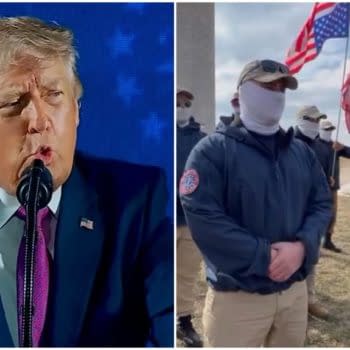
The situation took a more concerning turn on the afternoon of July 4th. As the nation celebrated Independence Day, a group of individuals identified as white supremacists conducted a march through the streets of Washington, D.C. The participants, largely masked to conceal their identities, carried symbols of hate, including Confederate flags—a historic emblem of secession and slavery—alongside various iterations of the U.S. flag.
The arrival of these demonstrators, timed to coincide with the high-profile holiday, prompted immediate alarm. Observers noted the irony of the group’s presence: individuals professing "patriotism" while operating under the cloak of anonymity, a tactical choice often associated with avoiding legal or social accountability for their extremist ideologies.
Supporting Data and Observations
The discrepancy between the perceived scale of "Freedom250" and its reality is supported by a wealth of anecdotal and visual evidence.
The Media Perception Gap
Journalistic analysis of the event coverage has highlighted a "perception gap." When networks attempted to frame the event as a massive outpouring of support, the physical reality of the scenes—often featuring near-empty plazas and wandering tourists—undermined those claims. The tendency to conflate general holiday foot traffic with event attendance has been characterized by critics as a deceptive narrative tactic.

The Anatomy of the March
The demonstration by white supremacist groups on July 4th was characterized by:
- Uniformity of Concealment: The use of masks was nearly universal, suggesting a deliberate effort to minimize individual identification.
- Symbolic Dissonance: The juxtaposition of U.S. flags with the Confederate battle flag signaled a deliberate attempt to co-opt nationalistic imagery for white nationalist ends.
- Lack of Public Engagement: Unlike the larger, organic celebrations occurring elsewhere in the city, the marchers maintained a insular presence, seemingly focused on intimidation and photo-ops rather than civic participation.
Official Responses and the Sound of Silence
One of the most significant aspects of the July 4th events has been the reaction—or lack thereof—from mainstream conservative leadership and the organizers of "Freedom250."
The Vacuum of Condemnation
As of this writing, there has been a notable absence of widespread, high-level condemnation of the white supremacist march from the Trump inner circle or the broader MAGA political coalition. This silence has been interpreted by many analysts as a tacit acknowledgment of the group’s presence or, at the very least, a strategic refusal to alienate a portion of the political base.
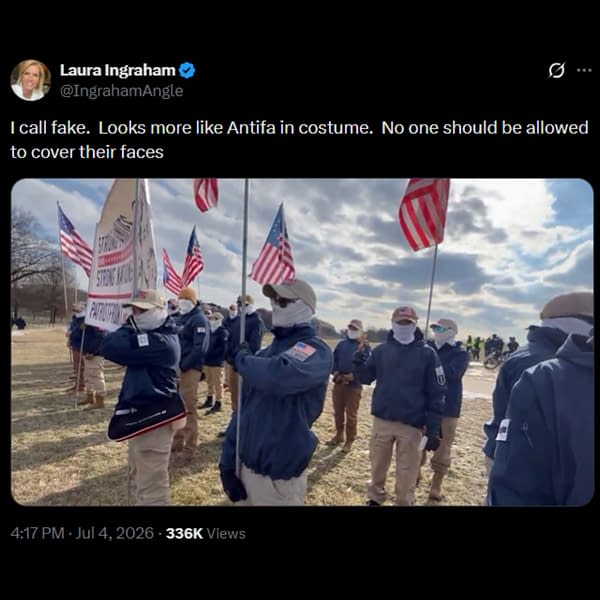
Media Commentary: The Ingraham Take
Media figures such as Laura Ingraham have faced intense scrutiny for their framing of the day’s events. Rather than addressing the radical elements that appeared in the capital, commentary from such figures has frequently pivoted toward unsubstantiated conspiracy theories or redirection, effectively avoiding a direct confrontation with the presence of hate groups in the nation’s capital. This pattern of behavior has drawn sharp rebukes from civil rights organizations, who argue that silence serves as a form of endorsement.
Implications for the American Political Landscape
The events of July 4th, 2026, serve as a microcosm of a larger, more systemic issue within the American body politic: the erosion of consensus regarding what constitutes extremist behavior.
The Normalization of Radicalism
When political movements refuse to disavow hate groups that align with their perceived interests, the window of "acceptable" political discourse shifts. The presence of white supremacists in Washington is no longer treated as an anomalous or universally condemned event; instead, it is often treated as a tactical complication to be managed or ignored.
The Crisis of Civic Memory
The 250th anniversary was intended to be a moment of reflection on the American experiment. Instead, the focus has shifted toward the exploitation of national symbols for partisan gain. The "Freedom250" debacle suggests that the nation is struggling to find a unified vision of its past, let alone its future. If the nation’s birthday is to be defined by who can claim the symbols of the state, rather than who can uphold the values of the Constitution, the consequences for democratic stability will be severe.
The Accountability Deficit
The use of masks by the marchers in D.C. highlights a growing "bully/victim" complex. These individuals claim to be the defenders of the American spirit while simultaneously lacking the courage to stand by their beliefs in the public square. When political leaders fail to distinguish between legitimate political dissent and organized hate, they forfeit the moral authority required to lead a diverse, democratic society.

Conclusion: Looking Ahead
As the dust settles on the "Freedom250" events, the questions remain: What is the threshold for moral courage in modern American politics? And can a nation that is so deeply divided on the very meaning of its founding symbols ever return to a place of shared purpose?
The failure of the "Freedom250" event to attract a genuine following, combined with the infiltration of extremist elements, paints a portrait of a political movement that is increasingly disconnected from the realities of the American public. The path forward requires a firm rejection of the exclusionary rhetoric that marred this past Fourth of July. Without a clear, unified, and vocal condemnation of hate, the ideals of freedom and equality that the 250th anniversary was supposed to honor will continue to be overshadowed by the actions of those who seek to redefine them for their own narrow, extremist ends.

The events of July 4th were not merely a logistical failure of a political rally; they were a test of the nation’s commitment to its founding principles. By that metric, the silence from those who claim to champion "freedom" speaks volumes about the current state of the American discourse.

 Sagoh
Sagoh
 Ammar Sabilarrohman