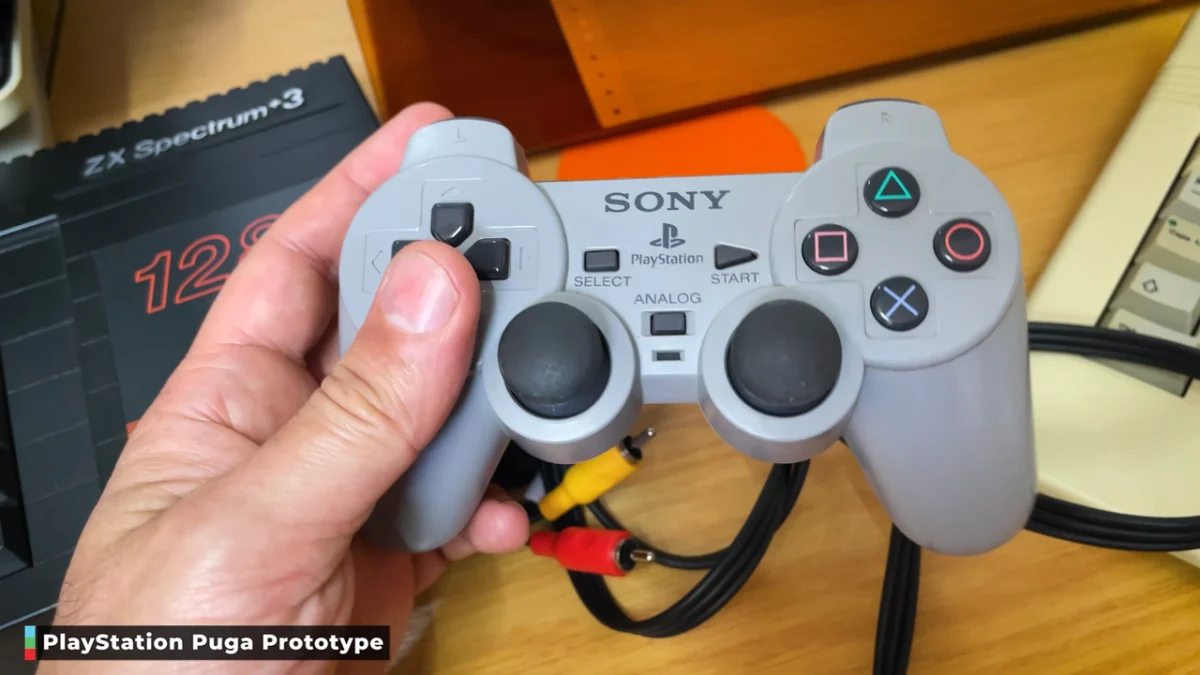
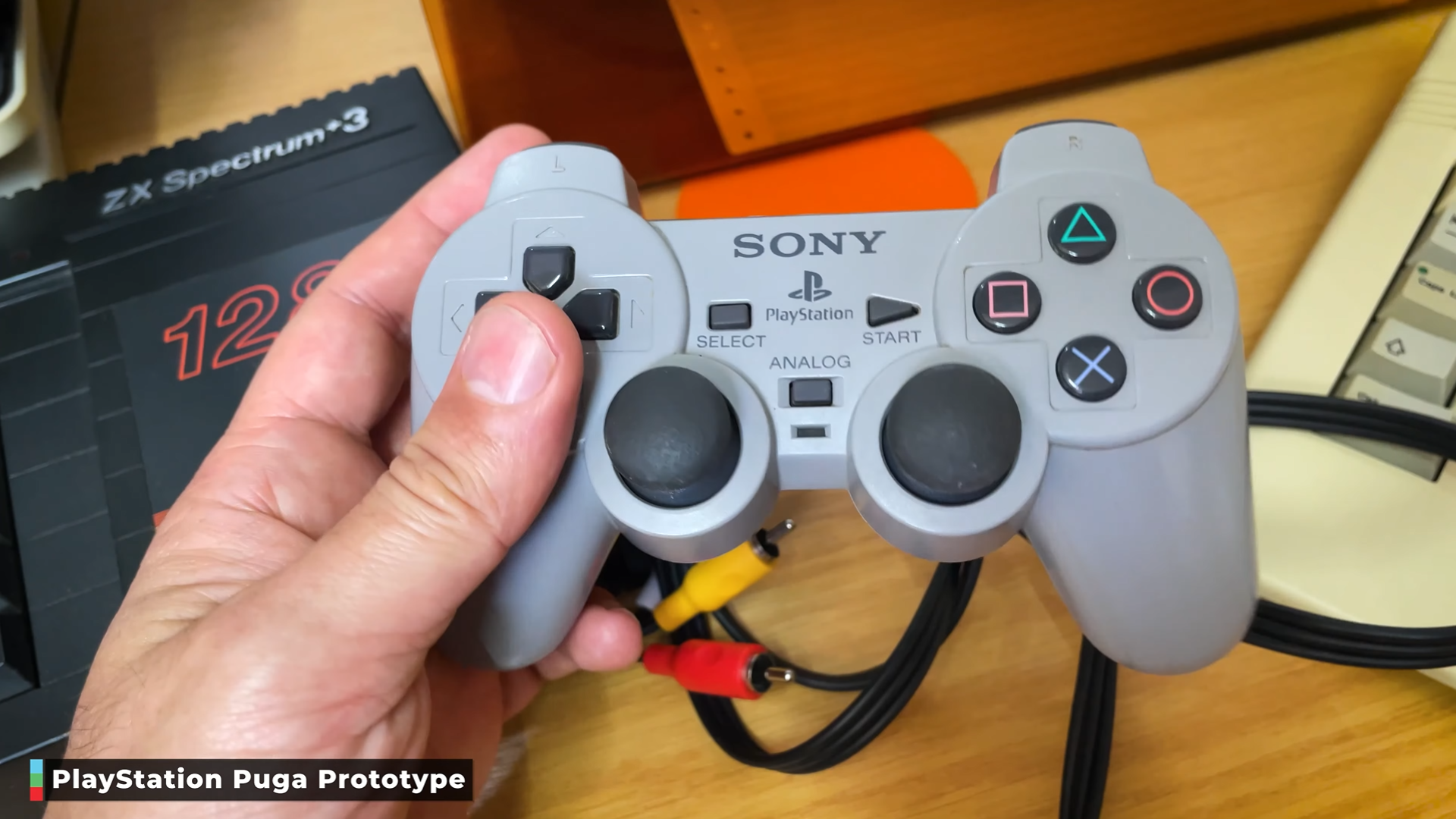
In the annals of gaming history, few companies have shaped the landscape as profoundly as Sony. From the beige box that revolutionized 3D gaming in 1994 to the cutting-edge hardware of the PlayStation 5, Sony’s trajectory has been one of consistent dominance. Yet, for every global success story, there are countless "what-ifs" buried in the archives of corporate R&D. Perhaps the most intriguing of these is the "PlayStation Puga," a daring, experimental prototype that sought to cram an entire PlayStation 1 console into a single, handheld controller.
Recently, the curtain was pulled back on this ambitious project by Brian "Biscuit" Watson, a veteran game developer with four decades of experience. During an appearance on the YouTube channel The Retro Collective, Watson revealed that the Puga was not merely a flight of fancy but a calculated attempt by Sony to penetrate the complex and restrictive Brazilian gaming market during the early 2000s.
The Genesis of the Puga: A Solution for Brazil
The early 2000s presented a unique challenge for global hardware manufacturers attempting to enter South America, particularly Brazil. The country maintained stringent import regulations and high tariffs, making the standard retail price of imported Japanese or American gaming consoles prohibitively expensive for the average consumer. To circumvent these barriers, companies were encouraged to manufacture hardware locally.
Sony, ever the strategist, envisioned the Puga as a way to bypass these hurdles. The concept was elegant in its simplicity: a self-contained, handheld unit shaped like a traditional DualShock controller. It would connect directly to a television via an included cable, effectively acting as both the input device and the console itself. By integrating the motherboard into the controller housing, Sony hoped to offer a "plug-and-play" experience that minimized the physical footprint and material costs, potentially allowing for a price point that would thrive in a developing market.
Chronology of a Failed Vision
The development of the Puga took place in an era where miniaturization was still in its infancy. For the project to succeed, the engineering team had to overcome immense technical hurdles.
The Prototype Phase
According to Watson, the prototype was functional, albeit limited by the constraints of the time. The unit was powered by an ARM-based processor clocked at 650 MHz—an impressive spec for a project of that era. The team successfully engineered the device to boot into a debug stub, confirming that the architecture could effectively emulate the original PlayStation environment.
The Power Efficiency Milestone
One of the most remarkable technical achievements of the Puga was its power consumption. Despite the power-hungry nature of emulating 32-bit hardware, the Puga reportedly boasted a battery life of roughly 20 hours on a standard set of four AA batteries. This longevity, coupled with the "all-in-one" form factor, would have made it a formidable competitor in the portable gaming space had it reached store shelves.
The Collapse
Despite the technical progress, the project hit an insurmountable wall: software licensing and internal bureaucracy. The business model relied on selling the device at a razor-thin profit margin—Watson noted they aimed to make just 10 cents per unit. To achieve this, the console needed to ship with a curated collection of classic titles.
The licensing negotiations proved to be a quagmire. Sony struggled to secure favorable royalty terms with third-party publishers like Rockstar Games. Even more frustrating for the development team was the internal friction at Sony; they found themselves in the position of having to negotiate royalties with separate, independent units of their own company. When it became clear that the cost of software licensing would render the unit unprofitable, the project was quietly shuttered.
Technical Specifications and Design Philosophy
The Puga was built around the philosophy of accessibility. It was intended to hold 10 games on 4GB of internal memory—a massive amount of storage for that period. The decision to use four AA batteries underscores the focus on a "universal" power source, catering to regions where specialized rechargeable lithium-ion battery packs might be difficult to source or replace.
While the unit never reached mass production, its DNA survived. The emulator developed specifically for the Puga project did not go to waste. It was eventually refined and repurposed, eventually finding its way into the Sony Xperia Play, the "PlayStation Phone" released in 2011. This reveals that, while the Puga failed as a hardware product, it served as a vital research and development stepping stone for Sony’s later mobile gaming initiatives.
The Bureaucratic Barrier: Why Corporate Silos Kill Innovation
The failure of the Puga provides a masterclass in how corporate structure can stifle innovation. The "silo" effect—where different divisions of a single company operate as competing entities—is a well-documented phenomenon in large-scale corporations.
In the case of the Puga, the hardware team was effectively sabotaged by the software licensing department. Because the hardware team was focused on keeping the unit price low to penetrate the Brazilian market, they could not absorb the high royalty demands imposed by the very software division that was supposed to support them.
This tension between hardware and software departments remains a constant struggle in the tech industry today. When a company fails to harmonize its internal licensing policies with its product development goals, even the most innovative hardware—like the Puga—is destined for the scrap heap of history.

Implications for Modern Gaming
The story of the PlayStation Puga serves as a poignant reminder of the fragility of hardware development. It highlights the vast distance between a "working prototype" and a "marketable product."
1. The Lesson of "Low-Cost" Hardware
The Puga was ahead of its time in anticipating the demand for "plug-and-play" retro consoles, a market that is now saturated with products like the NES Classic and various Raspberry Pi-based emulators. Had Sony successfully navigated the legal and royalty minefield in Brazil, they might have pioneered the modern retro-console market a decade earlier.
2. The Legacy of Emulation
The fact that the Puga’s emulation software migrated to the Xperia Play proves that the "failure" of a hardware project is rarely a total loss. In the tech industry, code and architectural breakthroughs are often more valuable than the plastic shells that house them. The Puga provided the R&D team with the framework necessary to understand how to port PlayStation-level performance to handheld devices, a skill set that became increasingly critical as smartphones began to dominate the mobile landscape.
3. Regulatory and Market Realities
The Puga also underscores how geopolitical and economic regulations dictate hardware design. The "Brazilian problem"—high import tariffs and local manufacturing requirements—forced Sony into a position of creative desperation. This is a reality that still affects global tech giants today, as companies navigate complex trade wars, chip shortages, and varying regional compliance standards.
Conclusion: A Footnote in the PlayStation Story
Today, the Puga exists only as a piece of hardware in the hands of a few former developers. It is a ghost of a different era—a time when the lines between "controller" and "console" were being aggressively blurred in the pursuit of market expansion.
While it is tempting to view the Puga as a tragic missed opportunity, it is perhaps more accurate to view it as a necessary failure. It taught Sony about the limits of their internal licensing structure, the complexities of international manufacturing, and the potential of mobile emulation. Brian "Biscuit" Watson’s revelation serves as a rare, transparent look at the messy, bureaucratic, and often chaotic reality behind the polished veneer of the gaming industry.
For collectors and historians, the Puga is a "holy grail." For Sony, it remains a lesson in the importance of internal synergy. And for the rest of us, it stands as a fascinating reminder that for every console that makes it into our living rooms, there are dozens of prototypes that died so the industry could learn how to better innovate.