Layla Zulfa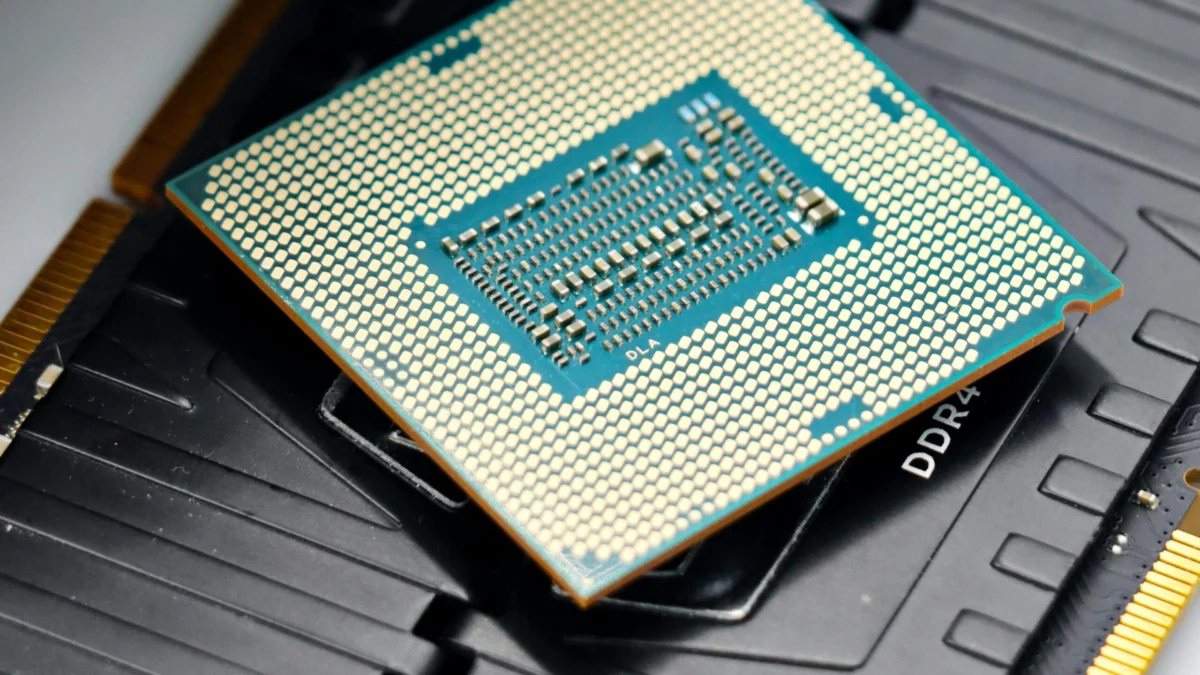
The global semiconductor landscape is undergoing a tectonic shift, driven by an insatiable appetite for artificial intelligence infrastructure. As the world transitions into an era defined by massive data centers and high-performance computing, the foundational components of this revolution—RAM and NAND flash memory—have become the new "gold."
Sanjay Mehrotra, CEO of semiconductor giant Micron Technology, has delivered a sobering assessment of this landscape. During the company’s Q3 2026 financial earnings call, Mehrotra indicated that the current supply-demand imbalance, which has plagued the hardware industry for months, is expected to persist through 2027. While he anticipates a "gradual improvement" by 2028, he candidly admitted that the industry currently lacks visibility on when supply will truly normalize to meet the exponential surge in demand.
The Anatomy of a Global Shortage
The current crisis is not a result of a singular failure, but rather a perfect storm of unprecedented demand and complex logistical constraints. Micron, along with fellow industry titans Samsung and SK Hynix, has found itself in the eye of this storm.
For the three months ending May 28, 2026, Micron reported staggering financial results: $41.46 billion in revenue, representing a 346% increase year-on-year. Profit margins saw an even more dramatic trajectory, climbing by 1,398%—nearly 15 times the profit recorded in the same period the previous year. While these numbers signify a period of immense prosperity for the manufacturer, they mask the underlying structural fragility of the global supply chain.
The primary driver of this shortage is the "AI Gold Rush." Hyperscalers—the massive cloud computing providers powering services like OpenAI, Google, and Microsoft—have locked up the majority of global memory production. These firms are willing to pay significant premiums to secure the DDR5 RAM and high-density NAND flash required to power the massive training clusters and inference servers that drive modern artificial intelligence.
A Chronology of the Crisis
The roots of the current bottleneck can be traced back to the post-pandemic stabilization period, followed by the sudden, explosive adoption of Generative AI in late 2024 and 2025.
- 2024 (The Foundation): As the AI sector began its meteoric rise, demand for high-bandwidth memory (HBM) and enterprise-grade SSDs began to outpace manufacturing capacity. Chipmakers, still recovering from the "inventory glut" of the preceding years, were initially hesitant to commit to massive capital expenditures.
- 2025 (The Shift): By mid-2025, the strategic pivot was complete. Samsung, SK Hynix, and Micron shifted their primary production lines toward server-grade components. Consumer-grade hardware, such as standard DDR5 for PCs and mid-range NAND for consumer electronics, became secondary priorities.
- Early 2026 (The Price Spike): Supply constraints began to manifest in the retail sector. Prices for consumer electronics, particularly gaming hardware and PCs, began to climb as manufacturers struggled to secure affordable components.
- May 2026 (The Reality Check): Micron’s Q3 earnings report confirms that the current state of affairs is not a temporary fluctuation but a structural reality that will define the hardware market for at least the next 24 to 36 months.
Why Fabs Cannot Simply "Turn Up the Tap"
A common question among investors and consumers alike is why memory manufacturers do not simply build more factories. The reality, as Mehrotra explained to investors, is far more complex.
The industry is currently relying on "greenfield" fab construction—building entirely new, state-of-the-art facilities from the ground up on undeveloped land. This process is fraught with significant hurdles:
- Lead Times: A cutting-edge semiconductor fabrication plant can take three to five years to plan, build, and reach full operational capacity.
- Labor Shortages: Beyond the physical structures, there is a severe shortage of specialized engineers and technicians capable of managing the extreme precision required for modern lithography and wafer processing.
- Regulatory and Environmental Barriers: Expanding existing sites or breaking ground on new ones involves navigating complex environmental regulations, land-use zoning, and the massive energy requirements needed to power these facilities—challenges that are increasingly difficult to resolve in a timely manner.
The "Post-Consumer" Market and Its Implications
The impact of this shortage is being felt most acutely by the consumer hardware sector. As Joost van Dreunen, CEO of Aldora, noted following the revelation of the $1,049 starting price for the latest Steam Machine, the market is effectively "post-consumer."
In this new paradigm, gamers and individual users are no longer the primary customers for the big memory manufacturers. When a memory chip can be sold at a massive premium to an AI data center operator, there is little incentive for producers to prioritize the thinner margins of the PC gaming or home console market.
Impact on Hardware Prices
The consequences of this shift are already visible:
- PC Gaming: High-end RAM and SSDs have seen consistent price hikes, pushing the cost of entry-level and mid-range gaming builds to record highs.
- Consoles: Platform holders are facing a dilemma: absorb the costs and sacrifice margins, or pass the price increases to the consumer. As seen with Valve’s pricing strategy for the Steam Machine, the latter is becoming the inevitable path.
- Market Nichefication: Analysts warn that high-performance hardware may become an increasingly "niche" luxury. If the current trajectory continues, the average household may see a stagnation in hardware upgrades, as the cost-to-performance ratio continues to widen in an unfavorable direction for the average user.
Official Responses and Strategic Outlook
Micron’s official stance remains one of cautious optimism regarding their own growth, balanced by a clear acknowledgment of the industry’s systemic limitations. Mehrotra emphasized that Micron is investing heavily in R&D to improve yield efficiency, but he underscored that these technical gains cannot solve the raw capacity shortfall in the short term.
Other major players in the sector, including Samsung and SK Hynix, have echoed similar sentiments in recent industry forums, highlighting a shift toward "value over volume." By focusing on high-margin, high-complexity chips like HBM3 and beyond, these companies are insulating their bottom lines against the volatility of the consumer market.
For stakeholders, the message is clear: the AI boom is not merely a software or model-training phenomenon—it is a physical constraint that is reshaping the global manufacturing economy.
Conclusion: The Road to 2028
As we look toward 2027, the semiconductor industry remains in a precarious position. While the massive investments in new fab capacity will eventually bring supply and demand closer to equilibrium, the current "silicon bottleneck" shows no signs of dissipating.
Consumers and businesses should prepare for a period of sustained high pricing and component scarcity. In the battle for memory, the data centers of the world have secured a dominant position, and until the manufacturing capacity catches up—a process measured in years, not months—the hardware market will continue to function under the strain of the most significant supply-side challenge in the history of the modern computing era.
The road to 2028 will be defined by how effectively manufacturers can bridge the gap between the frantic pace of AI innovation and the slow, grinding reality of building the factories that make the digital future possible.


 Pevita Pearce
 Siti Muinah