Raul Delapena Setiawan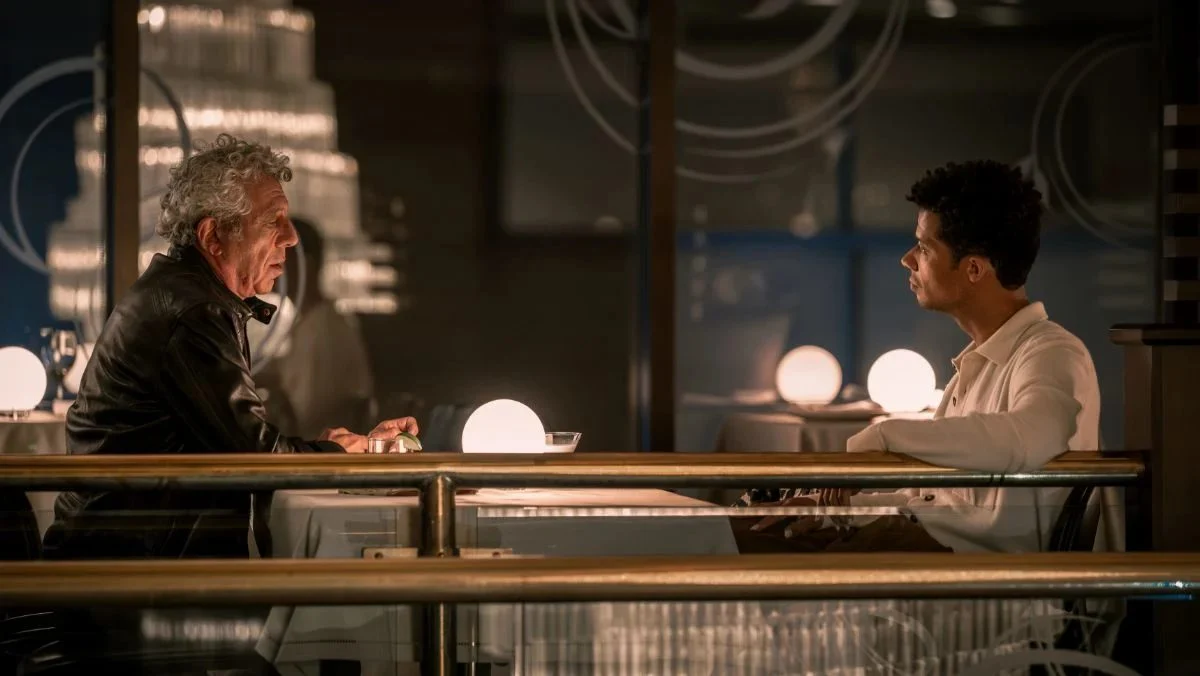
The second season of AMC’s The Vampire Lestat has already established itself as a masterclass in psychological tension and gothic romance. While the titular character remains a looming presence, the narrative spotlight has shifted in unexpected, poignant ways toward the show’s most complex human-turned-vampire: Daniel Molloy. Portrayed with razor-sharp wit and a newfound, chilling vulnerability by Eric Bogosian, Daniel’s arc in the early episodes offers a profound exploration of the "vampire bond"—a metaphysical connection between maker and fledgling that defies traditional definitions of love, manipulation, and autonomy.
The Core Phenomenon: A Rapture of the Soul
In the second episode of the current season, the veneer of Daniel’s cynical, blood-hookah-smoking persona momentarily cracks. During an uneasy, begrudging conversation with Louis de Pointe du Lac, Daniel describes a sensation that transcends typical vampiric senses.
"I have this weird thing that happens where suddenly everyone around me disappears, like the rapture’s come… and I… You know, I feel him," Daniel confesses.
This moment of uncharacteristic helplessness—delivered with a crushing weight by Bogosian—reveals the internal turmoil of a man who has spent a lifetime guarding his emotions, only to find himself tethered to a force he cannot control: Armand. For the "Devil’s Minion" shipping community, this sequence was not merely a plot point; it was a watershed moment. It suggests that the bond between Daniel and Armand is not merely one of sire and progeny, but a psychological eclipse where the rest of the world fades, leaving only the two of them in a singular, haunted orbit.
Chronology of a Connection: From Curiosity to Consummation
The exploration of this bond is rooted in the established lore of Anne Rice’s universe, yet the show takes bold liberties to heighten the emotional stakes.

- The Initial Inquiry: In episode two, Daniel initiates a meta-commentary on the vampire experience by asking Louis, "That happen with you and Lestat?" When Louis dismisses the notion—noting that such a profound sense of isolation and focus sounds "weird"—it highlights the unique intensity of the connection Daniel shares with Armand.
- The Weight of History: Louis’s own history with Lestat serves as the baseline for the "vampire bond." In season one, Louis described the connection as a state where "there are only two of you on the planet. Freedom and chastity wrapped in one person."
- The Episode Four Escalation: As of the fourth episode, the show moves from the abstract to the visceral. Viewers see the bond in action, confirming that Daniel’s experience is not a hallucination, but a terrifyingly real, perhaps even "messed up," manifestation of their tether. The world literally wipes away, leaving them alone, a dynamic that is as toxic as it is undeniably romantic.
Supporting Data: The Science of the Maker’s Bond
The "vampire bond" is a recurring motif in the Interview with the Vampire television canon, serving as a narrative shorthand for the loss of self. While the series has yet to fully detail the circumstances of Daniel’s turning—with showrunner Rolin Jones hinting that such revelations may be reserved for the fourth season—the evidence presented suggests a hierarchy of intensity.
In season two, the introduction of Madeleine (Louis’s attempt to provide a companion for Claudia) provided a secondary case study. The audience witnessed that a maker and fledgling can sense each other’s presence and absence, confirming that this is a standard, if powerful, biological trait of the undead. However, the Daniel-Armand dynamic appears to deviate from this standard. Unlike the bond between Louis and Madeleine, which feels like a tether of survival, the Daniel-Armand connection functions as an erasure of reality.
This leads to the prevailing fan theory: that the depth of their current connection is rooted in a forgotten past. If, as some book readers speculate, Armand and Daniel shared a history long before the current timeline, only for Armand to wipe those memories, then Daniel’s current "feeling" of Armand is a subconscious haunting—a repressed trauma masquerading as a romantic yearning.
Official Perspectives and Creative Intent
The creative team behind The Vampire Lestat has been careful to frame this dynamic through a lens of "beautifully romantic and deliciously toxic." By drawing parallels to other high-stakes fictional romances—such as the "I just feel you" line from the Marvel Cinematic Universe’s Wanda and Vision—the showrunners emphasize that the strength of this bond is defined by its ability to insulate the characters from the rest of the world.
Assad Zaman, who portrays Armand, has spoken in interviews about the complexity of playing a character who is simultaneously a mentor, a lover, and a master. The show’s choice to keep the specific nature of their turning scene shrouded in mystery is a calculated narrative decision. It forces the audience to engage with Daniel’s internal state: the confusion of a fledgling who is "lost, looking for an anchor that isn’t there," even as that anchor is the very person pulling him under.

Implications: A New Territory of Darkness
What does this mean for the future of the series? The implications are three-fold:
- The Subversion of Autonomy: If Daniel’s reality can be "wiped away" by the mere feeling of his maker, his agency as an independent character is severely compromised. This creates a fascinating tension: as an interviewer, Daniel is an observer of history; as a fledgling, he is a participant in a cycle of manipulation he may never fully comprehend.
- The "Devil’s Minion" Cannon: The show’s dedication to this pairing suggests that the relationship between Daniel and Armand will be the central axis upon which the later seasons turn. By leaning into the "romantic" aspect of the bond, the writers are signaling a shift away from traditional protagonist-antagonist tropes toward a more nuanced, character-driven exploration of power dynamics.
- The Narrative "Rapture": The show’s visual and thematic insistence that the world disappears when the two are connected implies that their story will eventually become a closed loop. Whether this leads to a grand, tragic union or a catastrophic falling out remains to be seen, but the narrative trajectory is undeniably leaning toward an epic, if dark, conclusion.
As the series continues, the "vampire bond" will likely serve as the ultimate litmus test for the characters’ morality. For Daniel, the question remains: is he being loved, or is he being consumed? And for Armand, the question is whether the bond is a genuine connection or a tool for control.
For now, the audience is left in the same position as the characters: seated, watching, and waiting to see if this haunting resonance will lead to salvation or destruction. As the episodes unfold, it is clear that the most dangerous, and perhaps the most important, story in The Vampire Lestat is not the one about the rock star vampire, but the one about the man who lost the world and found his maker in the void.
The Vampire Lestat airs Sundays at 9 pm ET/PT on AMC and AMC+. Fans of the series are encouraged to revisit the source material, Anne Rice’s "The Vampire Lestat," to track the subtle departures the show is taking in its exploration of this immortal connection.

 Siti Muinah
 Azzam Bilal Chamdy