Nana
Nana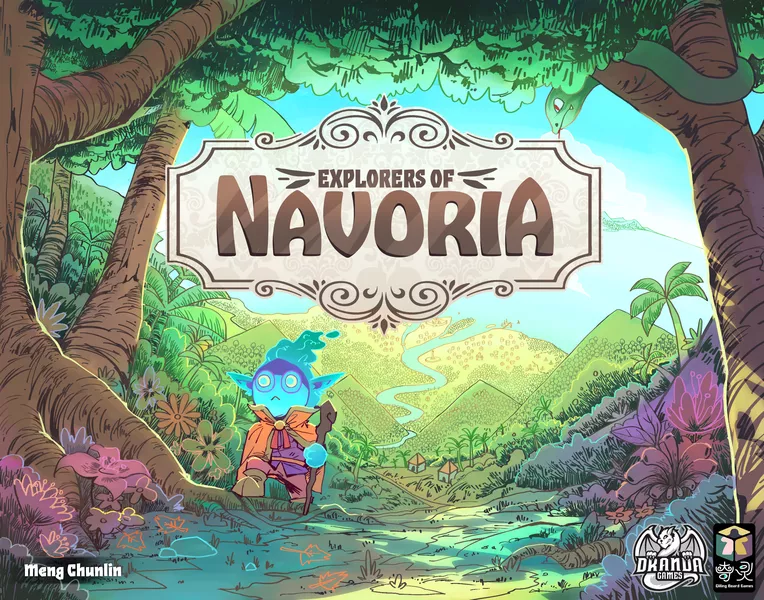
In the ever-expanding landscape of modern board gaming, few titles manage to strike the delicate balance between aesthetic charm and mechanical depth. Explorers of Navoria, the latest offering from publisher Qiling Board Games, designed and illustrated by the multifaceted Meng Chunlin, positions itself as a premier entry point for players looking to transition from classic gateway games to more robust tableau-building experiences. With its vibrant, whimsical fantasy world and a refined, rhythmic drafting system, the game has quickly become a focal point for families and casual strategy enthusiasts alike.
The Foundation: A Technical Overview
Explorers of Navoria is a game of exploration and development designed for two to four players, with an average playtime ranging between 40 and 80 minutes. At its core, the game functions as a lightweight drafting and tableau-building hybrid. Over the course of three distinct rounds, players assume the role of expedition leaders, recruiting diverse adventurers, harvesting precious resources, and pushing into the newly emerged continents of Navoria.
The mechanical loop is split into two critical phases: the Recruit Phase and the Gather Phase. During the Recruit Phase, players pull action tokens from a shared bag. These tokens dictate which cards can be pulled from the central display. Should the luck of the draw prove unfavorable, players are granted the tactical flexibility to visit the "town center," where they can claim tokens previously discarded by their opponents. This design choice introduces a layer of controlled mitigation, ensuring that even a poor pull from the bag does not result in a wasted turn.
Once the drafting concludes, the Gather Phase commences. Here, the tokens previously acquired are spent to activate specific regions on the main game board. These regions correspond to various strategic pillars: exploration, resource procurement, military influence, and income generation. The synergy between these two phases is the engine that powers the game; players must constantly weigh whether to prioritize immediate gains or invest in cards that provide passive income and specialized abilities for subsequent rounds.
Chronology of Gameplay: The Three-Round Expedition
The experience of Explorers of Navoria is defined by a consistent, predictable, and highly satisfying rhythm. The game is divided into three "seasons" of play, each following the same structural cadence, yet growing in intensity as the players’ individual tableaus evolve.
Phase 1: The Recruit Phase
This is the strategic heart of the game. Players interact with a dynamic card display. Because the pool of available adventurers and resources is limited, the Recruit Phase is a test of priorities. The inclusion of the "town center" mechanic serves as a clever catch-up mechanism and a tactical lever; by observing what their neighbors leave behind, savvy players can predict the flow of the game and adapt their long-term plans accordingly.
Phase 2: The Gather Phase
Following recruitment, the action becomes more deliberate. By placing their collected tokens onto the main board, players commit to their chosen path. Some may choose to focus on exploration tracks, which yield steady points and rewards, while others might lean into military cards or set-collection bonuses. This phase is characterized by a "first-come, first-served" scarcity that provides just enough tension to keep players engaged without descending into the cutthroat aggression often found in heavier wargames.
Phase 3: The Cleanup and Income
After actions are resolved, the game enters a maintenance cycle. Players collect the fruits of their labor—resources, coins, and victory points—before resetting the board for the next round. This segment of play provides a brief moment of reflection, allowing participants to analyze the board state and pivot their strategy before the next set of tokens is drawn.
Supporting Data: Pacing, Interaction, and Replayability
What distinguishes Explorers of Navoria from its peers is its commitment to pacing. At roughly 20 minutes per player, the game rarely suffers from "analysis paralysis." Each turn is distilled into a singular, meaningful choice. This efficiency ensures that the game maintains a high level of engagement, even in a four-player session.

Interaction Dynamics
The interaction in Explorers of Navoria is primarily indirect. It is a game of "parallel play," where participants build their empires side-by-side. While "hate-drafting"—the act of taking a card specifically to deny an opponent—is a viable strategy, it is never the primary focus. The game fosters a competitive environment centered on efficiency rather than conflict. For groups that enjoy building their own "engine" without the fear of direct sabotage, this is an ideal balance.
The Replayability Factor
Replayability is bolstered by the shifting availability of cards and objectives. Because the deck is never fully exhausted in a single session, every game presents a unique puzzle. One game might prioritize rapid exploration, while another might demand a focus on resource management or specific military combinations. The variability ensures that the "perfect" strategy is constantly shifting, requiring players to stay flexible rather than relying on a static, memorized opening.
Official Perspectives and Aesthetic Design
The artistic vision of Meng Chunlin is arguably the game’s strongest calling card. The visual language of Explorers of Navoria is one of "cozy fantasy." The board features bird-faced hot air balloons, charming explorer meeples, and vibrant, lush landscapes that feel inviting rather than intimidating.
The component quality mirrors this commitment to the theme. The use of a canvas bag for token drafting adds a tactile, physical satisfaction that digital counterparts simply cannot replicate. The cardboard tokens—depicting gems, swords, and coins—are clear and accessible, ensuring that even in the heat of a close match, the board state remains legible. By keeping the iconography clean and intuitive, Qiling Board Games has effectively lowered the barrier to entry, making the game accessible to younger players and those less familiar with complex rulebooks.
Implications for the Hobbyist Market
Where does Explorers of Navoria fit in the broader board game ecosystem? It is, fundamentally, a "gateway-plus" title. It is designed to be the next step for families who have exhausted Ticket to Ride or Sushi Go! and are looking for something with a bit more structural weight.
However, the game does acknowledge its own limitations. For the veteran hobbyist who craves the crushing complexity of a heavy economic simulation or a deep 4X game, Explorers of Navoria may eventually feel too streamlined. There is a desire among the community for an expansion—perhaps one that introduces a "fourth round" or advanced asymmetrical player powers—that could push this game from a "gateway" title into a permanent staple of the shelf.
Yet, its current state is arguably a success. By not overcomplicating the rules, it achieves a "low floor, high ceiling" design that welcomes newcomers while providing just enough depth to satisfy the casual gamer. The lack of heavy text and the reliance on clear, consistent iconography also makes it an excellent choice for multi-generational play, as evidenced by its success with players as young as six years old.
Conclusion: An Expedition Worth Taking
Explorers of Navoria is a triumph of accessible design. It captures the spirit of adventure without the baggage of dense rulebooks or aggressive player conflict. For those who appreciate the aesthetic satisfaction of titles like Wingspan or the drafting elegance of 7 Wonders, this game offers a fresh, inviting, and highly polished experience.
While it may not aim to dethrone the heavyweights of the strategy genre, it accomplishes something arguably more difficult: it makes the hobby feel inclusive, vibrant, and fun. For any family or gaming group looking to add a touch of whimsy and a solid, satisfying loop to their collection, Explorers of Navoria is a journey well worth embarking upon. With its excellent foundation and the potential for future growth through expansions, it is a game that is likely to remain on tables for many years to come.


 Sagoh
Sagoh
 Ammar Sabilarrohman