Siti Muinah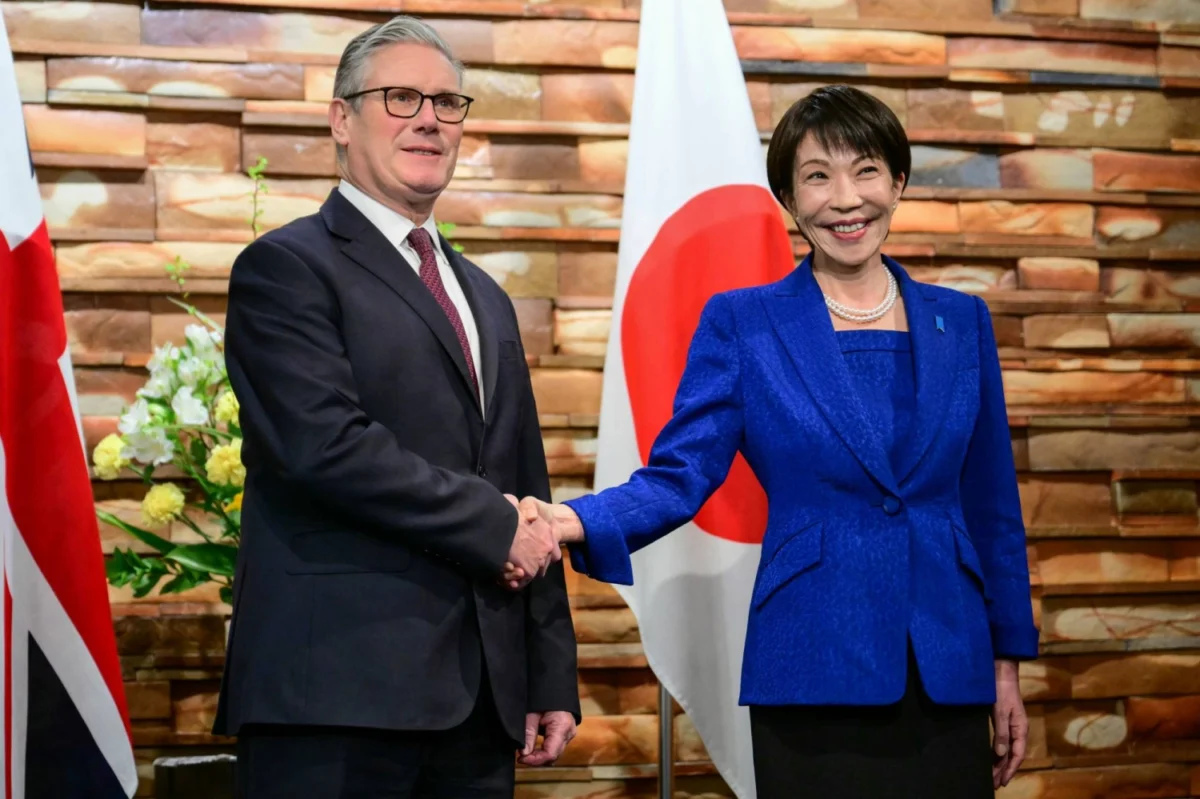
By International Affairs Desk
As British Prime Minister Keir Starmer prepares to sit down with his Japanese counterpart, Prime Minister Sanae Takaichi, this Sunday, the atmosphere in Tokyo is thick with diplomatic tension. At the heart of their high-stakes meeting lies the future of the Global Combat Air Program (GCAP)—an ambitious, multi-billion-pound trilateral initiative between the United Kingdom, Japan, and Italy intended to produce a sixth-generation stealth fighter jet by 2035.
What was once heralded as the pinnacle of defense cooperation between London, Tokyo, and Rome is now experiencing significant friction. Reports of internal U.K. budget disputes and subsequent delays in financial commitments have sent tremors through the partnership, prompting concerns among Japanese officials regarding Britain’s long-term strategic reliability.
The Genesis of a Technological Titan
To understand the gravity of this weekend’s summit, one must look back at the origins of the GCAP. Formally announced in December 2022, the program was designed to merge the British-led Future Combat Air System (often referred to as "Tempest") with Japan’s F-X program.
The goal was as much economic as it was military: to share the exorbitant research and development costs of a next-generation platform while creating a interoperable jet that could dominate the skies of the 2030s and beyond. Italy’s integration into the program solidified its status as a cornerstone of Western security in the Indo-Pacific and European theaters. The GCAP is not merely an aircraft; it is a complex ecosystem of artificial intelligence, advanced sensors, and next-generation weaponry intended to replace the aging Eurofighter Typhoon and the Mitsubishi F-2.
Chronology of a Mounting Crisis
The current impasse is the result of a slow-burning friction within the U.K. government that has spilled over into the international arena.
- December 2022: The U.K., Japan, and Italy sign the historic treaty to develop the GCAP, aiming for a 2035 operational deployment.
- Early 2025: Expectations were high that the U.K. Ministry of Defence (MoD) would finalize its multi-year funding commitment as part of a broader 10-year defense investment plan.
- Mid-2025: A "spending row" erupts between the British Ministry of Defence and the U.K. Treasury. The Treasury, citing fiscal constraints and competing demands on the national budget, pushes back against the scale of the initial investment.
- Late 2025: The anticipated announcement of the U.K.’s financial commitment is postponed, leaving international partners and industry stakeholders in the dark.
- January 2026: Prime Minister Starmer and Prime Minister Takaichi meet in Tokyo. Public optics remain professional, but behind closed doors, Japan voices growing frustration over the perceived lack of British urgency.
- June 2026: Ahead of the current Sunday summit, Japanese media reports signal that Tokyo is seeking ironclad guarantees that London will not prioritize domestic budgetary austerity over this critical geopolitical commitment.
The Battle of the Budgets: The U.K. Perspective
The core of the issue lies in the tension between the U.K.’s global security ambitions and its current economic realities. The Starmer administration inherited a complex fiscal landscape. The U.K. Ministry of Defence has long argued that the GCAP is essential to maintain the country’s sovereign capability to manufacture combat aircraft—a strategic industry that supports thousands of high-tech jobs.
However, the Treasury, under pressure to maintain fiscal discipline, has questioned the timing and structure of the payments. For the Treasury, the GCAP is a massive, long-term capital expenditure project in an era of high interest rates and stagnant growth. For the MoD, any delay is seen as a breach of trust with international partners and a potential setback to the "Global Britain" narrative.
The delay in funding has created a vacuum of confidence. Industry leaders in the U.K., including BAE Systems, have privately expressed concerns that the uncertainty is preventing long-term supply chain planning, which could lead to cost overruns—a classic irony in government procurement.
Japan’s Strategic Anxiety
For Prime Minister Sanae Takaichi, the stakes are existential. Japan’s security environment has deteriorated significantly over the last decade, marked by increased naval incursions by China and a nuclear-armed, unpredictable North Korea.

Japan is undergoing its largest military buildup since World War II. For Tokyo, the GCAP is not just a procurement project; it is a manifestation of Japan’s move toward a more proactive, internationalist defense posture. If the U.K.—a G7 partner and a key security collaborator—appears hesitant or incapable of meeting its financial obligations, it undermines the credibility of the entire regional security architecture Japan is attempting to build.
Takaichi is expected to press Starmer for a definitive timeline. In Tokyo’s view, if the GCAP is to succeed, it requires "political continuity." The message from the Kantei (the Prime Minister’s office) is clear: Japan is ready to invest, but it will not do so if it feels it is shouldering the risk alone.
Implications for Global Security and Industry
The consequences of a failure or significant stall in the GCAP would be profound.
1. The Erosion of Multilateral Defense Trust
If the U.K. is perceived as an unreliable partner, it will damage the prospects of future "AUKUS-style" arrangements. The GCAP was designed to show that Western democracies could integrate their defense industrial bases to counter autocracies. A collapse would suggest that domestic political volatility makes such grand-scale international cooperation unsustainable.
2. The Technological Gap
Without the GCAP, the U.K. would be forced to either purchase American-made aircraft, such as the F-35, or settle for incremental upgrades to its existing fleet. This would result in a loss of sovereign control over the fighter jet’s software and weaponry—a prospect that the British defense establishment views as a strategic defeat.
3. Industry Stagnation
The aerospace sector, particularly in the U.K. and Italy, is heavily reliant on the GCAP for R&D funding. A cancellation would lead to a "brain drain" of engineering talent and a permanent decline in the ability of these nations to compete with the United States and China in the high-stakes aerospace market.
Official Responses and the Path Forward
While official spokespeople from both the U.K. and Japanese governments have maintained that the project is "on track," the urgency of this weekend’s meeting suggests otherwise. Diplomatic sources indicate that Starmer is likely to bring a proposal to Tokyo intended to reassure Takaichi that the U.K.’s commitment is absolute.
Whether this involves a revised payment schedule, a formal treaty-level guarantee, or a strategic partnership agreement remains to be seen. What is certain is that the honeymoon period for the GCAP is over. The program has moved from the visionary stage to the implementation stage, where political promises are measured against the cold reality of national balance sheets.
As Starmer and Takaichi shake hands in Tokyo—a ritual of international diplomacy—the eyes of the global defense industry will be fixed on the subsequent press statements. If the two leaders emerge with a unified plan, the GCAP may yet become the gold standard for 21st-century military cooperation. If not, the project may be remembered as a bold but ultimately failed ambition, caught in the crossfire of domestic politics and fiscal fragility.
The world watches to see if the U.K. can bridge the gap between its strategic vision and its economic reality. The skies of 2035 depend on it.


 Neng Nana
 Asro
Asro