Sul sul! For millions of players across the globe, these two simple words serve as the universal greeting of an entire virtual civilization. If you have ever found yourself falling down the rabbit hole of The Sims—whether you were meticulously micromanaging the household dynamics of the Goth family, spending six hours designing the perfect Victorian-style manor, or obsessing over the precise color palette of your Sim’s outfit—you know exactly what that phrase means. It is never just a "quick session" with The Sims; it is a lifestyle, a creative outlet, and, quite often, a lesson in a language that technically doesn’t exist.
Welcome to the world of Simlish, the charming, nonsensical, and surprisingly consistent language that has defined The Sims franchise since its inception. To celebrate this unique piece of gaming history, we are diving deep into the linguistics, the development, and the legacy of the most recognizable gibberish in interactive entertainment.
The Genesis of a Language: A Chronology of Simlish
The story of Simlish did not begin with a linguistic master plan. When Will Wright and the team at Maxis were developing the original The Sims (2000), they faced a significant creative hurdle: how do you provide dialogue for characters without forcing players to read thousands of lines of repetitive, localized text?
The Early Experiments
Initially, the team experimented with various languages—including French, Ukrainian, and even Tagalog—to see if a real-world tongue could provide the necessary texture to the game. However, the developers quickly realized that hearing the same pre-recorded phrases over and over would become grating and repetitive for the player. If a Sim said "I am hungry" in English, the thousandth time that phrase triggered, the player would be annoyed. If a Sim said it in an unrecognizable, melodic, and emotive gibberish, it became a sound effect rather than a linguistic demand.
The "Simlish" Breakthrough
The breakthrough came when the team decided to embrace "Simlish." By blending fragments of various languages with emotional inflection, they created a tongue that conveys meaning through tone and context rather than dictionary definitions.
By the time The Sims 2 arrived in 2004, the language had become more structured. Voice actors began recording lines that felt more "human," with consistent intonations for anger, joy, love, and frustration. This progression continued through The Sims 3 and culminated in The Sims 4, where the phonetic depth of the language reached its peak, allowing for nuanced conversations that seem to capture the chaotic energy of life itself.
The Linguistic Architecture: How Simlish Works
While Simlish is technically a "conlang" (constructed language), it is not a complete linguistic system like J.R.R. Tolkien’s Elvish or Marc Okrand’s Klingon. Instead, it is an improvisational tool designed to evoke human emotion.
Phonetic Flexibility
Simlish is characterized by its reliance on vowel-heavy sounds and percussive consonants. It mimics the cadence of human speech, utilizing rising and falling intonations to signal intent. When a Sim is romantic, the language sounds fluid and melodic; when a Sim is angry, the sounds become clipped, harsh, and guttural. This is the "secret sauce" of Simlish: the player understands what is happening not because they know the word for "oven," but because they hear the panic in the Sim’s voice when the kitchen is engulfed in flames.
The Role of Voice Acting
The success of Simlish rests entirely on the shoulders of its voice actors. For decades, performers like Gerri Lawlor and Stephen Kearin have been the voices of the franchise. These actors are not reading scripts; they are improvising based on a scene’s emotional requirements. By allowing actors to "ad-lib" in Simlish, the developers ensured that the game felt alive and responsive. When you hear a Sim laugh, it is a genuine performance, not a digital synthesis of a human chuckle.
Supporting Data: Why We Love the Gibberish
Why has this fictional language persisted for over two decades? The answer lies in the psychological phenomenon of "projective play."
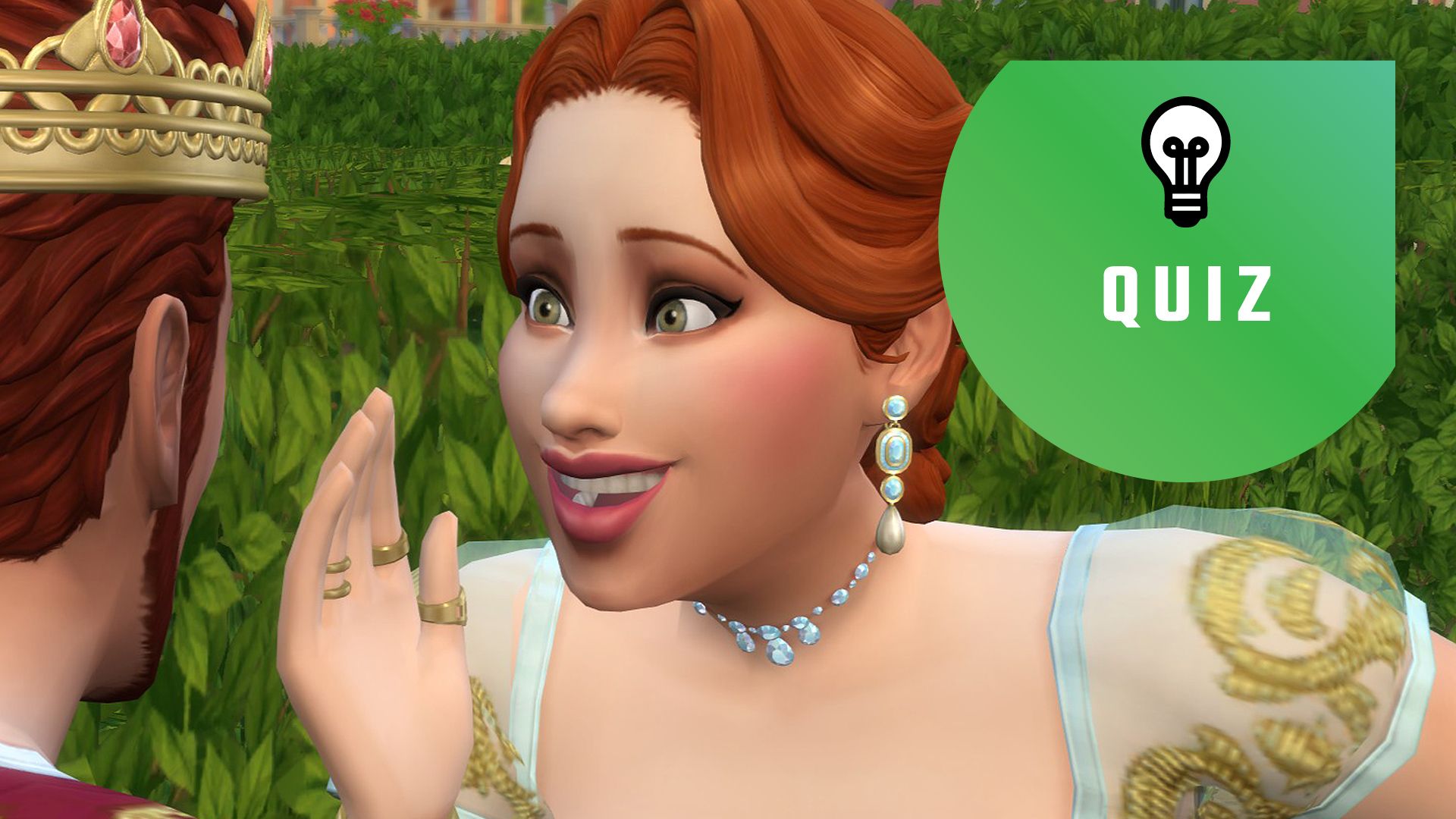
- Emotional Resonance: Because Simlish lacks a concrete vocabulary, players are free to project their own narratives onto the characters. If a Sim says, "Dag dag!" while waving, the player interprets it as a goodbye. The lack of rigid rules allows the game to remain universally accessible across all cultures and languages.
- The "Earworm" Effect: Much like the iconic The Sims soundtrack, Simlish phrases have become ingrained in gaming culture. Sul sul (hello), Dag dag (goodbye), and Nooboo (baby) are phrases that transcend the screen.
- Pop Culture Integration: The Sims Studio famously partnered with major music artists—from Katy Perry to Paramore and Depeche Mode—to record their hit songs in Simlish. This turned the language into a marketing juggernaut, allowing players to hear their favorite tracks in a "new" way, further cementing the language’s place in the zeitgeist.
Official Responses and Linguistic Theory
The team at Maxis and Electronic Arts have long maintained that Simlish is a work-in-progress, constantly evolving to meet the needs of the game. In several developer diaries and behind-the-scenes interviews, the creative leads have noted that they avoid creating a formal "dictionary" for the language.
"We want it to sound like a language you almost understand," said a member of the audio team in a 2014 retrospective. "If we gave it a grammar structure and a set vocabulary, it would become a barrier to entry. We want the player to feel like they are observing a secret, magical world that they are intimately connected to, without needing a textbook."
This philosophy prevents the language from becoming static. By keeping the rules fluid, the audio engineers can introduce new sounds as the game mechanics evolve, ensuring that the "Simlish" of The Sims 5 (or future installments) will feel just as fresh and expressive as it did in the early 2000s.
Implications: The Future of Virtual Communication
The existence of Simlish raises an interesting question for the future of interactive AI and gaming: is total linguistic accuracy necessary for immersion?
As we move toward a future filled with advanced NPCs (non-player characters) capable of generating complex dialogue, the "Simlish model" serves as a reminder that feeling is often more important than understanding. Even with the advent of AI, there is a distinct charm to the emotive, non-verbal communication that Simlish provides. It is a language of pure expression—a testament to the idea that games don’t always need to tell us what to think; sometimes, they just need to help us feel.
Test Your Knowledge
Now that we have explored the history and the heart of this iconic language, it is time to put your expertise to the test. Have you been playing long enough to decipher the nuance of a Sim’s plea for help or their flirtatious banter?
In honor of the series’ impressive linguistic feat, we have teamed up with our own The Sims series scholar, Lauren Morton, to curate a comprehensive quiz on all things Simlish. From basic greetings to the more obscure emotional outbursts, this quiz will determine if you are a casual player or a true "Simlish" master.
[Click here to take the PC Gamer Simlish Quiz]
You have exactly eight minutes to interpret these 10 phrases. Be warned: some of these are tricky, and only those who have spent countless hours in the The Sims 4—or perhaps even the original classics—will achieve a perfect score. Once you’ve completed the quiz, be sure to drop your results in the comments section below. Are you a linguistic virtuoso, or do you need to go back to Simlish 101?
Regardless of your score, one thing is certain: as long as we continue to play, sul sul will remain the most welcoming phrase in the world of gaming. Happy simming!