

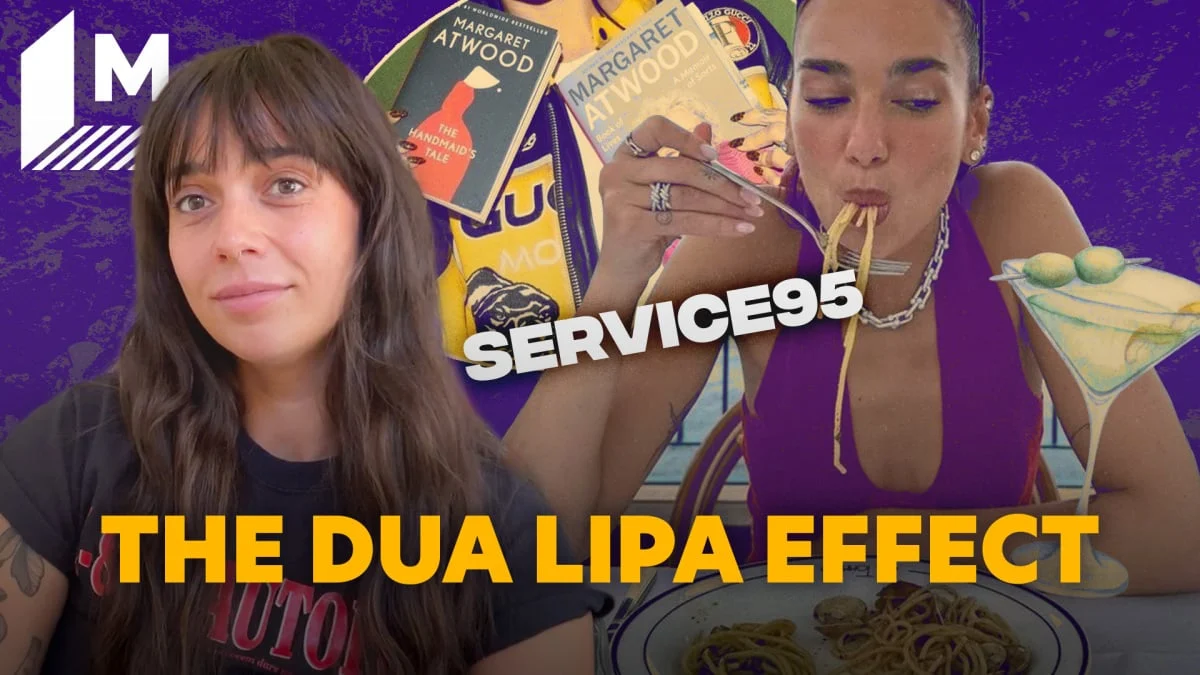
In the digital landscape of 2026, where the "hustle culture" of the previous decade has largely collapsed under the weight of burnout and economic precarity, a new archetype of aspirational living has emerged. At the center of this cultural shift is global pop icon Dua Lipa. She is not merely a chart-topping musician; she has become the internet’s unofficial mood board for a specific, refined version of adulthood—one that prioritizes intellectual curiosity, tactile experiences, and the unapologetic pursuit of pleasure.
The Architecture of an Aspirational Life
Dua Lipa’s public persona offers a masterclass in modern branding. Unlike the traditional celebrity machine, which often focuses on the transactional nature of fame or the conspicuous consumption of wealth, Lipa’s digital footprint—curated across Instagram and her editorial platform, Service95—projects a life of "intentional abundance."
Her feed is a collage of what many young people today categorize as the "ideal" life: European summer excursions, immersive visits to international art galleries, literary deep-dives, and social circles defined by creative camaraderie. This is not the "luxury for luxury’s sake" associated with the influencer class of the early 2020s. Instead, it is a curated catalog of enrichment.
Writer Madison Huizinga has dubbed this phenomenon "The Dua Effect." It describes a brand identity built around the concept of being a perpetual "student of life." By weaving together threads of activism, travel, and high-culture curation, Lipa sells a fantasy that is profoundly resonant in the current socio-economic climate: the idea that a person can be successful without having their soul consumed by the machinery of their own labor.
Chronology: The Evolution of the "Cultural Concierge"
The transition from pop star to lifestyle curator did not happen overnight. It was a strategic, multi-year evolution that mirrored the changing interests of her global fanbase.
- 2020-2021 (The Lockdown Pivot): As the world shifted into isolation, Lipa maintained an active digital presence that focused on "slow living." Her posts began to emphasize reading lists, cooking, and home aesthetics, signaling a move toward intellectual engagement.
- 2022 (The Launch of Service95): Lipa officially launched Service95, an editorial platform and newsletter. This moved her brand beyond social media snapshots into long-form content. By positioning herself as a "cultural concierge," she began curating not just her life, but the lives of her followers, offering recommendations for books, restaurants, and social causes.
- 2023-2024 (Global Curation): Partnerships with global tech entities, such as Google for curated travel maps, cemented her status as a cultural authority. She began to frame her travel not as mere vacationing, but as a form of cultural literacy.
- 2025-2026 (The Current Zeitgeist): The "Dua Effect" reached its zenith. Lipa’s aesthetic has become synonymous with the "Euro summer" fantasy, a recurring trend on platforms like TikTok that romanticizes the concept of taking time to "live" rather than just "produce."
Supporting Data: The Decline of the "Grind"
The obsession with Lipa’s lifestyle is not coincidental; it is a direct reaction to the exhaustion of the "hustle." Data from recent economic and social studies indicates a seismic shift in how Gen Z and younger Millennials view professional stability.

According to various labor reports from 2025 and 2026, the traditional "rise and grind" mentality has seen a precipitous decline in popularity. A significant percentage of young workers now prioritize "life-work balance" over climbing the corporate ladder. In this environment, Lipa serves as a beacon. She works hard—her touring schedule and business ventures prove that—but she successfully decouples her work from her identity on her digital platforms.
The internet’s fascination with her lifestyle is effectively a protest against the "always-on" economy. When followers look at her photos, they aren’t just looking at a beautiful person; they are looking at someone who has seemingly mastered the ability to carve out a private, enriched existence in an increasingly public and precarious world.
The Tension of the Unattainable
While the "Dua Effect" is aspirational, it is also rooted in a fundamental tension: it is not replicable for the vast majority of her audience.
Sociologists point out that the fantasy of "living beautifully" requires a level of financial and social capital that is largely out of reach for the average person. The very things that make Lipa’s life so enviable—the ability to move between countries, the time to read deeply, the access to exclusive cultural institutions—are luxuries facilitated by her immense success.
There is an inherent irony in the fact that her lifestyle is marketed as a "free" or "accessible" aesthetic. While anyone can pick up a book or visit a local museum, the global, high-gloss version presented by Lipa requires a specific, top-tier economic baseline. This creates a psychological gap: followers consume the content as a form of "lifestyle therapy," but the reality remains that the "Dua Effect" is a fantasy, not a roadmap.
Official Perspectives and Industry Implications
Industry experts argue that Lipa’s platform, Service95, is a blueprint for the future of celebrity-driven commerce. By moving away from "sponsored posts" for consumer goods and toward "sponsored curation" of experiences, she has created a higher-trust, higher-value connection with her audience.

"She isn’t selling you a product; she is selling you a standard of taste," says one digital marketing analyst. "When she recommends a restaurant or a book, she is trading on her reputation as a person of discernment. It’s a sophisticated evolution of the influencer model."
However, critics remain wary of the implications. By framing a life of extreme privilege as a "mood board for adulthood," does she inadvertently contribute to a culture of inadequacy? The pressure to curate a "beautiful" life—even one that emphasizes culture and rest—can become just another form of performance, another task on a to-do list that already feels too long.
Implications for the Future
As we look toward the latter half of the decade, the "Dua Effect" serves as a mirror for our collective desires. We are currently a society in search of meaning outside of productivity. We want to be the kind of people who have time to read, who have the energy to host friends, and who possess the curiosity to explore the world.
Whether or not the obsession with Lipa persists, the underlying impulse that drives it—the desire for a life that feels more "human" and less "corporate"—is likely to grow. The challenge for the next generation of digital natives will be to differentiate between the fantasy of that life and the reality of achieving it within their own means.
Dua Lipa has succeeded in becoming the ultimate avatar for this modern yearning. She represents the "student of life" we all wish we had the time and space to become. For now, we will continue to scroll, to bookmark her recommendations, and to wonder what it would feel like to inhabit that version of adulthood, even if only for the length of a double-tap.
Summary of Key Findings:
- Cultural Shift: The internet has moved from celebrating "hustle culture" to romanticizing "curated leisure," a trend embodied by Dua Lipa.
- Strategic Branding: Through Service95, Lipa has evolved from a pop star into a "cultural concierge," leveraging taste as a primary commodity.
- Economic Context: The "Dua Effect" is a direct response to Gen Z’s rejection of the "grind," reflecting a desire for a life less defined by productivity.
- The Reality Gap: Despite its popularity, the lifestyle is largely non-replicable, creating a tension between the aspirational content and the economic reality of the audience.











