In a landscape increasingly dominated by generative artificial intelligence, Meta Platforms Inc. continues to aggressively expand its footprint. Despite mounting public scrutiny regarding the ethical implications of AI-generated content across its ecosystem, the tech giant has unveiled "Pocket," a novel creative platform designed to allow users to generate interactive "gizmos"—small, functional games or digital tools—solely through text-based prompts.
This move marks a significant pivot in how Meta intends to engage its user base, shifting from a passive consumption model toward an active, generative creation environment. By removing the technical barriers to entry for game development and software design, Meta aims to democratize the act of creation. However, as the digital world grapples with the quality versus quantity debate, the introduction of Pocket raises fundamental questions about the nature of artistry, the sustainability of AI-driven platforms, and the potential for a "content glut" that may ultimately stifle the very creativity it seeks to foster.
The Core Concept: What is Pocket?
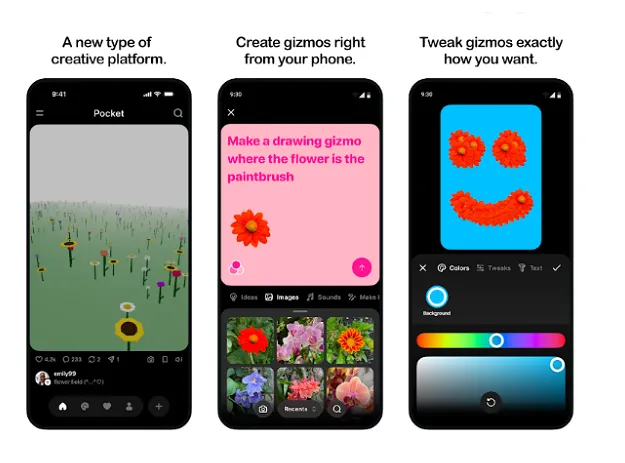
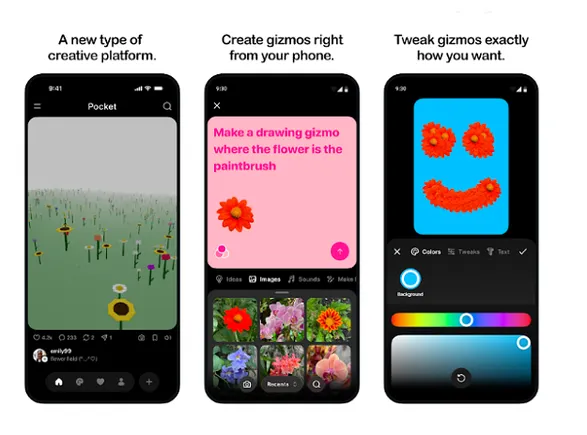
At its simplest, Pocket is an experimental sandbox for non-technical users. Available via the Google Play Store, the app is marketed as a creative hub where users can conceptualize and manifest interactive tools by describing them in plain English.
Meta describes these outputs as "gizmos"—a term intended to evoke simplicity and utility. If a user wants to build a simple space shooter game or a custom productivity timer, they need only type a descriptive prompt. Meta’s underlying AI models then interpret these instructions to assemble the logic, interface, and mechanics of the gizmo.
The platform also functions as a social network for these creations. Users can browse a curated feed of community-generated gizmos, interact with them, "like" them, and leave comments. This social layer is intended to gamify the creative process, encouraging users to iterate on popular ideas and elevate the most engaging projects.
Chronology: The Evolution of Meta’s AI Push
Meta’s journey toward the launch of Pocket did not happen in a vacuum. It is the latest development in a long-term strategic shift initiated by CEO Mark Zuckerberg following the company’s massive pivot toward the "Metaverse" and, subsequently, its total commitment to generative AI.
- Early 2023: Meta began integrating Llama (its Large Language Model) into various internal workflows, signaling a move toward generative features for its core platforms, Facebook and Instagram.
- Late 2023: Meta introduced AI stickers, image generation, and chat-based personas, testing the waters of how users would interact with AI-generated assets in social contexts.
- Early 2024: Concerns regarding AI-generated "slop"—low-quality or deceptive content—began to plague social media platforms. Meta faced intense criticism for its handling of AI-labeled media.
- Mid-2024: The development of the "Pocket" project was finalized, aiming to move beyond image generation and into the realm of functional software development.
- Current Phase: The public release of Pocket marks the company’s first direct attempt to turn its user base into a workforce of non-developer software creators.
The Mechanics of "No-Code" Creativity
Meta’s messaging surrounding Pocket is clear: it is designed to eliminate the need for traditional programming languages like C++, Python, or JavaScript. By abstracting the "coding" process entirely, the company is betting that human intent, rather than technical proficiency, is the primary bottleneck to innovation.
However, labeling these outputs as "coded" is, in many ways, a misnomer. The AI is not teaching users how to build software; it is acting as a black-box translator that maps natural language to pre-defined logic structures. This "vibe-coding" approach—where the aesthetics and general behavior are prioritized over structural integrity—is a hallmark of the current generative AI wave.
While this allows for near-instant results, it raises a significant technological hurdle: the "ceiling of complexity." Because the AI is constrained by the parameters set by its developers, users will inevitably find themselves unable to create anything that diverges significantly from the templates the AI understands. This results in a plateau of innovation, where thousands of games look and feel virtually identical, differentiated only by their visual themes.
Implications: The Quality vs. Quantity Dilemma
The primary criticism leveled against Pocket is not one of functionality, but of value. In the creative arts, the history of human achievement is built on the refinement of skill through trial and error. Whether it is a classical painting or a modern mobile game, the "great" works of history are rarely the product of a single prompt; they are the result of years of iterative development, critique, and technical mastery.
The "Boring" Output Problem
The fundamental risk for Pocket is the proliferation of low-effort, low-quality content. If anyone can generate a game, the value of an individual game approaches zero. If a platform is flooded with thousands of repetitive, uninspired "gizmos," the user experience will inevitably degrade. When the novelty of "making something" wears off, the platform must rely on the quality of the content to retain users. If the output remains consistently "boring," the platform risks becoming a digital graveyard of abandoned projects.
The Death of Craftsmanship
Critics argue that by making creation too easy, Meta is devaluing the craft of game development. There is a reason that professional studios spend months or years on a single project: they are solving complex problems related to user experience, narrative pacing, and balance. AI-generated gizmos, by their nature, bypass these developmental stages. While this might lead to a democratization of ideas, it may also lead to a "dumbing down" of digital interactive media.
Supporting Data and Market Reception
While Meta has not released specific usage statistics for the Pocket app, early sentiment analysis from the developer community and tech reviewers highlights a stark divide. On one side are the "AI enthusiasts" who view this as a gateway for creative expression for those who would otherwise never have the chance to build. On the other are industry professionals who view the app as a superficial gimmick that ignores the rigors of software engineering.
Data from similar generative AI platforms (such as those for image or text generation) shows that while initial engagement is often high, retention rates drop precipitously once users realize the limitations of the technology. The "wow" factor of seeing a prompt turn into a game typically lasts for a few sessions. Unless Meta can integrate deeper, more complex development tools into the app, the "gizmos" will likely fail to compete with even the simplest of traditionally coded indie games.

Official Responses and Strategic Vision
Meta has maintained a defensive, yet optimistic, stance regarding its AI projects. In public statements, Meta executives have emphasized that their goal is to provide users with "superpowers." They frame Pocket not as a replacement for professional game development, but as an entry point for creative expression.
"We are giving people the tools to turn their imaginations into reality," a spokesperson might argue, highlighting that many of the most successful cultural phenomena started with simple, grassroots tools. Meta’s leadership seems to believe that by casting a wide net, they will inevitably discover a "diamond in the rough"—a creator who uses the platform to build something truly groundbreaking.
However, the company remains largely silent on the issue of platform sustainability. They have not yet articulated a plan for how they will filter the "noise" of millions of low-effort creations to ensure that the platform remains usable for the average person.
The Future of AI-Driven Platforms
The fate of the Pocket app will likely serve as a litmus test for the viability of generative AI in social media ecosystems. If the app manages to cultivate a dedicated community that builds, plays, and improves upon each other’s work, it could become a staple of the Meta ecosystem. If it fails, it will serve as a cautionary tale about the limits of "democratized" creation.
The reality remains that creativity is a process, not an outcome. While AI can certainly assist in the generation of assets and basic structures, it cannot currently replicate the spark of human inspiration that makes a piece of art or a game truly compelling. The "wavelength" of a great creator—the ability to understand what works, what doesn’t, and why—is honed through experience, not through a prompt box.
As we look toward the future, it is clear that AI will play a role in the creative landscape. However, the success of platforms like Pocket depends entirely on whether they can move beyond the "AI-generated" gimmick and foster an environment where human ingenuity remains the driving force. Without this, Meta’s latest endeavor may find itself in the same place as many of its previous experiments: a fleeting curiosity, ultimately destined to be forgotten in the ever-shifting sands of the digital age.
Ultimately, the users will decide. If they find the gizmos worth their time, Pocket will thrive. But if the app becomes a conduit for endless, uninspired content, the platform will likely be abandoned by the very people Meta is trying to empower. The irony of the AI age is that while we are building faster, better, and more efficient ways to create, we are still struggling to answer the most basic question of all: Is it actually worth playing?