Raul Delapena Setiawan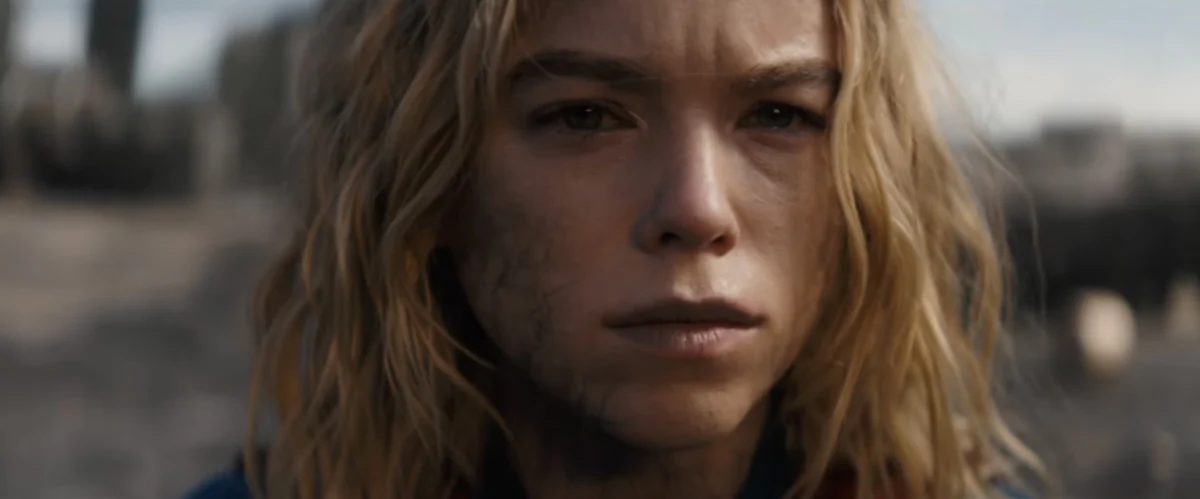
On paper, Supergirl appeared to be the quintessential “easy sell.” As the second pillar of the ambitious DCU film reboot, it arrived in the wake of 2025’s Superman, a film that successfully cracked a long-forgotten code for the character and was met with near-universal acclaim from both critics and audiences.
The film introduced Milly Alcock as the formidable Kara Zor-El, a character defined by her sharp edges—a “hard-drinking little cousin” who retreats to red-sun planets to numb the existential weight of her heritage. The narrative foundation seemed ironclad: it was an adaptation of the acclaimed 2021 comic run Supergirl: Woman of Tomorrow by Tom King and Bilquis Evely, a story lauded for its emotional depth, sweeping scope, and nuanced take on the nature of vengeance. Yet, despite the talent, the pedigree, and the built-in audience goodwill, the film has stumbled, becoming a case study in how a blockbuster can lose its way when it ignores the heart of its own story.
The Weight of Expectation: A Troubled History of Female-Led Superheroes
The failure of Supergirl does not exist in a vacuum; it sits atop a long, fraught history of Hollywood’s struggle to market and produce female-led superhero features. For over a decade, the Marvel Cinematic Universe (MCU) famously hesitated to greenlight a Black Widow solo film, despite her status as a foundational member of the original Avengers. Captain Marvel eventually burst onto the scene, but the lack of institutional investment in its marketing was palpable. While 2017’s Wonder Woman offered a momentary respite from this trend, the subsequent sequel’s baffling Big-style plot arc and the inexcusable misuse of the villain Cheetah derailed the momentum.
Even projects that succeeded creatively, such as Cathy Yan’s Birds of Prey, were hampered by box office challenges, leaving fans frustrated by a lack of long-term commitment from studios. When Black Panther: Wakanda Forever focused heavily on its female cast, it was a move born of necessity—the tragic death of its leading man—resulting in a film that felt structurally ungainly. Consequently, Supergirl arrived with gargantuan boots to fill. It was expected to be a course correction for the genre, but instead, it has seemingly repeated the industry’s most persistent mistakes.
A Narrative Out of Sync: From ‘True Grit’ to Derivative Blockbuster
The premise of the film begins with promise: a 13-year-old alien girl named Ruthye Marye Knoll (Eve Ridley) seeks retribution against a brigand named Krem of the Yellow Hills (Matthias Schoenaerts) for the massacre of her family. Ruthye, a determined and compelling protagonist, seeks aid to avenge her father’s death. Kara Zor-El, initially preoccupied with her own hedonistic escapism on Ruthye’s homeworld, is thrust into the fray when Krem steals her ship and poisons her canine companion, Krypto.
In the original comics, Krypto’s health crisis is a narrative ruse, a clever subversion of stakes. The film, however, opts for a literal, high-stakes ticking clock, forcing a shallow sense of urgency upon the plot. This is emblematic of a broader issue: the film’s inability to trust its own source material. Where the comic functioned as a space-faring True Grit—with Ruthye as the sharp-tongued narrator and Kara as the flawed, reluctant mentor—the film opts for a generic, "gritty" interplanetary adventure.
The ‘Gunnification’ of the DCU: Aesthetic and Thematic Disconnects
The script, penned by Ana Nogueira, bears the unmistakable, heavy-handed fingerprints of DCU architect James Gunn. The film’s world-building feels like a Xeroxed version of the Guardians of the Galaxy aesthetic: everything is familiar, yet inexplicably dirtier. The inclusion of arbitrary pop-culture references—such as a dive-bar alien crooning "The Girl From Ipanema"—serves no narrative purpose, functioning only as a stylistic affectation that pulls the viewer out of the immersion.
Furthermore, the film’s approach to linguistics and culture is frustratingly inconsistent. The characters navigate a galaxy with a "common tongue," yet the rules of this language shift to suit the plot’s convenience, making the universe feel small and poorly realized. When the film introduces the antagonists—simply referred to as "The Brigands"—the narrative collapses into a derivative echo of Mad Max: Fury Road.
The film introduces a grim "sex slavery" angle—the kidnapping of women as "brides" for an all-male society—that was not present in the source material. By shoehorning this dark, heavy subject into a film that is supposedly meant for a broad, younger audience, the production creates a tonal dissonance that is difficult to reconcile. This plot point is not a mere background detail; it is the entire engine of the film, yet it is handled with a clumsy, performative severity that borders on the exploitative.
Ethical Concerns and the Message to Young Viewers
Perhaps the most egregious failure of the film is its moral center. The movie spends its duration lecturing the audience—and specifically, the 13-year-old Ruthye—that seeking revenge against a mass murderer will "change her" and cause her irreparable harm. This argument is presented by Kara, who, despite having lost her own world, acts as if she is a veteran of some moral battlefield she hasn’t actually fought on.
To tell a young girl that she is morally tarnished for wanting to end the life of a man who slaughtered her family and views her as a commodity is, frankly, grotesque. It is an irresponsible message to send to young women, stripping them of agency and framing their righteous anger as a flaw. In the comics, Ruthye’s journey is one of growth and complex self-actualization; in the film, she is a vessel for a poorly conceived, preachy moral lesson that collapses under the slightest critical scrutiny.
The Lobo Factor: When Fan Service Masks Rot
The film attempts to distract from these failings with the long-awaited arrival of Jason Momoa’s Lobo. While Momoa captures the chaotic energy of the character, his presence is used primarily as a vehicle for the film’s most disappointing choices. This includes the use of the nickname “Tits” (or "Ditz," depending on the viewer’s hearing) directed at Supergirl. Whether the word was intended as a juvenile insult or a degrading slur, it highlights the film’s inability to treat its female lead with the baseline respect she deserves. It is a cynical, "edgy" inclusion that feels out of place in a modern superhero landscape, suggesting that the studio is still relying on outdated tropes to bridge the gap between "family entertainment" and "adult-oriented" grit.
Implications for the Future of the DCU
The implications of Supergirl are profound for the fledgling DCU. The film’s inability to differentiate itself from the tropes of previous cinematic universes, combined with its failure to treat its source material with the reverence it deserves, bodes poorly for the studio’s long-term strategy.
When a film based on such rich, critically acclaimed source material is so drastically "re-imagined" to fit a studio-mandated aesthetic, the result is a product that pleases no one. The visual language feels derivative, the tone is disjointed, and the moral messaging is, at best, confused and, at worst, harmful.
While DCU head James Gunn has expressed a desire to build a "connected universe" that respects the history of the characters, Supergirl suggests a disconnect between that vision and the reality of the creative output. If the studio continues to force a specific, cynical, and "grungy" aesthetic onto every project, it risks alienating the very audience it spent years cultivating with the success of Superman.
Conclusion: A Lesson in Missed Potential
Ultimately, Supergirl is a film defined by its missed opportunities. It had the characters, the emotional stakes, and the narrative roadmap to deliver something truly special. Instead, it delivered a disjointed, tonally inconsistent, and conceptually regressive experience that leaves the audience questioning the direction of the entire franchise.
For the fans of Tom King’s Woman of Tomorrow, the film is a disappointment. For the fans of female-led superhero cinema, it is a reminder of how much work remains to be done in how these characters are handled by major studios. One can only hope that the DCU takes the feedback from this project to heart—not just regarding the "cheap" plot devices or the visual clutter, but regarding the fundamental way it chooses to respect its audience and its own intellectual property. Until then, viewers would be better served returning to the source material itself, where Kara Zor-El’s journey is one of genuine substance, not cynical, "gritty" artifice.

 Laily UPN
 Evan Lee Salim