

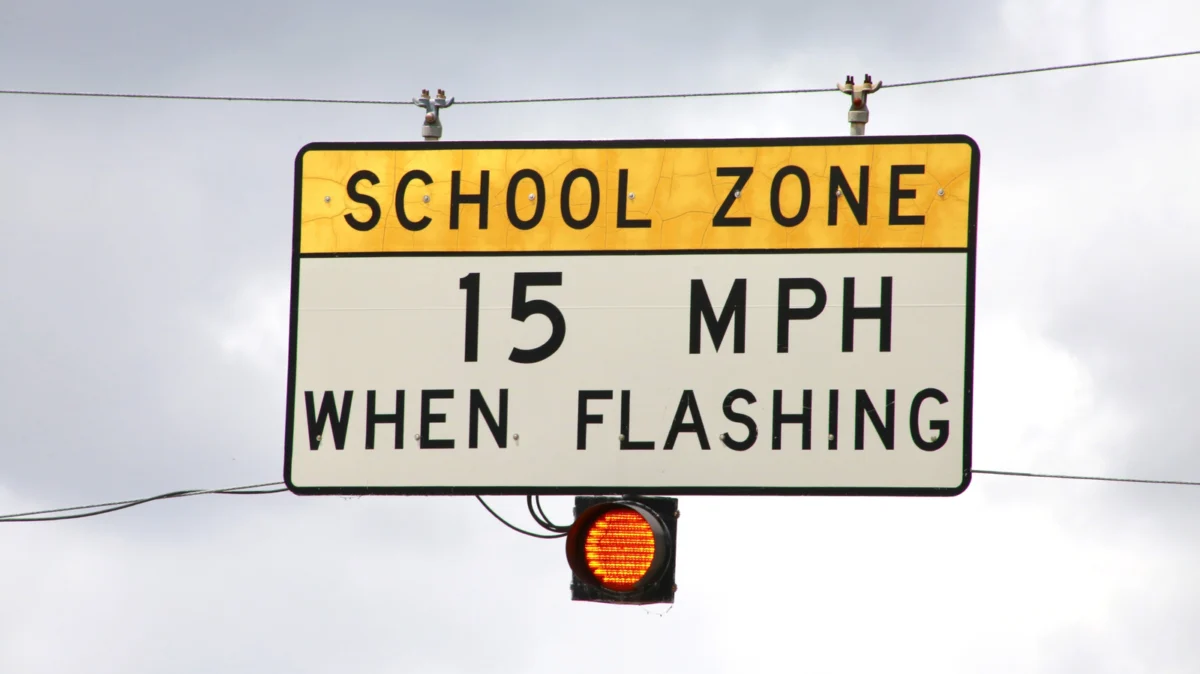
Navigating modern roadways requires constant vigilance. Among the myriad of visual stimuli encountered by drivers—ranging from static billboards to complex traffic signal arrays—the flashing yellow light atop a speed limit sign holds a unique and critical position. While the standard white-and-black regulatory sign provides a baseline for legal travel speeds, the introduction of a pulsating amber light transforms these signs into dynamic, situation-specific commands. Understanding the purpose, physics, and regulatory framework behind these lights is essential for every motorist aiming to balance safety, compliance, and situational awareness.
The Core Function: Dynamic Regulation in High-Risk Zones
At their most fundamental level, flashing yellow lights on speed limit signs are tools for "dynamic traffic control." Unlike permanent speed limit signs that dictate the legal maximum for a given stretch of road under optimal conditions, flashing signs serve as a real-time warning that environmental or safety conditions have shifted.
These lights are typically activated during periods of heightened risk, such as school zones during drop-off and pick-up hours, active construction sites, or areas prone to heavy pedestrian crossing. By incorporating movement into the visual field, traffic engineers aim to break the "highway hypnosis" that often leads drivers to ignore static signage. The flashing mechanism is a deliberate attempt to demand cognitive engagement; it forces the brain to shift from habitual driving to active, attentive navigation.
When a driver encounters a flashing sign, it is rarely a suggestion. In most jurisdictions, these lights signify that a temporary, lower speed limit is in effect. Disregarding these signals often carries stiffer penalties than ignoring static signs, as they are specifically placed to protect vulnerable road users or workers.
The Physics of Perception: Why Yellow?
The choice of yellow for these warning systems is not a matter of aesthetic preference or historical accident; it is rooted firmly in human optics and evolutionary biology.
The Visible Spectrum and Human Vision
Human eyes are remarkably adept at detecting certain wavelengths of light. Within the visible spectrum, the color yellow resides in the medium wavelength range, approximately 580 nanometers. Scientific research, including studies conducted by Iowa State University, has consistently demonstrated that under standard daylight conditions, the human eye is most sensitive to the yellowish-green segment of the spectrum.
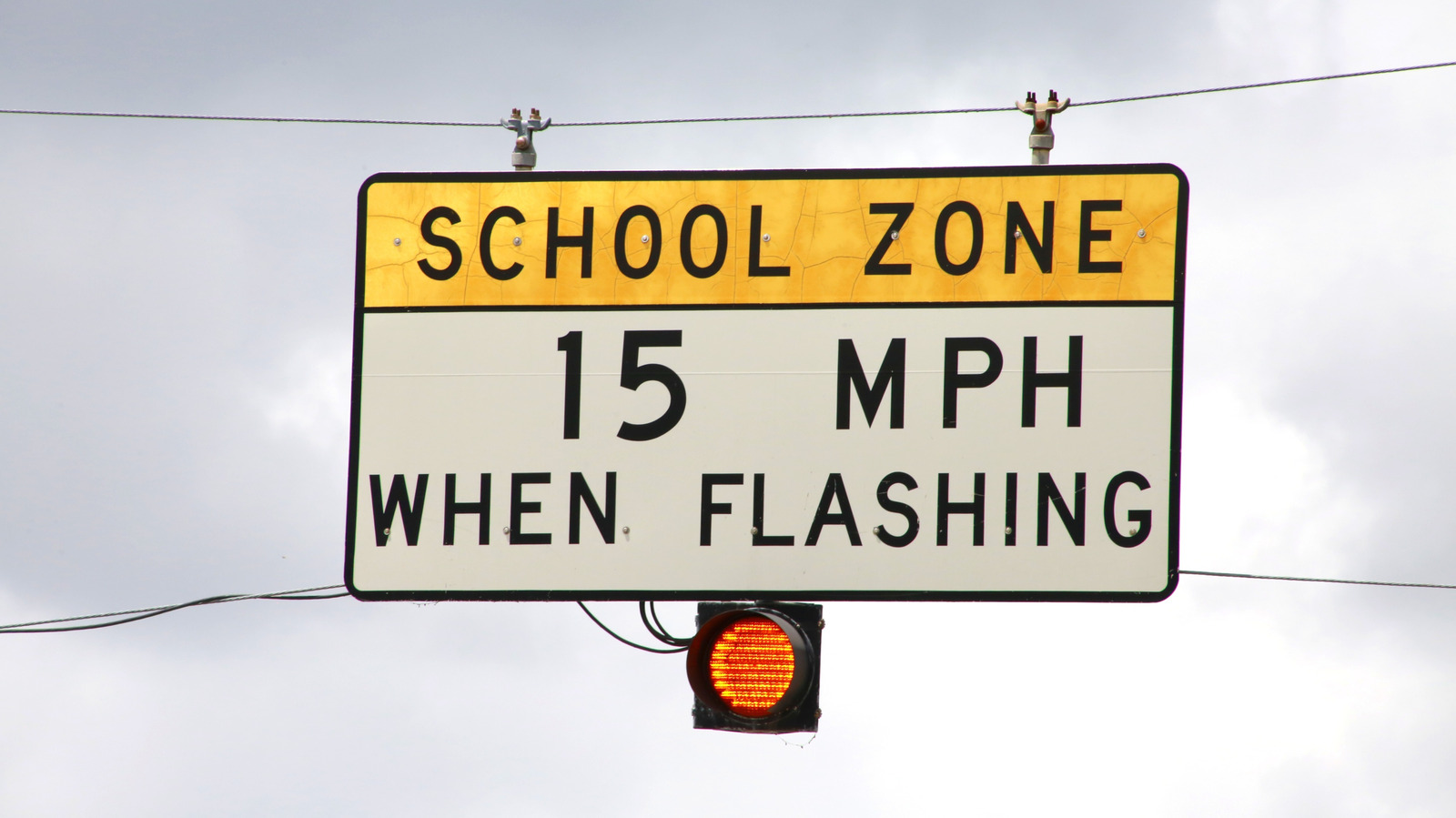
This sensitivity is the result of how our cones—the photoreceptor cells in our retinas—process light. Because the brain registers these specific wavelengths more rapidly than others, yellow objects appear to "pop" against natural backgrounds. This is the same reason that school buses are painted "National School Bus Glossy Yellow" and why high-visibility safety vests are typically a fluorescent yellow-green.
The Role of Peripheral Detection
Traffic safety experts have long understood that drivers do not always look directly at a sign. The Federal Highway Administration (FHWA) conducted extensive tests to determine how different colors impact detection at wide angles. Their findings confirmed that warning signs featuring yellow and fluorescent yellow-green hues are significantly easier to spot in the periphery than standard black-and-white regulatory signs. In complex urban environments where visual clutter is high, the flashing yellow light acts as a beacon, drawing the driver’s eyes toward the necessary information even when they are focused on the road ahead.
A Chronological Evolution of Traffic Signaling
The use of flashing beacons on regulatory signs is a relatively modern development in the long history of road infrastructure, evolving in tandem with the rise of the automobile and the increasing density of urban centers.
- Early 20th Century: The earliest traffic control measures were largely manual or rudimentary. The first standardized speed limit signs were simple, static, and often ignored by early motorists.
- The Mid-Century Shift: As traffic volume surged in the 1950s and 60s, the need for more nuanced control became apparent. The implementation of school zone signals began to appear, usually consisting of a clock-controlled beacon that would flash during specific morning and afternoon windows.
- The 1980s and 90s: Technological advancements allowed for more sophisticated integration. Sensors and radar-activated signs became more common, allowing for signs that flashed only when a vehicle was actually exceeding the speed limit, providing real-time feedback to the driver.
- The Modern Era: Today, we are seeing the integration of IoT (Internet of Things) technology. Traffic management centers can now remotely adjust the timing of these flashing signs based on real-time traffic data, weather patterns, or local events, marking a shift toward "smart city" infrastructure.
Official Standards: The FHWA Guidelines
Traffic control is not left to chance or local whim. In the United States, the Federal Highway Administration provides strict guidelines through the Manual on Uniform Traffic Control Devices (MUTCD). This manual ensures that a driver in Maine sees the same type of signals as a driver in California, maintaining a cohesive national driving language.
Regarding flashing yellow lights on speed limit signs, the guidelines are precise:
- Flash Rate: The beacons must operate at a rate of 50 to 60 flashes per minute. This rate is carefully calibrated to be noticeable without being so rapid that it induces stress or becomes a distraction.
- Duty Cycle: The duration of the flash is also regulated. Each pulse should remain illuminated for at least 50% to 66% of the full cycle. This "on-time" ensures the light is perceived as a steady, distinct signal rather than a faint flicker.
- Placement: These lights must be placed in a way that does not obscure the primary text of the speed limit sign. The goal is to highlight the regulation, not to replace or clutter it.
The Implications of Compliance: Safety vs. Fines
The primary implication of these signs is, of course, the preservation of life. When a school zone light flashes, it is an admission that the physical environment is not designed to safely accommodate high-speed traffic. The speed reduction is meant to increase a driver’s reaction time and decrease the kinetic energy of a potential impact—a factor that can mean the difference between life and death for a pedestrian.
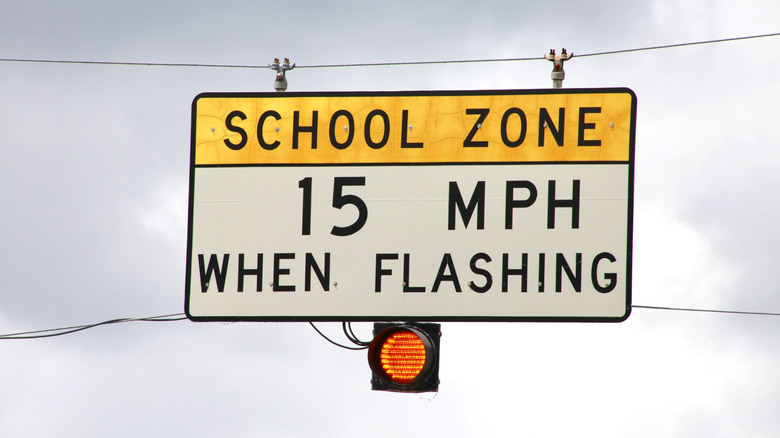
However, there is a legal dimension that drivers must acknowledge. In many states, violations within these "flashing" zones carry enhanced penalties. Because these areas are explicitly marked as high-risk, judges and law enforcement often view speeding here as a form of reckless driving rather than a simple clerical infraction.
Furthermore, the prevalence of these signs is growing. As urban planning trends toward "Complete Streets"—which prioritize pedestrians and cyclists alongside cars—the use of active traffic calming measures, including flashing speed limit signs, is becoming the standard rather than the exception.
Conclusion: Driving with Intent
The flashing yellow light is a testament to the fact that traffic engineering is as much about psychology as it is about civil construction. By leveraging the way our brains prioritize color and motion, engineers create a failsafe for the moments when our attention might otherwise wander.
For the modern motorist, the lesson is clear: when you see those amber lights pulsating, do not merely see a sign—see a warning that the road around you has changed. Whether it is protecting children, construction workers, or crossing pedestrians, the sign is an invitation to slow down and re-engage with the environment. In the end, these lights are not just about avoiding a ticket; they are a critical component of a system designed to ensure that every road user makes it home safely. By understanding the science behind the flash, we can all become more informed, compliant, and responsible drivers.











