Suro Senen
The landscape of sports simulation gaming is notoriously difficult to navigate. Balancing the hyper-realistic demands of hardcore enthusiasts with the accessibility required for casual fans is a feat few developers master. With the June 19, 2026, release of EA SPORTS UFC 6, EA Vancouver has once again attempted to capture the raw, visceral intensity of mixed martial arts. By pivoting toward advanced motion-capture technologies and narrative-driven experiences, the studio is aiming to redefine what a fighting game can be in the current console generation.
Main Facts: The Technical Leap Forward
At its core, UFC 6 is defined by a shift in underlying architecture. EA Vancouver has moved beyond the iterative updates of previous entries, opting to integrate Sapien Technology—a system previously seen in the Madden and NHL franchises—to overhaul fighter models. This technology, combined with Markerless Capture, allows for an unprecedented level of anatomical accuracy.
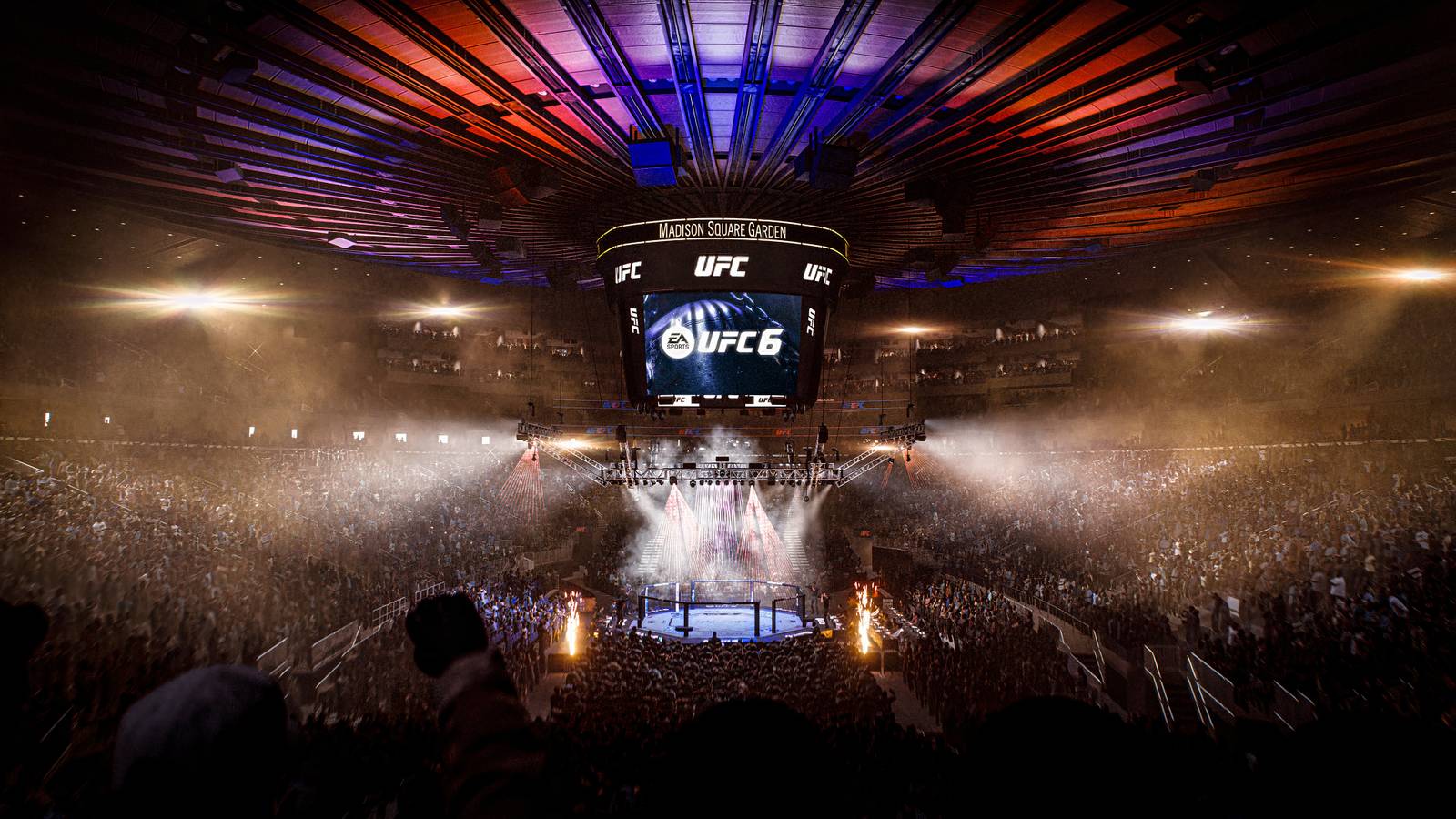
Every fighter, from the heavyweight giants to the flyweight technicians, possesses a distinct skeletal structure and fluid range of motion that mimics their real-world counterparts. This is not merely a visual upgrade; it fundamentally alters the physics of the game. Signature Strikes and unique movement patterns are now mapped to over one hundred individual styles, ensuring that players who know the sport can immediately recognize a fighter’s distinct "tell" or defensive posture.
A Chronology of the UFC Franchise Evolution
To understand the significance of UFC 6, one must look at the trajectory of the series. The transition from UFC 5 to UFC 6 represents a three-year gap—a significant period in modern software development. During this time, EA Vancouver observed a growing disconnect between the arcade-style "button mashing" of earlier titles and the tactical, slow-burn reality of championship-level MMA.

- The Early Years (Pre-2023): The series focused heavily on accessibility, prioritizing fast-paced action over ground-game nuance.
- The Transition (2023-2025): The introduction of the Frostbite Engine brought visual parity with real-world broadcasts, but players noted a stagnation in career mode depth.
- The Current Era (2026): With UFC 6, the focus has shifted toward "The Hall of Legends" and "The Legacy," moving away from simple tournament loops to a documentary-style, narrative-heavy framework that treats the sport with the gravity of a historical record.
Supporting Data: Realism and the "Flow State"
The most controversial, yet arguably most innovative, addition to the gameplay loop is the "Flow State." Much like the Heat Meter in Tekken 8, the Flow State is a tactical resource that activates when a player successfully executes a series of authentic, fighter-specific moves.
Upon activation—triggered by a downward press of the D-Pad—the arena undergoes a striking visual transformation. The crowd noise fades, the background desaturates into a high-contrast black-and-white, and the game enters a heightened state of perception. While some purists argue this leans too far into "arcade" territory, the data suggests it solves a long-standing issue in sports gaming: the lack of a "clutch" moment. When a fighter enters the Flow State, they are not invincible, but their ability to capitalize on an opponent’s mistake is drastically increased, turning the tide of a match in seconds.

Visual fidelity is further bolstered by Real-Time Contact physics. The implementation of damage reactions—where a fighter’s limb goes limp or a body strike causes a visceral wince—adds a level of stakes that was previously missing. Combined with lighting systems that adjust based on the specific venue, UFC 6 offers a visual experience that often rivals the real-world broadcasts on ESPN.
Official Responses and Developer Philosophy
The team at EA Vancouver, in various previews and press releases, has been vocal about their desire to move away from the "annual release" model. By embracing a longer development cycle, they have been able to bake in more complex systems. However, the move has not been without its challenges.

The developers have confirmed that the total roster size is smaller than in UFC 5, a decision aimed at ensuring higher-quality assets for each fighter rather than quantity. To compensate, the "Live Service" model is being heavily leveraged. Fight Week, a mode that mirrors the real-world UFC schedule, allows players to engage with upcoming cards, predict winners, and earn rewards. This integration suggests that EA views UFC 6 not as a static product, but as a living platform that will receive significant expansions in Winter 2026 and Summer 2027.
Implications: The Future of Sports Simulation
The implications of the UFC 6 design choices are profound for the sports gaming genre. The "Hall of Legends" mode, for instance, functions less like a game and more like a digital museum. By allowing players to navigate a fully rendered environment, watch archival footage, and then step into the shoes of fighters like Max Holloway or Alex Pereira to recreate history, EA has set a new standard for educational content in games.

However, the game is not without its hurdles. The career mode, while improved in its UI, still relies heavily on repetitive sparring sessions. The menu performance—a common complaint in EA titles—remains sluggish, and the reliance on VIP editions to unlock certain fighters has drawn criticism from the community.
Furthermore, the game’s accessibility features are a double-edged sword. While the "First Time User Experience" helps novices learn the complex ground game, the inherent difficulty of the sport remains a high barrier to entry. The inclusion of cross-play is a major victory, though the stability of the online environment currently hinges on the quality of the individual connections, with some players reporting lag during high-stakes exchanges.

Conclusion: Is It Worth the Investment?
EA SPORTS UFC 6 is a technical marvel that succeeds in bringing the gritty, high-stakes atmosphere of the Octagon to the home console. It is a game that rewards patience, punishes recklessness, and celebrates the technical history of the sport through its Hall of Legends mode.
While it suffers from the common pitfalls of the modern sports gaming industry—namely, sluggish menus, heavy reliance on micro-transactions for skins, and a grindy career mode—it offers enough depth to satisfy the most discerning MMA fan. By treating the sport as a narrative entity rather than just a combat mechanic, EA Vancouver has created a title that feels essential for anyone who follows the UFC. As the platform continues to evolve through its planned expansions, it is likely that UFC 6 will remain the definitive mixed martial arts simulation for years to come. For those willing to learn the ropes, it is a rewarding, albeit occasionally frustrating, experience that brings the viewer one step closer to the cage.


 Asro
Asro
 Muslim