Introduction: A Strategic Pivot in the Skies
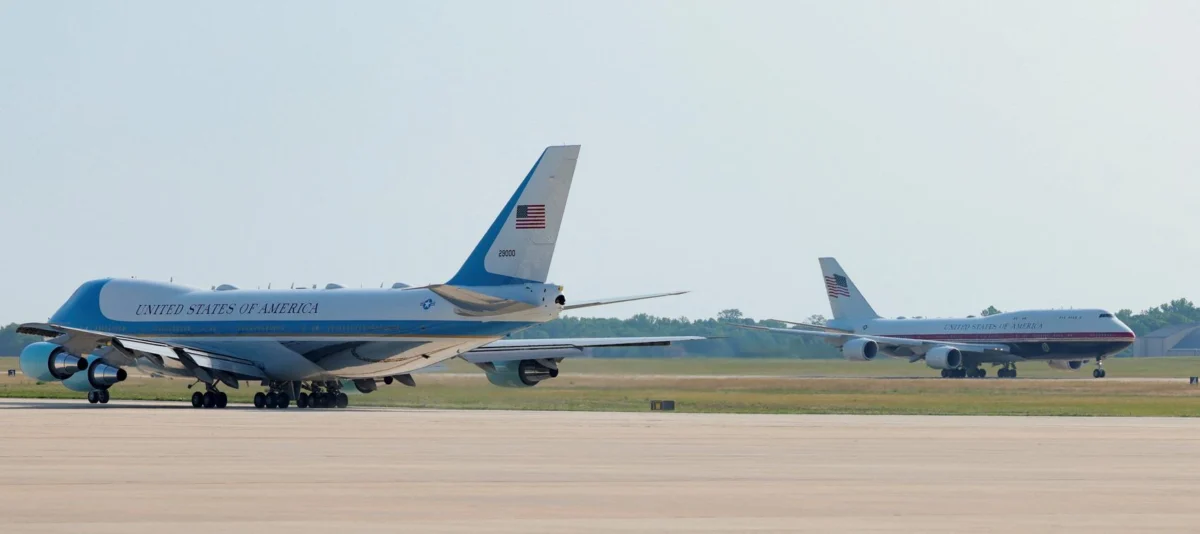
In a move that underscored the volatile intersection of international diplomacy, personal security, and defense procurement, President Donald Trump executed a mid-journey aircraft switch during his return from a high-profile NATO summit in Turkey this week. After arriving in Ankara aboard a newly refitted Boeing 747—a luxury gift from the State of Qatar—the President opted to depart Turkish airspace on a classic, baby-blue legacy Air Force One. The maneuver, which concluded with a rendezvous at RAF Mildenhall in Britain, served as a potent reminder of the logistical and security pressures currently defining the Trump administration’s air travel.
As the President navigated a summit overshadowed by rising hostilities with Iran, the decision to alternate between the aging fleet and the newly christened Qatari jet sparked fresh debate. While official accounts suggest a gesture of goodwill toward service members, the backdrop of the decision included an acknowledgment of severe security threats and ongoing congressional skepticism regarding the $1 billion rapid-retrofit of the Qatari aircraft.
The Chronology: A Transatlantic Transit
The sequence of events began with the inaugural international deployment of the Qatari-gifted 747, a project that has moved from the drawing board to the runway at an unprecedented pace.
Wednesday Morning (Ankara, Turkey):
As the NATO summit drew to a close, the presidential entourage prepared for the return leg to Washington. In a departure from the expected flight plan, President Trump confirmed that he would board the older, iconic Boeing 747 for the initial leg of the journey. During a press conference, when questioned if concerns regarding a potential Iranian assassination plot—or security deficiencies in the new plane’s rapid-fire upgrades—drove the decision, the President remained coy. "I’m number one on the kill list for Iran," he remarked, adding, "I don’t know. I can’t tell you that, but I don’t really care."
Wednesday Evening (RAF Mildenhall, UK):
The two aircraft converged at the British airbase. While the older jet served as the primary transport for the President across the initial leg, the Qatari-gifted jet—adorned in the striking red, white, dark blue, and gold livery selected by Trump—landed at the base to allow U.S. service members to tour the cabin. Trump later boarded the newer vessel for the final trans-Atlantic crossing to the United States, posting on Truth Social that the stop was intended to boost morale among the troops, noting there was "virtually no deviation of flightpath."
Supporting Data: The Anatomy of a Billion-Dollar Retrofit
The aircraft in question is not merely a transport vehicle; it is a symbol of a complex, fast-tracked defense procurement process. Originally a luxury Boeing 747 gifted by Qatar, the jet underwent an intensive transformation managed by defense contractor L3Harris Technologies.
The Cost of Speed
Congressional scrutiny has intensified over the financial and technical aspects of the conversion. Democratic lawmakers have estimated that the retrofit cost upwards of $1 billion. This rapid conversion was necessitated by the persistent delays plaguing the primary Boeing program. The official Air Force project, involving two purpose-built 747-8s under a $3.9 billion fixed-price contract signed in 2018, has become a cautionary tale of government procurement.
Currently four years behind schedule, the Boeing project is not expected to yield a finished product until mid-2028. With total program costs now exceeding $5 billion and Boeing absorbing significant financial charges, the Qatari-gifted jet was refitted as a "stop-gap" measure. Critics have voiced concerns that in the rush to deliver the aircraft, certain security modifications—specifically those related to advanced missile defense and secure communication suites—may have been expedited or simplified in ways that fail to meet the rigorous standards of the traditional "Flying White House."
Official Responses and Security Considerations
The security of the President is the paramount concern of the Secret Service and the U.S. Air Force. The "fast-track" nature of the Qatari jet’s certification has created a divide between administration officials and technical experts.
The "Presidential Standard"
While Air Force officials maintain that the plane meets all necessary criteria for presidential transport, the transition period remains precarious. The reliance on a gift from a foreign nation, even a strategic ally like Qatar, has raised eyebrows regarding the implications of the supply chain. Every wire, sensor, and defense system installed by L3Harris had to be vetted against potential interference, a process that experts argue usually takes years, not months.
When the President addressed the media in Ankara, he framed the stop at RAF Mildenhall as a public relations triumph, emphasizing the aesthetic appeal of the aircraft. "So the soldiers can see it because it’s truly magnificent," he stated. However, this narrative did little to quell concerns regarding the operational security of a plane that has been subject to intense public scrutiny and international attention since its inception.
Implications: A New Era of Presidential Aviation
The events of this week highlight three critical shifts in how the executive branch manages its mobility and risk profile.
1. The Geopolitical Shadow
The fact that the President felt compelled to address his status on an Iranian "kill list" while boarding a legacy aircraft highlights the heightened security environment of the current administration. The reliance on older, proven technology—the "baby blue" 747—suggests that in moments of acute tension, the White House prioritizes the reliability of legacy systems over the prestige of newer, untested, or controversial assets.
2. The Procurement Crisis
The state of the U.S. presidential fleet is currently in crisis. With the Boeing 747-8 project potentially missing the window for the current administration—or concluding only months before the end of Trump’s term in 2029—the White House is forced to rely on "interim" solutions. This sets a dangerous precedent for future administrations, where the integrity of presidential transport may become dependent on third-party gifts or emergency retrofits rather than purpose-built, sovereign-engineered aircraft.
3. Congressional Oversight
The $1 billion price tag for the retrofit has become a focal point for fiscal hawks and political opponents. The argument from the administration is that the costs were justified by the need to maintain a continuous, high-capacity presidential transport capability. Conversely, critics argue that the project represents a loss of control over the sensitive supply chain required for the nation’s most important vehicle. As the project enters its next phase of service, the pressure on the Air Force to provide transparency regarding the aircraft’s defensive capabilities will only increase.
Conclusion: The Path Forward
As the Qatari-gifted jet touches down in Washington, it carries more than the President; it carries the weight of a complex procurement failure and a rapidly evolving global threat landscape. The mid-trip switch from Turkey to Britain was a tactical decision that prioritized caution, but it has left the administration with lingering questions about the long-term viability of its "interim" fleet.
For the American public, the image of two Air Force jets—one a relic of a past era and the other a modern, gift-wrapped question mark—serves as a stark illustration of the logistical hurdles facing the White House. As the 2028 deadline for the Boeing-built replacements looms, the administration must balance the optics of its "magnificent" new plane against the cold, hard realities of national security, fiscal responsibility, and the unpredictable nature of international diplomacy. The coming months will likely see further audits and intense scrutiny, as the White House attempts to ensure that its wings remain as secure as they are visible.