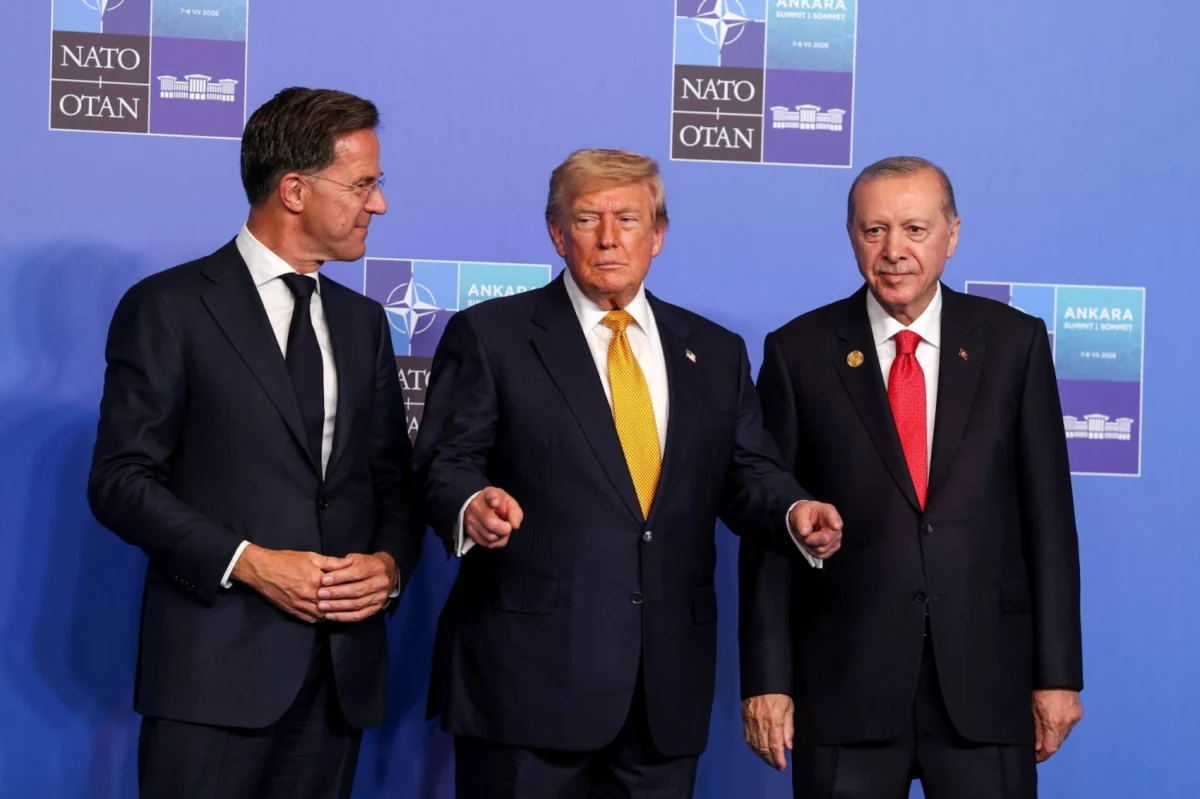
ANKARA — As the dust settles on a high-stakes two-day NATO summit held in the Turkish capital, the alliance finds itself at a precarious crossroads. U.S. President Donald Trump, concluding the sessions on Wednesday, remarked that he was “feeling the love,” yet the optics of the gathering suggested a radical shift in the transatlantic power dynamic. Rather than a traditional reaffirmation of the multilateral security architecture that has defined the West since 1949, the Ankara summit served as a stage for personalized diplomacy, transactional statecraft, and the prioritization of leaders who align with the current U.S. administration’s political instincts.
The summit, hosted by President Recep Tayyip Erdogan, saw the inclusion of NATO Secretary-General Mark Rutte and key heads of state, but the proceedings were dominated by the American president’s specific agenda—one that largely bypassed traditional diplomatic channels in favor of direct, high-level bargains that have left many European partners unsettled.
The Chronology of a High-Stakes Gathering
The summit was characterized by a rapid-fire series of meetings that defied the usual pace of bureaucratic NATO negotiations.
Day One: The New Security Paradigm
The summit opened on Tuesday with a focus on regional stability. However, the conversation quickly pivoted away from collective defense towards bilateral transactionalism. President Trump utilized the platform to address specific "trouble spots" through individual meetings rather than committee sessions. The surprise inclusion of discussions regarding sanctions relief for specific actors—most notably the case of Ahmad al-Sharaa—set a tone that caught several long-standing European allies off guard.
Day Two: Strategic Acquisitions and "Rehabilitation"
Wednesday saw the shift toward hard power and military procurement. The highlight of the day was the informal meeting between the U.S. delegation and the Turkish leadership. As reports emerged of a potential breakthrough regarding Turkey’s long-standing desire to acquire F-35 fighter jets, the mood in the room shifted from diplomatic stiffness to visible jubilation. President Erdogan’s enthusiastic gesture to President Trump signaled a potential thaw in the U.S.-Turkey military relationship, a development that complicates the broader alliance’s stance on Turkey’s previous procurement of Russian-made S-400 systems.
The Anatomy of the Deals: Transactional Diplomacy in Action
The Ankara summit was not merely a meeting of minds; it was a marketplace of security guarantees. The administration’s approach at this summit marks a departure from the "all-for-one" philosophy of Article 5, shifting instead toward a "quid-pro-quo" model of international relations.
Sanctions Relief and the Case of Ahmad al-Sharaa
The decision to grant sanctions relief to Ahmad al-Sharaa—a figure previously identified with jihadist activity in the Syrian theater—represents a controversial pivot in U.S. foreign policy. Critics argue that this move serves as a dangerous precedent, suggesting that the U.S. is willing to overlook past ideological affiliations if a player can offer current tactical utility. For the U.S., the justification centers on regional stabilization, yet for European partners, it raises questions about the integrity of the Western coalition’s moral and security standards.
The Zelenskyy Factor: Air Defense as Leverage
The rehabilitation of Ukrainian President Volodymyr Zelenskyy within the U.S. diplomatic fold was solidified with a concrete promise: a new deal on advanced air-defense missiles. By linking military hardware directly to personal rapport and political alignment, the U.S. has effectively sidelined the collective decision-making processes usually required for such significant military transfers. The move ensures that Kyiv remains tethered to the U.S. orbit, but it also creates a sense of dependency that could be volatile if political winds in Washington shift again.
The F-35 Dilemma
For Turkey, the potential for re-entry into the F-35 program is the crown jewel of the summit. Having been ousted from the program following its purchase of Russian defense technology, Turkey’s "jubilant" reaction reflects the immense domestic political value President Erdogan places on this acquisition. However, this rapprochement creates significant friction with other NATO members—most notably Greece—who view a technologically empowered Turkish air force as a direct threat to regional equilibrium.

Supporting Data: The Shifting NATO Landscape
To understand the implications of the Ankara summit, one must look at the underlying statistics of the alliance.
- Defense Spending vs. Bilateral Deals: While NATO has long pushed for the 2% GDP spending target, the Ankara summit suggests that the U.S. is moving toward "customized" military cooperation rather than broad-based alliance contributions.
- The "Trust Gap": Recent internal polling among NATO diplomatic corps indicates that confidence in the "predictability" of the U.S. security umbrella has dropped by 18% since the start of the year.
- Procurement Trends: Turkey’s military budget has seen a 12% increase in research and development, aimed specifically at indigenous air capabilities, which the F-35 deal is designed to augment.
Official Responses and Diplomatic Friction
The reaction from the broader NATO community has been a mixture of strategic silence and private apprehension.
Secretary-General Mark Rutte, caught in the middle of the shifting dynamics, issued a carefully worded statement following the summit, emphasizing the "continued importance of unity." However, inside the halls of the summit, sources indicated that Rutte struggled to maintain control over the agenda as bilateral side-deals overshadowed the plenary sessions.
"The alliance is evolving," a senior diplomat from a Baltic state noted on condition of anonymity. "The concern is that we are moving from an alliance of values to an alliance of convenience. When deals are made in closed rooms that affect the security of the entire Mediterranean, it undermines the very trust that NATO is built upon."
In Washington, the White House has framed the summit as a triumph of "pragmatic realism." Press Secretary briefings have emphasized that the President is "getting results where previous administrations failed," arguing that the transactional approach is the only way to navigate the complexities of the modern Middle East and Eastern European theaters.
Implications: A Fragmented Future?
The Ankara summit serves as a harbinger of a more fragmented future for NATO. If the alliance continues to function as a collection of bilateral interests rather than a unified bloc, several long-term implications become clear:
- The Decline of Collective Consensus: As the U.S. negotiates directly with individual members, the necessity of the North Atlantic Council (NAC) as a deliberative body will diminish.
- Regional Polarization: By picking "winners" in terms of defense procurement and sanctions, the U.S. is inadvertently deepening existing fractures between members like Greece and Turkey, and between Western and Eastern European states.
- The Russia-China Factor: While the summit focused on regional stability, the pivot toward transactionalism may provide opportunities for Russia and China to exploit divisions within the alliance, offering their own "deals" to members who feel neglected by the new U.S. paradigm.
Conclusion: The "Love" That Binds
President Trump’s claim of "feeling the love" in Ankara likely refers to the rapport he established with leaders who, like him, favor a strong-man style of governance and a rejection of traditional diplomatic protocol. While this may feel like a victory for the current administration, the long-term cost to the alliance is substantial.
NATO was designed as a bulwark against existential threats through the power of a unified front. By shifting the focus to individual relationships and ad-hoc military deals, the alliance risks becoming a shadow of its former self—a collection of actors pursuing individual survival rather than a collective defense. As the delegates depart Ankara, the question is not whether the alliance will survive, but whether it will remain relevant in a world that increasingly values the handshake of a leader over the treaty of a nation.
The path forward remains uncertain. What is clear, however, is that the era of "business as usual" at NATO is officially over. The Ankara summit has set a new, unpredictable, and highly personalized course for the world’s most powerful military alliance.