Raul Delapena Setiawan
As the technology sector pivots toward an AI-integrated future, the hardware that powers these experiences is becoming increasingly sophisticated—and expensive. With Samsung’s highly anticipated Galaxy Unpacked event locked in for July 22, the discourse surrounding the company’s upcoming foldable lineup has shifted from mere hardware speculation to the economic reality of the flagship market. A new report from the South Korean outlet SEDaily has cast a shadow over consumer expectations, suggesting that U.S. buyers should prepare for a significant price hike for the forthcoming Galaxy Z Fold 8 series.
The Financial Landscape: What the Leaks Suggest
For years, the "Galaxy Z Fold" moniker has represented the pinnacle of Samsung’s mobile engineering. However, the introduction of the "Ultra" branding to the foldable category marks a strategic transition toward a more tiered, luxury-focused hardware strategy. According to the latest data, the standard Galaxy Z Fold 8—frequently referred to in supply chain circles as the "Wide Fold"—is expected to enter the U.S. market with a base price of $1,899 for the 256GB storage configuration.
More concerning for enthusiasts of the top-tier hardware is the anticipated pricing for the Galaxy Z Fold 8 Ultra. As the direct successor to the previous generation’s premier foldable, the Ultra model is rumored to launch at $2,099 for the 256GB model. This represents a $100 increase over the $1,999 launch price of the Fold 7, a move that signals a broader trend of rising component costs being passed directly to the consumer.

This inflationary trend is not localized to the United States. Earlier leaks regarding the European market indicated a starting price of €2,199 for the base Ultra model—a €100 increase over its predecessor. While these figures represent the entry-level storage tiers, analysts expect that higher-capacity versions will see even steeper markups, potentially pushing the top-of-the-line configurations into uncharted territory for mainstream consumer electronics.
A Chronology of the Foldable Evolution
To understand why these price adjustments are occurring, one must look at the evolution of Samsung’s foldable trajectory.
- The Early Days (2019-2021): The initial Fold iterations were experimental, characterized by fragile hinges and high R&D costs. During this period, the price was justified by the sheer novelty of the technology.
- The Maturation Phase (2022-2024): With the refinement of the "Flex" hinge and the introduction of IP-rated water resistance, the Fold series began to stabilize. Pricing remained relatively consistent as Samsung achieved economies of scale.
- The Ultra Era (2025-Present): With the introduction of the "Ultra" tier, Samsung has moved to segment its foldable audience. This mirrors the S-series strategy, where the "Ultra" device serves as a testbed for the most expensive camera sensors, premium materials, and specialized processing power.
The July 22 event is expected to be the formal culmination of this transition. Having set the date, Samsung is now in the "final review" phase of its pricing strategy. While the leaked figures provide a clear indication of the company’s internal targets, market volatility and ongoing supply chain constraints mean that these numbers could technically fluctuate before the final unveiling.

Supporting Data: Why the Price Hike?
The primary driver behind this shift is the global semiconductor and memory market. We are currently witnessing a tightening in the supply of high-end DRAM and NAND flash memory, which are essential for the high-performance AI features Samsung is planning to integrate. As the demand for AI-capable hardware rises, the cost of these premium components has climbed, placing significant pressure on the bill of materials (BOM) for every device produced.
Furthermore, the "Ultra" designation is not merely a marketing term. Reports indicate that the Fold 8 Ultra will feature significant hardware upgrades, including a revamped camera array. For years, the most frequent critique of the Galaxy Fold series was that it offered a "premium price for a non-premium camera." By bringing the optics closer to the standards of the Galaxy S26 Ultra, Samsung is forced to incorporate more expensive sensor modules, larger camera housings, and complex optical stabilization systems.
The Promise of One UI 9.0 and Gemini Intelligence
If consumers are expected to pay a premium, they must be offered a unique value proposition. Samsung is leaning heavily into the software experience to justify the $2,100 price point. The Galaxy Z Fold 8 and Fold 8 Ultra are slated to be the first devices to launch with One UI 9.0, an iteration of Samsung’s interface that is reportedly built from the ground up for "AI-first" interaction.

Central to this experience is the deeper integration of Google’s Gemini Intelligence. Unlike previous iterations of voice assistants, Gemini on the Fold 8 is designed to function as an "agentic" system—capable of navigating multiple apps, performing complex multi-step tasks, and managing workflows across the expansive internal display. For power users and enterprise professionals, the ability to automate complex operations could serve as the primary justification for the price hike.
The Competitive Landscape
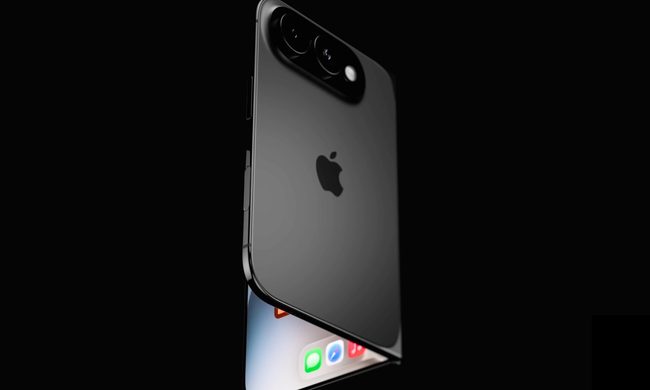
Samsung’s pricing decision does not happen in a vacuum. With Apple rumored to be finalizing its own entry into the foldable market, the pressure to maintain margins while delivering "best-in-class" hardware has never been higher.
Recent supply chain reports have highlighted aggressive hiring at manufacturing partners like Foxconn, suggesting that the industry is bracing for a high-stakes competition between the established king of foldables and the incoming challenger from Cupertino. If Apple does enter the market with a device priced in the $2,000 range, Samsung’s move to normalize a $2,099 starting price for the Ultra may actually be a preemptive attempt to solidify the "Ultra" tier as the standard for high-end foldable productivity.

Official Responses and Consumer Sentiment
To date, Samsung has remained tight-lipped regarding specific pricing. In accordance with standard corporate protocol, the company has declined to comment on "leaks or speculation." However, internal briefings suggest that the company is keenly aware of the "price sensitivity" of the current consumer base.
The strategy appears to be a two-pronged approach:
- The "Wide Fold" (Standard Z Fold 8): Retaining a more accessible entry point to keep the base interested.
- The "Ultra" (The Prosumer Choice): Positioning the device as a professional tool rather than a standard consumer phone, thereby insulating it from some of the price elasticity seen in the budget and mid-range markets.
Implications for the Future of Mobile
The implications of this price hike extend far beyond a single product launch. If the $2,000-plus threshold becomes the new baseline for "Ultra" foldable devices, we are witnessing the formal end of the era where flagship phones were priced at $1,000.
For the average consumer, this suggests a future where device lifecycles are forced to extend. If a phone costs $2,100, the industry must transition toward a model where hardware is supported for longer periods—potentially five to seven years of updates—to ensure that the return on investment (ROI) remains palatable.
As we approach July 22, the tech community remains divided. Some see the price increase as an inevitable result of cutting-edge technology and rising material costs; others view it as an overreach that could alienate the very power users who made the Fold series a success in the first place. Whether the inclusion of Gemini Intelligence, a superior camera system, and the next generation of One UI will be enough to tip the scales in favor of a purchase remains to be seen.
One thing is certain: when the lights go up at the Galaxy Unpacked event, the world will be watching to see if the innovation under the hood truly matches the price on the tag.


 Azzam Bilal Chamdy
 Asep Darmawan