Nana Wu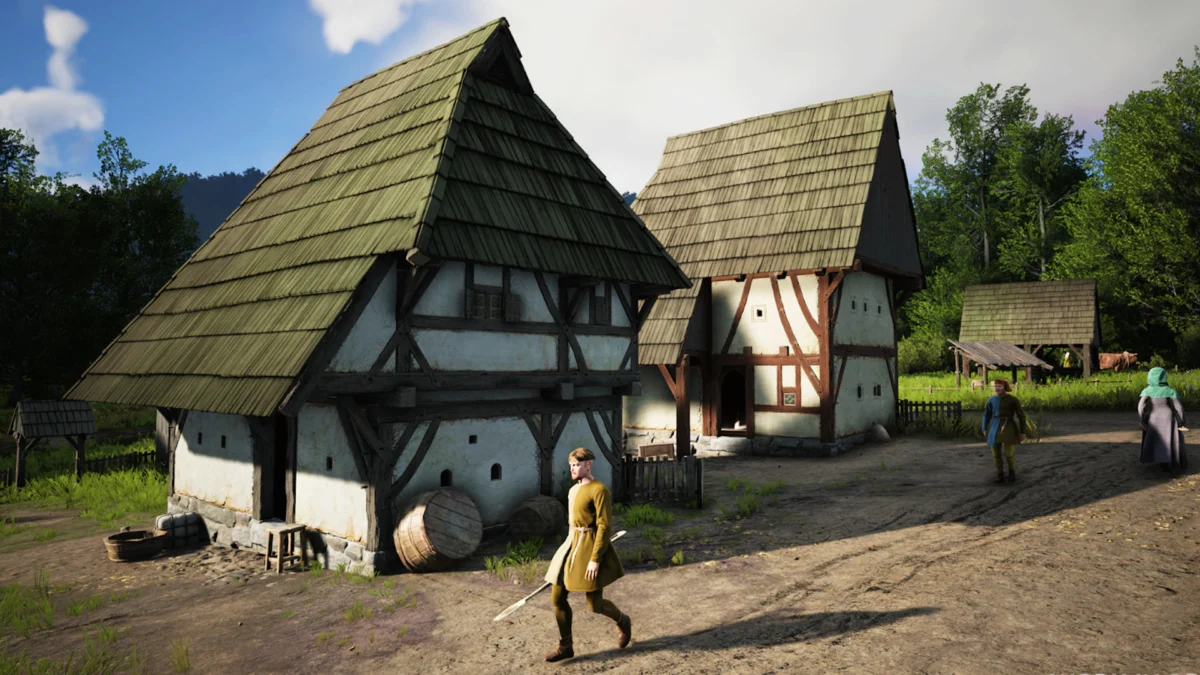
After four months of rigorous testing, iteration, and behind-the-scenes refinement, the seventh major update for Manor Lords has officially migrated from the experimental beta branch to the live build. For the thousands of players currently governing their own virtual medieval fiefdoms, this release represents more than just a standard patch; it is a fundamental reconstruction of the game’s architectural framework. Developer Slavic Magic, spearheaded by solo developer Greg Styczeń, has spent the last quarter prioritizing the structural integrity of the simulation, ensuring that the "under-the-hood" mechanics are robust enough to support the ambitious content roadmap that lies ahead.
A Strategic Shift: Why "Under-the-Hood" Mattered
In the high-pressure world of early-access game development, the temptation to rush out flashy new features—such as new combat units, expanded trade routes, or additional building types—is immense. However, Styczeń took a calculated risk earlier this year, pausing the development of new content to address the creeping technical debt that had begun to plague Manor Lords.
As the game’s complexity grew, so did the friction in its core systems. What once worked seamlessly in a small village became erratic as populations ballooned and supply chains stretched across the map. By "taking a hard look at systems that had quietly degraded over time," the team opted for a period of consolidation. This decision, while frustrating for those hungry for new toys, has resulted in a more responsive, stable, and scalable game environment.
Chronology of the Update: From Beta to Live
The journey to this point has been iterative. The beta branch served as a sandbox where thousands of players stress-tested pathfinding algorithms and building logic.
- Initial Beta Launch: Introduced early pathfinding fixes, addressing the "stacking inefficiencies" that caused villagers to take convoluted routes.
- Mid-Beta Adjustments: Refined the "island" system, which prevents units from attempting to traverse disconnected zones, such as rivers lacking bridges.
- Final Optimization Phase: Focused on collision, squad movement, and the specific balancing of economy-related triggers, such as ale consumption and fire management.
Now that these systems have been battle-tested by the community, they are officially part of the core experience. This four-month window has been vital in transforming the game from a promising, occasionally glitchy simulator into a finely tuned city-building engine.
Supporting Data: The Anatomy of the Patch
The sheer volume of changes in update seven is staggering, spanning hundreds of lines of code. While the patch notes are exhaustive, the most significant improvements can be categorized into three key pillars:

1. Pathfinding and Locomotion
Pathfinding is the heartbeat of any city builder. When villagers cannot navigate a village effectively, the entire economy collapses. The new "island" system is a sophisticated piece of logic that forces the pathfinding algorithm to reject invalid routes instantly, rather than wasting CPU cycles calculating impossible trajectories. Combined with refactored character collision, the result is a more "organic" feel. Villagers no longer "bump" into each other with the same frequency, and squad movement—long a source of player frustration—has been smoothed out. For those who prefer the original, more tactical control, the option remains available by holding the "Alt" key.
2. Economic and Quality-of-Life Balancing
Styczeń has implemented several common-sense adjustments that prevent minor annoyances from snowballing into gameplay-ruining events:
- Ale Consumption: Level-one families no longer consume ale, a change that provides a much-needed buffer for early-game resource management.
- Fire Safety Logic: A critical distinction has been added: families will no longer be marked as homeless if their house simply catches fire. They only lose their housing status if the building is fully destroyed, preventing unnecessary population spikes and morale drops during minor emergencies.
- Spatial Management: The expansion of church boundaries provides future-proofing for higher-level upgrades, while enlarged quarry footprints solve the visual and mechanical clipping issues that occurred when placing extraction sites adjacent to one another.
3. Worker Intelligence
One of the most notable, albeit subtle, changes is the "tidying up" behavior. Previously, idle workers would often leave tools or handcarts scattered in illogical locations. The AI has been updated to prioritize returning equipment to sheds, making the village look and function with significantly more purpose and efficiency.
Official Responses: The Philosophy of the Solo Dev
The development of Manor Lords is unique in that it is largely the vision of one individual, Greg Styczeń. Addressing the community earlier this week, Styczeń was candid about the challenges of balancing speed with quality.
"I wish, more than anyone, that progress on content was quicker," Styczeń admitted, acknowledging the impatience of a fanbase that has grown rapidly since the game’s launch. However, he remained firm on his stance regarding team expansion: "We’re doing everything we can, and I truly think that the team can’t grow any larger without introducing risk."
This "small-team" philosophy is central to the game’s identity. Styczeń emphasizes that the high bug-reporting rate from the large player base is a double-edged sword; while it highlights issues that would otherwise go unnoticed, it also creates a constant stream of "obscure bugs" that can ruin a player’s playthrough. By focusing on these, he is protecting the longevity of the project. "Please remember," he added, "that if it wasn’t important, we wouldn’t prioritize it."

Regarding the feedback loop, Styczeń took a moment to thank the community for their constructive criticism and support. He clarified that any polls or social media votes regarding features are merely gauges for "low-priority improvements." They do not represent a diversion from the core development roadmap, but rather a way to keep the community involved in the minor details while the heavy lifting continues behind the scenes.
Implications for the Future
What does this mean for the future of Manor Lords? With the foundational work complete, the development team has signaled a pivot back to content generation. The "Next stop: more content" announcement serves as a promise to the player base that the stagnation period is over.
The implications of this update are profound. By fixing pathfinding and collision, Slavic Magic has cleared the "technical debt" that would have made adding complex new features—like massive sieges or intricate trade networks—extremely difficult to implement without breaking the game.
Players can now expect the roadmap to accelerate. The game is currently in a state of unprecedented stability, providing a clean slate for the introduction of upcoming mechanics. For the fans who have stuck through the four months of technical refinements, the reward is a game that is not only deeper in its mechanics but also more reliable in its execution.
As Manor Lords transitions into this next phase, the focus will likely shift toward expanding the game’s mid-to-late-game loops. With the pathfinding "island" system and the smarter worker AI, the engine is now prepared to handle more complex city layouts and larger, more autonomous populations.
In conclusion, update seven is a testament to the importance of foundational development. While players may have been eager for new buildings or expanded military campaigns, the work done to polish the movement, collision, and economic triggers has arguably added more value than a single content drop ever could. The medieval world of Manor Lords is now more robust, more responsive, and—most importantly—ready for the next chapter of its evolution.

 Rifan Muazin
 Laily UPN