By Mustafa Mahmoud
For over a decade, the Assassin’s Creed franchise has undergone a radical transformation. From its humble, stealth-focused beginnings in the Crusades to the sprawling, RPG-heavy epics of the recent Valhalla and Odyssey eras, the series has often been accused by its most ardent fans of drifting away from its core identity. As the formula began to feel increasingly repetitive, Ubisoft faced a mounting challenge: how to innovate without losing the magic that defined the series’ golden age.
The answer, it seems, lay in the past. When Ubisoft officially announced that Assassin’s Creed IV: Black Flag—widely considered the high-water mark of the franchise—would receive a comprehensive remake, the news was met with a volatile mixture of nostalgia-fueled excitement and deep-seated skepticism. Could a modern studio capture the lightning-in-a-bottle charm of Edward Kenway’s high-seas adventure? With the launch of Assassin’s Creed: Black Flag Resynced, the verdict is in: Ubisoft Singapore has not only met the challenge, they have set a new standard for modern remakes.
The Core Success: A Return to the Golden Age
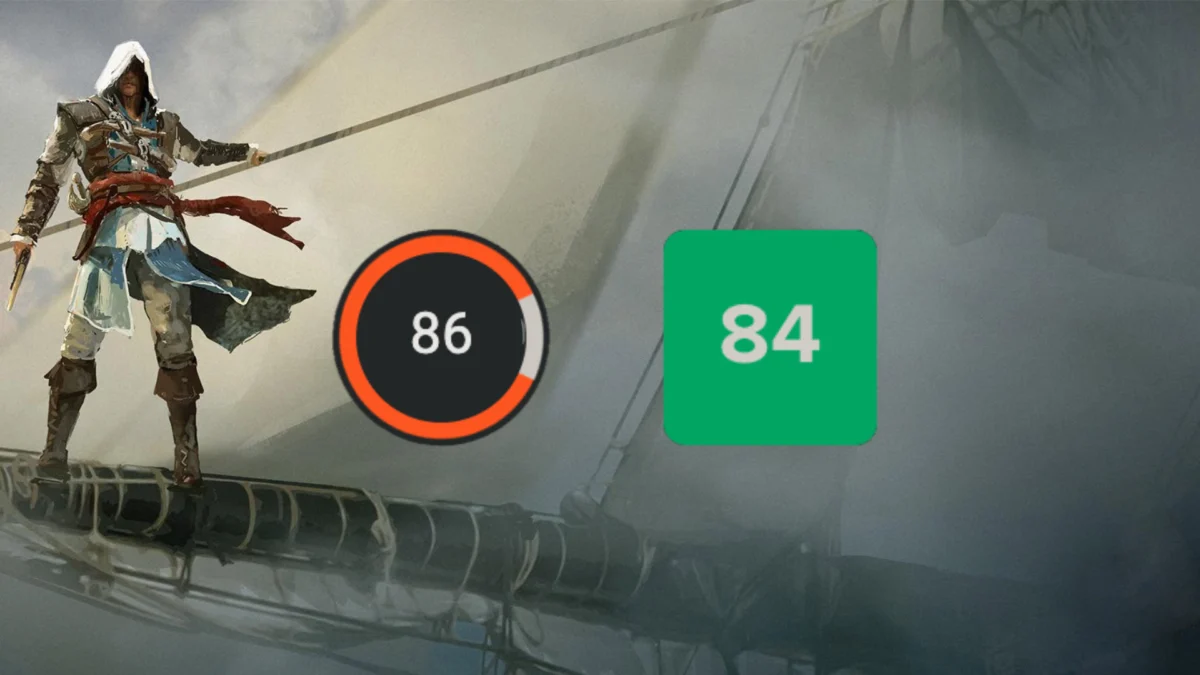
Assassin’s Creed: Black Flag Resynced has launched to widespread critical acclaim, signaling a triumphant return to form for a series that many felt had lost its way. The game currently boasts a formidable Metacritic score of 84, mirrored by an impressive 86 on OpenCritic. These figures are not just numbers; they represent the highest-rated entry in the Assassin’s Creed franchise since the original Black Flag debuted in 2013, which famously secured an 88 on Metacritic.
This critical success is a testament to the enduring power of the source material. By focusing on a "resynced" approach—one that updates the visual fidelity and mechanical fluidity of the original without diluting its narrative DNA—Ubisoft Singapore has managed to bridge the gap between a decade-old classic and the demands of modern hardware. Critics have lauded the game’s atmosphere, noting that the cast, the Caribbean setting, and the sheer sense of adventure remain some of the best ever realized in gaming history.
A Chronology of a Pirate Legend: From 2013 to Today
To understand the significance of Black Flag Resynced, one must look at the trajectory of the series.
- 2013: The Original Launch: Assassin’s Creed IV: Black Flag arrived as a breath of fresh air. Moving away from the dense urban environments of previous titles, it introduced naval combat, exploration, and a charismatic protagonist in Edward Kenway, a pirate who inadvertently found himself embroiled in the eternal war between Assassins and Templars. It remains the gold standard for many fans.
- 2014–2025: The Evolution and Fatigue: Following Black Flag, the series saw ups and downs with titles like Unity, Syndicate, Origins, Odyssey, and Valhalla. While some were technical triumphs, the "formulaic" nature of the gameplay—marked by repetitive map-clearing and bloat—began to alienate long-term players.
- Mid-2026: The Announcement: Rumors finally gave way to reality. Ubisoft confirmed that Black Flag would receive the "Resynced" treatment, promising not just a graphical overhaul, but a refined experience designed for modern platforms like the PlayStation 5 and Xbox Series X.
- Late 2026: The Launch: The game officially hits the market, earning high praise from critics and reigniting the conversation about the series’ future.
Supporting Data: Why the "Resynced" Formula Works
The success of Black Flag Resynced is not merely anecdotal; it is grounded in how the game addresses the "formula fatigue" that has plagued the industry.
When comparing the critical reception of Resynced against other recent titles, a clear trend emerges: players are craving "remasters of substance." While the original 2013 title holds an 88, the fact that a remake has achieved an 84—in an era where review standards have become significantly more stringent—is a massive win for Ubisoft.
Data from early player sentiment indicates that the most improved aspects are:
- Naval Combat Mechanics: The transition to modern physics engines has made the Jackdaw’s movement feel more weighted and realistic.
- Lighting and Atmospheric Rendering: The Caribbean sea, once limited by the hardware of the PS3/Xbox 360 era, now features dynamic weather patterns and volumetric lighting that bring the tropical storms to life.
- UI/UX Modernization: The "clutter" of the 2013 map has been replaced with a more streamlined, intuitive interface that respects the player’s time.
However, it is not all perfection. Critics have pointed out that the new story additions, while ambitious, can occasionally feel jarring when contrasted with the original script. Some narrative tweaks intended to better align Black Flag with the current Assassin’s Creed lore have been described as "less-than-perfect," suggesting that while the gameplay has been elevated, the narrative purity of the original is a delicate thing to touch.
Official Responses and Developer Intent
Ubisoft Singapore has maintained a relatively low profile throughout the development process, focusing their efforts on the "Resynced" title rather than engaging in heavy pre-launch marketing. In brief statements provided to the press, the development team emphasized that their primary goal was to "honor the legacy of Edward Kenway."
"Our intention was never to rewrite history," a lead developer noted during a recent roundtable. "We wanted to provide a ‘resync’—a way for modern players to experience the same emotional journey that millions enjoyed in 2013, but with the technical clarity that current hardware allows."
The studio’s decision to focus on the core gameplay loop—the "Pirate Fantasy"—rather than trying to force the game into the modern RPG mold of Valhalla or Odyssey has clearly paid off. By choosing restraint over reinvention, they have avoided the pitfalls that often cause remakes to lose their identity.
Implications for the Future of Assassin’s Creed
The success of Black Flag Resynced carries significant implications for the future of the franchise. It proves that there is a massive, untapped audience for smaller, more focused experiences. In an industry currently obsessed with "live service" titles and massive, 200-hour open worlds, Black Flag Resynced serves as a reminder that a tight, 30-to-40-hour adventure with a strong narrative heart can still dominate the charts.
1. The "Remake" Strategy:
If Resynced continues to perform well in terms of sales, we can expect Ubisoft to look at other fan-favorite titles for similar treatment. The Ezio Trilogy has long been requested, and the success of this project provides a viable blueprint for how to handle such a sensitive task.
2. Balancing Tradition and Innovation:
Ubisoft is currently at a crossroads. The upcoming mainline titles in the series are expected to lean heavily into modern RPG mechanics. However, the critical reception of Resynced suggests that fans are not necessarily tired of Assassin’s Creed—they are tired of the specific design loops that have become standard over the last five years. Moving forward, the franchise may adopt a "bifurcated" strategy: massive RPGs for those who want content-heavy experiences, and refined, classic-style remakes for those who prefer the original DNA of the series.
3. The Economic Outlook:
With the recent launch of other legacy ports, such as the Black Ops 1 and 2 ports on PlayStation, there is a clear trend toward monetizing nostalgia. However, Black Flag Resynced proves that consumers are willing to pay for quality. The premium price point attached to these remakes is only justifiable if the quality matches the hype. In this instance, Ubisoft has delivered.
Final Thoughts: Is it Worth the Return to the Caribbean?
Whether you are a long-time fan who remembers the sting of the salt spray in 2013 or a newcomer looking to see what all the fuss is about, Assassin’s Creed: Black Flag Resynced offers a compelling argument for its own existence. It is a game that respects its past while firmly planting its feet in the present.
The technical achievements, while impressive, are secondary to the emotional resonance of the story. Edward Kenway’s journey from a self-interested privateer to a man who discovers the weight of the Creed remains one of the most poignant arcs in the series. By polishing the edges and removing the friction of a decade-old game, Ubisoft Singapore has allowed that story to shine once more.
As we look toward the future of the series, we hope that the lessons learned here—that simplicity, atmosphere, and character-driven storytelling are the pillars of a great Assassin’s Creed game—are not forgotten. For now, the sails are set, the wind is in our favor, and for the first time in a long time, the future of the Assassin’s Creed franchise looks as bright as the Caribbean sun.
What about you?
Have you had the chance to step back onto the deck of the Jackdaw? Did the "Resynced" changes enhance your experience, or do you find yourself missing the quirks of the original? We want to hear your thoughts. Join the discussion in the comments below and let us know if you think this is the right path forward for Ubisoft.