

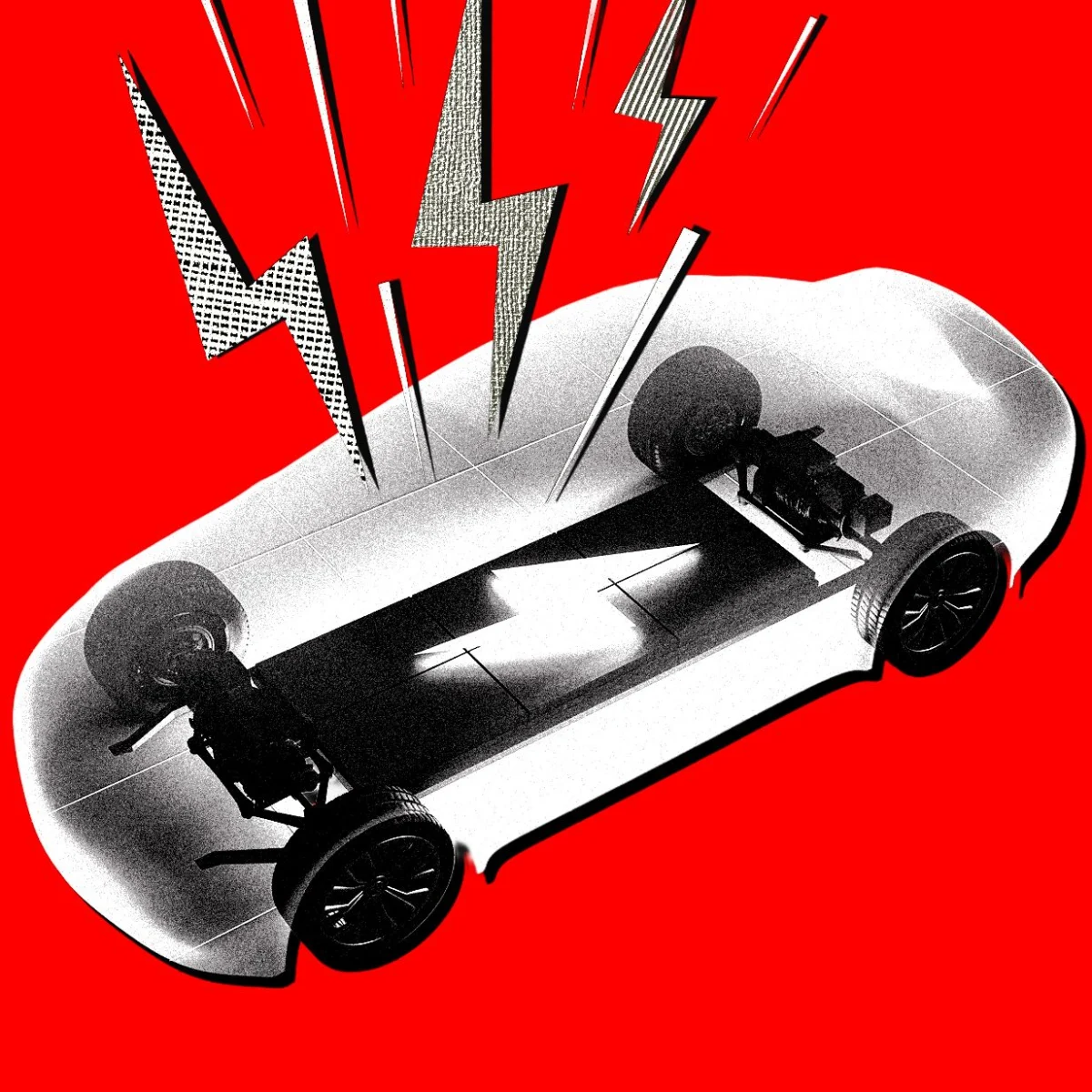
The global transition to a carbon-neutral economy hinges on a singular, volatile component: the lithium-ion battery. For the better part of a decade, the narrative of the battery industry has been defined by Chinese dominance. Titans like BYD and CATL have effectively cornered the market, not only supplying the lion’s share of batteries for electric vehicles (EVs) and massive energy storage projects worldwide but also expanding their physical footprint into the domestic landscapes of Western nations.
For European and American manufacturers, attempting to compete with the sheer scale and cost-efficiency of Chinese production has proven to be a bruising endeavor. Companies like Sweden’s Northvolt have discovered that the barrier to entry is not merely technical—it is systemic. However, a glimmer of hope remains for the rest of the world. The industry is currently pivoting toward a "holy grail" of energy storage: solid-state battery technology. If a non-Chinese firm can master the mass production of these units, the geopolitical and technological balance of power could shift significantly.
The Technological Pivot: Beyond Liquid Electrolytes
To understand why solid-state batteries are the focal point of this race, one must look at the flaws of the current standard. Today’s dominant lithium-ion batteries rely on liquid electrolytes to shuttle ions between the cathode and anode. While effective, these liquids are inherently volatile—they are prone to leakage, vaporization, and, in high-heat scenarios, thermal runaway leading to fire.
Solid-state batteries replace this liquid medium with a solid material, such as ceramics, glass, or polymers. The promise is transformative: higher energy density, faster charging times, and, crucially, a significantly safer profile. These batteries are more resilient in extreme temperatures, a massive advantage for cold-climate EV adoption.
Yet, despite decades of laboratory success, the transition from petri dish to assembly line has been fraught with difficulty. The primary obstacle is the manufacturing process; current methods for producing high-quality solid electrolytes at scale remain prohibitively expensive.
A "Living Fossil" Leads the Charge
Enter Vincent Yang, the founder and CEO of ProLogium, a Taiwanese company that has positioned itself as the vanguard of this transition. Yang, a material scientist with over 20 years of experience, describes himself with characteristic modesty as a "living fossil" of the battery world. Having experimented with nearly every iteration of battery chemistry in existence, Yang possesses the rare, granular knowledge required to bridge the gap between lab-scale innovation and gigafactory-scale production.
ProLogium’s trajectory has shifted from a niche player to a major geopolitical stakeholder. The company’s fourth-generation solid-state battery, unveiled earlier this year, is designed specifically for ease of mass production—a claim that has caught the attention of both global investors and European regulators.

Chronology of ProLogium’s Ascent
- 2018: ProLogium partners with Chinese automakers Weltmeister and Enovate for prototype vehicles, keeping these collaborations under wraps at the request of strategic investors like Mercedes-Benz.
- 2022: Vietnamese EV giant VinFast becomes a significant investor, signaling a shift in strategy toward broader industrial applications.
- February 2024: ProLogium breaks ground on a massive gigafactory in Dunkirk, France, fueled by a €1.5 billion grant from the local government.
- May 2024: The company announces a merger with TDAC, a SPAC, to facilitate a Nasdaq listing at a $3.8 billion valuation.
- 2027 (Projected): The target date for the commencement of mass production for its next-generation solid-state batteries.
The Geopolitical Strategy: Finding the "Non-China" Niche
ProLogium’s most significant competitive advantage in the current climate is its geographic independence. As Western nations become increasingly wary of over-reliance on Chinese supply chains, ProLogium has become an attractive partner for entities seeking to diversify their risks.
Yang notes that the company recently secured a deal with a state-backed utility infrastructure firm in Asia that explicitly requested a non-mainland Chinese supplier. "Almost every region in the world has its own protectionism," Yang observes. "It has positive and negative outcomes, but I have to admit we can sometimes benefit from it."
This sentiment is echoed by Jiayan Shi, a battery researcher at BloombergNEF. "Solid-state batteries have less mature supply chains than conventional lithium-ion, which cuts both ways," Shi explains. "There is more opportunity for non-Chinese players to establish supply chains, but also more vulnerability to disruption of Chinese-controlled upstream materials, like graphite, rare earths, and lithium."
Supporting Data: The Cost-Benefit Landscape
The transition to solid-state is not just a technological hurdle; it is a financial one. Batteries account for nearly 50% of the cost of an electric vehicle. If solid-state batteries, currently more expensive to manufacture than traditional liquid-electrolyte batteries, are integrated into EVs immediately, they risk pushing the sticker price beyond the reach of the average consumer.
This reality has forced ProLogium and its competitors to look beyond the automotive sector. Analysts suggest that the first successful applications will be in "cost-insensitive" sectors:
- Robotics: High-performance power needs with lower unit-volume constraints.
- AI Data Centers: Using batteries for energy storage to manage peak demand and emergency blackouts.
- Aerospace: Drones and electric aircraft, where safety and weight-to-energy ratios are far more critical than upfront costs.
VinFast’s recent pivot from using ProLogium’s technology solely for cars to exploring applications in AI data centers is a bellwether for the industry. Yang estimates that by 2032, while 60% of volume might still go to cars, the higher margins will likely be captured by these emerging sectors.
Official Responses and Industry Outlook
The Chinese government has responded to this emerging threat with characteristic centralization. The formation of the All-Solid-State Battery Collaborative Innovation Platform (CASIP) in 2024 represents a coordinated national effort to consolidate research and accelerate domestic development. By pooling resources from major manufacturers, China aims to maintain its grip on the next generation of energy storage.

However, the EU’s Net-Zero Industry Act, which mandates that 40% of Europe’s battery demand be met locally by 2030, provides a clear regulatory tailwind for companies like ProLogium. By establishing a base in Dunkirk, ProLogium is essentially betting that Western governments will continue to incentivize "friend-shoring" and local production, even if the costs remain higher than importing from China.
Implications for the Future
The race for the solid-state battery is, at its core, a race for the future of energy sovereignty. If the technology can be scaled, it will render the current debate over traditional lithium-ion supply chains somewhat obsolete, as the material requirements and manufacturing techniques for solid-state batteries are fundamentally different.
For the incumbent Chinese players, the challenge is to maintain their dominance while pivoting to a technology that is, in many ways, an unproven manufacturing frontier. For outsiders like ProLogium, the challenge is to survive the "valley of death"—the period between high-concept innovation and full-scale industrial viability—without running out of capital or losing the support of national governments.
"We are racing with the greatest people in the world," Yang says. "But even for the largest companies in the world, this remains a technical challenge that is difficult to solve."
As the world watches, the success of the solid-state transition will likely determine whether the EV revolution becomes a truly globalized, multi-polar industry or remains a market defined by the constraints of a single dominant power. For now, the game is still wide open, and the next few years of pilot production in Europe will be the ultimate litmus test for whether the "living fossils" of the industry can truly reinvent the way the world moves.











