

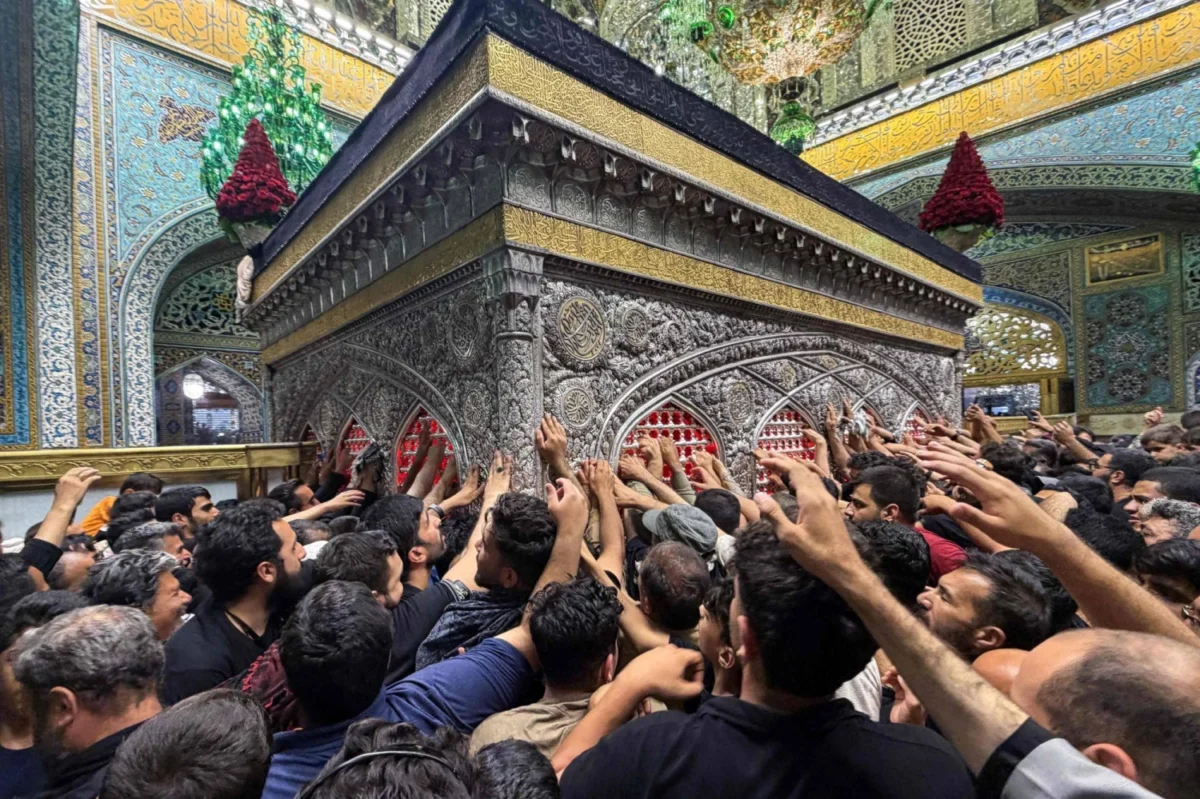
MASHHAD, Iran — The gold-domed shrine of Imam Reza in Mashhad, usually a bastion of spiritual stability, has become the backdrop for an unprecedented national enigma. As thousands of pilgrims gathered on Friday to pay their respects following the final funeral rites for the late Ayatollah Ali Khamenei and his slain family members, the central figure of Iran’s future—the newly appointed Supreme Leader, Mojtaba Khamenei—was nowhere to be seen.
In the 47-year history of the Islamic Republic, the seat of the Supreme Leader has never been shrouded in such profound ambiguity. Since his elevation to the highest office in the land—a transition that occurred just one week after the devastating February strike that claimed the life of his father—Mojtaba Khamenei has become a ghost in the machine of state. His disappearance has left a power vacuum, a crisis of confidence, and a nation bracing for potential escalation with the United States.
The Chronology of a Succession Crisis
The collapse of the traditional power structure began in late February, when a precision strike targeted the heart of the Iranian leadership. The death of Ayatollah Ali Khamenei, who had guided the nation for decades, sent shockwaves through the regional geopolitical order.
- Late February: A high-level strike targets the Iranian leadership, resulting in the death of Ayatollah Ali Khamenei and several members of his immediate family.
- Early March: Amidst intense behind-the-scenes lobbying by the Islamic Revolutionary Guard Corps (IRGC), Mojtaba Khamenei is named the successor. The announcement is met with skepticism and internal division within the clerical establishment.
- Mid-March to Present: Mojtaba Khamenei enters a period of self-imposed seclusion. While official state media continues to issue decrees in his name, his physical absence from the public sphere stretches into its fourth month.
- July: Hostilities between Iran and the United States reignite, bringing the legitimacy and functionality of the new leadership under intense scrutiny.
The Physical and Political Toll
According to senior intelligence and political sources, the silence surrounding the new Supreme Leader is not merely a strategic choice, but a matter of medical necessity. Reports indicate that Mojtaba Khamenei suffered severe facial disfigurement and significant internal injuries during the same strike that killed his father.
While the state machinery insists that he is "governing from a secure location," the reality appears more fragmented. Sources close to the regime suggest that while Mojtaba is still capable of making high-level decisions, he is currently physically incapable of appearing in public. This has forced the IRGC to act as the de facto face of the government, creating a dual-power dynamic that is as fragile as it is dangerous.
The absence of even a written message or a recorded video during the recent funeral ceremonies—a departure from standard protocols—has fueled a firestorm of speculation. Is he incapacitated beyond the ability to govern, or is he being shielded by factions within the Revolutionary Guard to prevent a coup by reformist clerics who view his appointment as an unconstitutional dynastic grab?
The Geopolitical Powder Keg
The timing of this internal crisis could not be worse for the Islamic Republic. Following the reignition of hostilities with the United States this week, the lack of a visible, vocal commander-in-chief is creating a sense of strategic paralysis.
Regional analysts argue that the IRGC is currently overextended, attempting to manage both a volatile domestic situation and a simmering military conflict with the U.S. and its regional allies. In the absence of the Supreme Leader’s direct mandate, the military command structure is increasingly relying on ad-hoc decisions that lack the traditional religious imprimatur of the office.
"The Islamic Republic is built on the concept of Velayat-e Faqih—the Guardianship of the Islamic Jurist," says a senior regional analyst based in Dubai. "If that jurist cannot be seen, cannot be heard, and cannot demonstrate that he is physically whole, the very foundation of the regime’s legitimacy begins to erode."

Official Responses and State Narratives
The official state line remains one of defiant normality. Government spokespeople have repeatedly dismissed claims regarding the Supreme Leader’s health as "Western psychological warfare" designed to sow discord among the Iranian people.
"The Leader is in full command of the nation’s affairs," an official statement released by the state news agency claimed earlier this week. "His absence from public ceremonies is a security protocol dictated by the ongoing threats from the Great Satan [the United States] and its agents. The unity of the Iranian people is stronger than the rumors spread by our enemies."
However, the disconnect between this narrative and the reality on the ground is growing. Pilgrims at the Imam Reza shrine—a place usually reserved for solemn prayer—were overheard whispering about the "vanished leader." The lack of transparency has allowed misinformation to fill the void, with rumors ranging from his total recovery and imminent return to assertions that he has already succumbed to his injuries and the regime is delaying the news to prevent a total collapse of order.
Implications for the Middle East
The implications of this power vacuum extend far beyond Iran’s borders. For neighboring nations and international powers, the uncertainty poses a unique set of risks:
- Military Escalation: Without a clear, centralized command, the IRGC may act more aggressively or unpredictably, hoping to assert its own authority and distract from internal weaknesses.
- Economic Instability: The Iranian Rial continues to fluctuate violently as markets react to the uncertainty of the leadership. International investors remain on the sidelines, waiting for a sign that the government can maintain internal stability.
- Proxy Warfare: Iran’s influence over its regional proxies—groups in Lebanon, Yemen, and Iraq—is currently in flux. These groups rely on the ideological guidance of the Supreme Leader; without it, their actions may become increasingly disjointed and dangerous.
The Path Ahead: A Nation at a Crossroads
As Iran navigates this turbulent period in its 47-year history, the question of succession has become a question of survival. If Mojtaba Khamenei recovers and returns to the public eye, he will face the Herculean task of proving his legitimacy to a populace that is weary of war, economic hardship, and dynastic politics.
If he does not, the country faces the prospect of a brutal power struggle within the Revolutionary Guard. Such an outcome could lead to a fundamental restructuring of the Iranian state, potentially ending the era of absolute clerical rule.
For the millions of Iranians watching, waiting, and wondering, the mystery of the Supreme Leader is more than a news headline; it is a profound uncertainty about their future. As the bells toll in Mashhad and the geopolitical temperature rises, the world remains fixated on a single, unanswered question: Where is the man who is supposed to lead Iran?
As the situation continues to evolve, the international community remains on high alert. The intersection of a wounded, unseen leader and a reignited regional conflict creates a scenario that defies traditional diplomatic modeling. For now, Iran exists in a state of suspended animation, waiting for its leader to either emerge from the shadows or for the system itself to finally shatter.











