

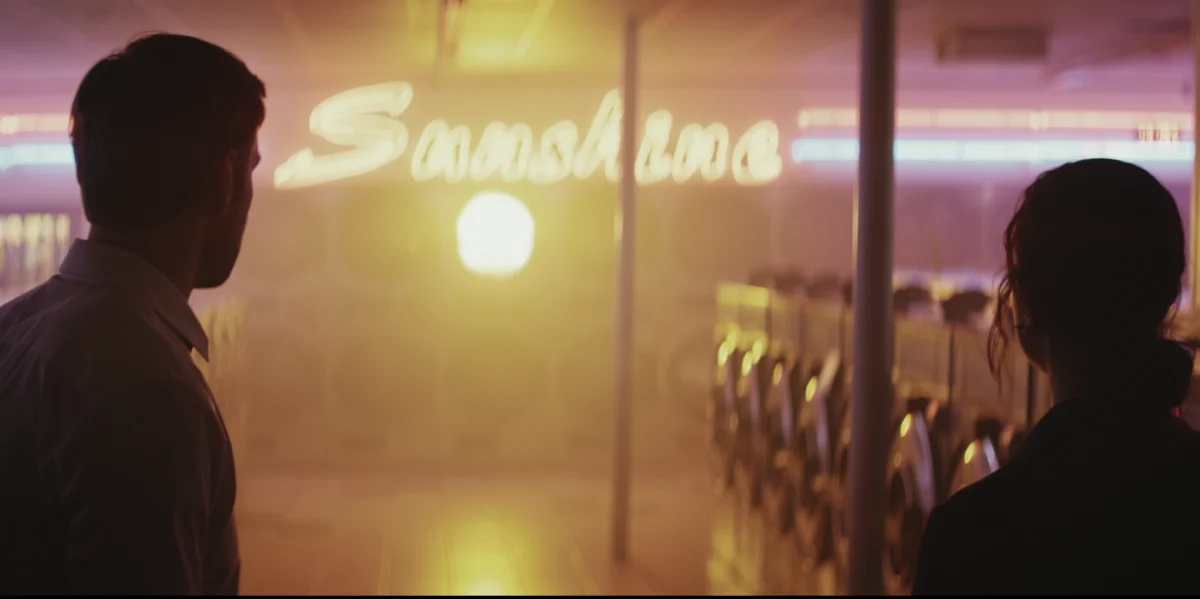
The independent horror landscape is set for a supernatural shake-up this summer as Cineverse and its specialized genre label, Bloody Disgusting, have officially secured the U.S. VOD and streaming rights to Portal to Hell. The feature debut from writer-director Woody Bess—who recently gained industry attention for his 2024 Blacklist-honored script Total Landscaping—is a genre-bending horror-comedy that has already garnered significant buzz following its successful festival circuit run at Slamdance and Frightfest.
The acquisition marks a strategic move for Cineverse, which continues to consolidate its position as a primary distributor for high-concept, indie-driven horror content. The film is slated for a limited theatrical rollout across North America throughout the summer of 2026, followed by a wide digital release, ensuring that Bess’s vision reaches both the hardcore genre faithful and a broader streaming audience.
A Narrative of Debt and Damnation
Portal to Hell pivots on a premise that blends the mundane frustrations of urban life with cosmic, infernal horror. The plot centers on Dunn (played by Trey Holland), a debt collector whose existence is defined by meticulous routine and the crushing monotony of mid-level bureaucracy. However, the fabric of his reality is violently rent asunder when a literal portal to the underworld manifests inside his local laundromat.
The situation escalates when a demon—portrayed with wicked charm by veteran character actor Richard Kind—is dispatched to drag Dunn’s neighbor, the unassuming Mr. Bobshank (the legendary Keith David), into the abyss to settle a long-standing supernatural debt. While Dunn has spent his professional career helping people manage their financial obligations, he finds his moral compass tested when the demon offers him a Faustian bargain: if Dunn can provide three souls to take Bobshank’s place, the neighbor will be spared.
Defying the demon’s sinister ultimatum, Dunn finds himself in a desperate, high-stakes battle to save his neighbor, transforming from a passive debt collector into an unlikely hero in a fight that transcends traditional collections. The film is rounded out by a deep supporting ensemble, including Michael McDonald, Casey Deidrick, Trevor Newlin, Ryan Follesé, Kevin Fonteyne, and Monet Weir.
The Evolution of a Genre Project: A Production Chronology
The journey of Portal to Hell from a creative concept to a major distribution deal reflects the grit and determination typical of the independent film sector. Woody Bess, who leveraged the momentum from his Blacklist recognition, helmed the project as writer and director.
Production was a collaborative effort between Little Shadows and several associated partners, including Hello Moon, Ford Films, This is Swington, Dalmatian Cow, and Baked Studios. Producers Trey Holland, Lucas Ford, and Tom Watts oversaw the principal photography, which navigated the logistical challenges of creating a supernatural environment within a confined, everyday setting like a laundromat.
The project’s legitimacy was bolstered by the participation of industry heavyweights. Keith David, known for his iconic roles in John Carpenter’s The Thing and They Live, provided the necessary genre gravitas to anchor the film’s surreal premise. Richard Kind, a mainstay of comedic television through Spin City and Curb Your Enthusiasm, offers a performance that balances the film’s comedic beats with the looming threat of the demonic.
Following its successful premiere at the Slamdance Film Festival and its international exposure at Frightfest, the film’s trajectory shifted toward acquisition. The deal was brokered by Raven Banner’s Cecilia Brush and Michael Paszt, working in tandem with Dan Fisher, the vice president of acquisitions at Cineverse. With the U.S. rights secured, Raven Banner continues to represent worldwide rights, with international interest already manifesting in deals with Lighthouse for the German market and 9th Planet for Poland.
Strategic Implications: Why Cineverse Doubled Down
For Cineverse, Portal to Hell is not merely another acquisition; it is a quintessential "Bloody Disgusting" title. The label has long championed films that prioritize inventive storytelling over formulaic jump-scares, and Portal to Hell fits this ethos perfectly.
"Portal to Hell is exactly the kind of sharp, wildly entertaining genre film that Cineverse and Bloody Disgusting audiences respond to," said Dan Fisher during the announcement. "It is inventive, funny, and genuinely horror-forward, with a terrific cast led by Keith David and Richard Kind. This is the kind of project that reminds audiences why independent horror is the most vital space in cinema today."
The decision to pair a limited theatrical run with a summer digital release is a calculated effort to build grassroots momentum. By targeting niche independent cinemas—such as the Rio Theater in Vancouver, the Laurelhurst in Portland, and the Paradise in Toronto—Cineverse intends to turn the film into a "must-see" event before it becomes accessible on VOD platforms. This "event-driven" distribution model is designed to maximize social media buzz and critical reviews, which serve as the primary marketing engine for mid-budget indie horror.
Supporting Data: The Theatrical Rollout
The film’s exhibition strategy spans three months, focusing on culturally active urban centers. The schedule reflects a deliberate attempt to capture the late-summer audience, with dates currently confirmed as follows:
- Toronto, ON: Paradise Theatre – July 9, 2026
- Portland, OR: Laurelhurst Theater – July 24–25, 2026
- Kansas City, MO: Screenland Amour – July 31, 2026
- Syracuse, NY: The Palace Eastwood – July 2026 (TBD)
- Vancouver, BC: Rio Theater – August 2026 (TBD)
- Rehoboth Beach, DE: Cinema Art Theater – August 8, 2026
- Huntsville, AL: The Independent – August 21, 2026
- St. Louis, MO: Chase Park Plaza Cinema – August 2026 (TBD)
- Tuscaloosa, AL: Bama Theatre – August 2026 (TBD)
- Florence, AL: Shoals Theatre – September 5, 2026
- Corvallis, OR: Darkside Cinema – September 2026 (TBD)
- Beverly Hills, CA: Lumiere Cinema – September 2026 (TBD)
- Oklahoma City, OK: Rodeo Cinema – October 2026 (TBD)
Official Statements and Industry Reception
In a joint statement, the filmmakers expressed their enthusiasm for the partnership with Cineverse, emphasizing the alignment between the production team’s vision and the distributor’s expertise.
"We’re excited to bring Portal to Hell to Cineverse and work with the passionate group of genre folks over there to release the film," the producers noted. "Their reach and partnership felt like a natural home to bring our film to a larger, more dedicated audience. The team at Bloody Disgusting understands the DNA of this movie better than anyone."
Industry analysts observe that this acquisition arrives at a time when the "horror-comedy" subgenre is experiencing a significant resurgence. By utilizing a mix of established talent and fresh directorial voices, projects like Portal to Hell demonstrate that the industry is looking for high-concept scripts that offer escapism with a cynical, modern edge.
Looking Forward: The Broader Landscape
The success of Portal to Hell will likely hinge on the critical reception of its balance between humor and horror. As the film prepares for its summer rollout, all eyes will be on the Cannes Film Festival, where Raven Banner continues to shop the title to other international territories.
The film’s performance will also serve as a barometer for the appetite of independent streaming audiences in the second half of 2026. If the film performs well in the select theatrical markets listed above, it may pave the way for similar "theatrical-first, streaming-second" strategies for upcoming independent titles.
For Woody Bess, the release of Portal to Hell represents the successful transition from a promising screenwriter to a director with a bankable, finished product. With the weight of Cineverse’s marketing apparatus behind him, Bess is well-positioned to cement his place in the current wave of genre filmmakers who are successfully bridging the gap between cult festival status and commercial viability. As the summer of 2026 approaches, the laundromat, once a place of mundane chores, may soon be viewed by horror fans as the most dangerous place in the neighborhood.










