The mid-summer period is widely recognized in the literary community as the "Golden Season" for crime fiction, a time when the industry’s most prestigious organizations unveil their annual honorees. As we navigate the landscape of 2026, the announcements from the British Crime Writers’ Association (CWA), the Capital Crime Festival, Mystery Readers International, and the Private Eye Writers of America provide a definitive snapshot of the current state of suspense, mystery, and thriller writing.
From the historic Dagger Awards to the hard-boiled grit of the Shamus Awards, this year’s selections reflect a vibrant, evolving genre that balances the traditions of the Golden Age with contemporary psychological innovation and global perspectives.
The Chronology of Recognition: A Summer of Suspense
The 2026 awards cycle began in earnest in mid-June and extended through early July, creating a wave of excitement for readers and authors alike.
- June 18, 2026: The Fingerprint Awards were presented at the Capital Crime Festival in London, setting a high bar for the summer by celebrating books that push the boundaries of genre and format.
- July 3, 2026: The British Crime Writers’ Association announced the winners of their iconic Dagger Awards, the most coveted honors in the British crime-writing landscape.
- July 7, 2026: Mystery Readers International followed suit, releasing the nominations for the Macavity Awards, which are uniquely driven by the grassroots enthusiasm of the mystery-reading community.
- Mid-July 2026: The Private Eye Writers of America (PWA) finalized their Shamus Award list, turning the spotlight toward the quintessential American "PI" archetype.
This rapid-fire succession of announcements serves not only as a celebration of individual excellence but as a roadmap for readers seeking the best literature published over the last eighteen months.
The British Crime Writers’ Association (CWA) Dagger Awards
The CWA Dagger Awards remain the benchmark for crime fiction excellence. Established in 1955, these awards have grown to encompass a diverse range of categories that reflect the complexities of the modern crime market. The 2026 winners represent the apex of craft, from the high-stakes intrigue of the Ian Fleming Steel Dagger to the meticulous research required for the Historical Dagger.
Defining the Categories
The Daggers are unique in their granular approach to sub-genres. The Whodunnit Dagger, for instance, honors the traditional mystery—a nod to the genre’s roots—while the Twisted Dagger acknowledges the massive market shift toward psychological suspense and unreliable narrators. Furthermore, the Dagger in the Library remains a sentimental favorite, as it is one of the few industry awards that explicitly prioritizes the relationship between the author and the public library system, rewarding a body of work that has sustained popularity among borrowers.
The inclusion of the Publishers’ Dagger highlights the industry’s collaborative nature, recognizing that a masterpiece of crime fiction requires a dedicated editorial and promotional team to reach its audience.
Fingerprint Awards: The Capital Crime Vanguard
Hosted in the heart of London, the Capital Crime Festival has quickly established itself as a premier destination for crime fiction enthusiasts. The Fingerprint Awards, presented annually during the festival, are distinguished by their commitment to "genre-busting" works.
The focus here is heavily skewed toward the reader experience. By awarding categories like Audiobook of the Year and True Crime Book of the Year, the festival acknowledges that the modern consumer of crime fiction is multi-modal. As audiobooks surge in popularity, recognizing the performance and production value of a crime thriller is a necessary evolution of the literary award landscape. The "Genre-Busting" category, in particular, rewards authors who refuse to be confined by the traditional tropes of detective fiction, encouraging cross-pollination between science fiction, horror, and noir.
The Macavity Awards: The Reader’s Voice
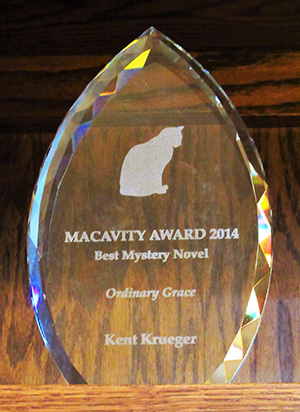
Named after T.S. Eliot’s "mystery cat" from Old Possum’s Book of Practical Cats, the Macavity Awards are perhaps the most personal of the major honors. Because the nominees are selected by the members of Mystery Readers International, the Macavity is a direct reflection of what the most dedicated fans are actually reading and discussing.

The Five Pillars of the Macavity
- Best Mystery Novel: The flagship category, focusing on narrative arc, character development, and pacing.
- Best First Mystery: A critical gateway that highlights the future stars of the genre.
- Best Mystery Short Story: An appreciation for the brevity and punch required to execute a mystery in limited word counts.
- Sue Feder Memorial Award for Best Historical Mystery: A specialized honor that requires both investigative accuracy and atmospheric storytelling.
- Best Mystery-related Nonfiction/Critical: A category that celebrates the scholars and essayists who analyze the history and craft of the genre.
The Macavity’s focus on the "mystery-related" nonfiction category is particularly noteworthy, as it encourages a deeper intellectual engagement with crime fiction beyond the simple act of reading for pleasure.
The Shamus Awards: Hard-Boiled Tradition
The Private Eye Writers of America (PWA) continue to uphold the legacy of the American hard-boiled detective story through the Shamus Awards. Finalists for 2026, which draw from works published in the United States in 2025, offer a stark contrast to the more "cozy" mysteries found elsewhere.
The Shamus categories—Best PI Hardcover, Best First P.I. Novel, Best Original Paperback P.I. Novel, and Best P.I. Short Story—are essential to maintaining the "Private Investigator" sub-genre. As the literary world becomes increasingly dominated by psychological thrillers, the PWA ensures that the classic investigator—the cynical, world-weary operative navigating the underbelly of society—remains a vibrant and necessary archetype.
The upcoming announcement at the 2026 Bouchercon in Calgary, Alberta, is highly anticipated. Bouchercon, the World Mystery Convention, provides the perfect stage for these awards, as it brings together the largest gathering of authors, publishers, and fans in the industry.
Implications for the Publishing Industry
The concentration of these awards within the summer months is no coincidence. It serves as a powerful marketing engine for the publishing industry. Winning a "Dagger" or a "Shamus" acts as a definitive seal of quality, often leading to increased library acquisitions, bookstore placement, and international licensing deals.
The Shift Toward Global Perspectives
A recurring theme across all these awards is the increasing globalization of crime fiction. From the Crime Fiction in Translation Dagger to the international reach of Bouchercon, the barriers to entry for non-English language authors are crumbling. Readers are increasingly seeking out "Nordic Noir," "Mediterranean Mystery," and translated works from Asia and South America, enriching the genre with new cultural contexts and investigative methodologies.
The Impact on Emerging Authors
For the aspiring writer, these awards provide a vital path to recognition. Categories such as the ILP John Creasey (First Novel) Dagger and the Emerging Author (for unpublished works) signify that the industry is actively searching for fresh voices. These awards are not merely historical records; they are active investment tools that help publishers identify and nurture the next generation of bestsellers.
Official Responses and Industry Outlook
While individual authors expressed humility and gratitude upon their nominations, the industry sentiment is one of cautious optimism. Publishers have noted that despite the economic pressures on the retail sector, crime fiction remains the most resilient genre in the market. The high volume of entries for the 2026 cycle suggests that creativity in the genre is at an all-time high.
As we look toward the remainder of the year, the industry will be watching to see how these awards influence the "long tail" of book sales. The integration of digital awards ceremonies and virtual conventions has democratized access to these events, allowing fans from Tokyo to Toronto to witness the winners in real-time.
In summary, the 2026 crime fiction awards season is a testament to the enduring power of the mystery. Whether through the intellectual rigor of a critical essay, the pulse-pounding tension of a psychological thriller, or the classic appeal of a hard-boiled P.I. novel, these awards remind us that the human fascination with crime, justice, and the truth remains an essential element of our cultural diet. As the winners prepare for their next projects, the literary community waits with bated breath to see where these authors will take us next.