Evan Lee Salim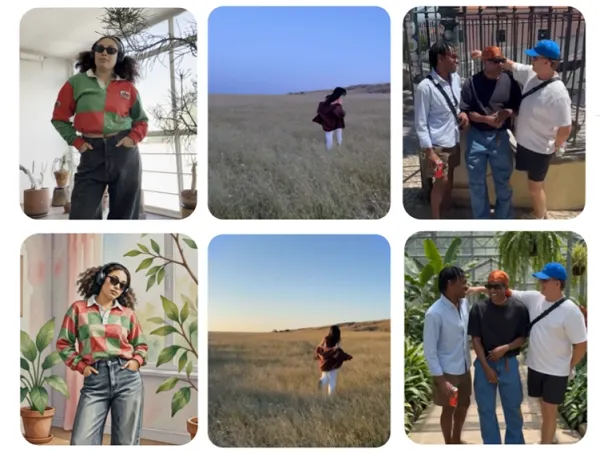
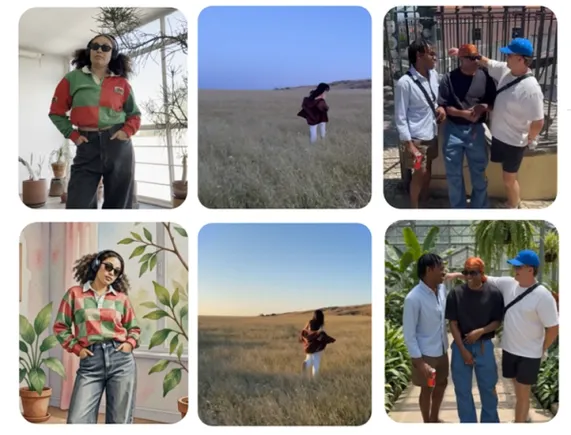
Google has officially unveiled a significant upgrade to its artificial intelligence suite within the Google Photos app: a feature dubbed "Video Remix." Powered by the company’s sophisticated Gemini Omni model, this new tool allows users to fundamentally alter the context, background, and stylized appearance of personal video clips with only a few taps. While Google frames this as a revolutionary leap in creative storytelling, the announcement has reignited a broader industry debate regarding the utility of hyper-realistic generative AI in consumer-facing applications.
The Core Innovation: What is Video Remix?
The Video Remix tool, now accessible via the "Create" tab within Google Photos, is designed to democratize professional-grade video editing. By leveraging a library of curated templates, users can input raw, mundane footage and transform it into highly stylized, imaginative content.
The underlying engine, Gemini Omni, is the same multimodal model Google first introduced at its I/O conference in May. Unlike previous iterations of generative video that often struggled with temporal consistency or erratic frame movement, Gemini Omni is engineered with what Google describes as an "intuitive understanding of physics" and deep "real-world knowledge and reasoning." These technical improvements allow the AI to place subjects into new environments while maintaining lighting, shadow, and depth cues that appear strikingly authentic.
For creators and marketers, the implications are immediate. The ability to realistically change the background of a video or adjust the stylistic atmosphere of a clip without a green screen or expensive post-production software could significantly lower the barrier to entry for high-quality social media marketing and brand storytelling.
A Chronology of Google’s AI Evolution
The path to Video Remix did not happen in a vacuum. It is the latest waypoint in a multi-year, aggressive push by Google to integrate generative AI into every facet of its ecosystem.
- May 2024 (Google I/O): Google officially announces the Gemini Omni model, highlighting its low-latency, multimodal capabilities. At this stage, the focus was on real-time interaction and reasoning.
- Late Summer 2024: Google begins the quiet integration of Gemini-powered features into its workspace and creative tools, signaling a move toward "AI-first" product development.
- October 2024: Following months of testing, Google announces the rollout of the Video Remix feature.
- Current Rollout: The feature is being pushed to Google AI Plus, Pro, and Ultra subscribers in select international markets, signaling a tiered release strategy that prioritizes high-value, paying customers before a potential wider release.
Supporting Data and Technical Capability
To understand why Google is investing so heavily in these tools, one must look at the trajectory of the generative AI market. Recent data from market intelligence firms suggests that the "Creative AI" sector is expected to grow at a compound annual growth rate (CAGR) of over 25% through 2030.
Gemini Omni differentiates itself through its "Omni-modal" architecture. Traditional AI models often process video by breaking it into frames and treating them as static images. Gemini Omni, however, processes video as a continuous stream, allowing the model to understand the intent of the movement. By applying its understanding of physics, the AI can "re-render" a video scene such that the shadows of a subject actually move in relation to the new light sources introduced by the generative template. This "true-to-life" rendering is the hallmark of the current generation of Google’s AI research.
Official Responses and Corporate Strategy
Google’s marketing messaging remains resolutely positive. In an official blog post, the company stated: "Now, with Video Remix in Google Photos, you can transform ordinary videos into share-worthy moments in just a few taps. Powered by our Gemini Omni model, Video Remix lets you make stylized, imaginative memories from a library of easy-to-use templates."
The strategy is clear: Google aims to position Google Photos not just as a storage repository for digital memories, but as a proactive "creative partner." By embedding these tools into an app that users already use for daily storage, Google creates a frictionless path for mass adoption of generative AI.
However, the corporate narrative is being met with a complex reception. Internally, sources suggest that Google views these features as a "moat" to protect its ecosystem. By providing tools that are technically superior to third-party apps, they hope to ensure that users remain within the Google "walled garden" rather than migrating to competitors like Adobe’s Firefly or standalone generative startups.
Implications: The Philosophical Divide
Despite the technical prowess of Video Remix, the industry is increasingly divided on whether this feature actually solves a consumer problem.
The Marketing Utility
For the professional sector, the tool is a boon. Marketers, who often operate on tight budgets and rapid timelines, now have access to a tool that can "reshoot" a video scene in post-production. A product video shot in a sterile office can be instantly shifted to a cozy living room or a sunny outdoor park. This represents a tangible increase in ROI for content teams.
The Consumer Dilemma: A "Fantasy" Reality
For the average user, the implications are more fraught. Critics argue that we are witnessing the rise of "synthetic life"—the ability to create false depictions of ourselves in alternate environments. When personal history becomes "remixable," does it lose its value as a record of truth?
The criticism is that developers are competing on "made-up scoreboards." Engineers and product leads at major tech firms are locked in an arms race to see who can produce the most realistic AI imagery. In this race, the "usefulness" of the tool is often secondary to the technical achievement itself. If a feature allows a user to lie about where they were or what they were doing, does that add value to their lives, or does it merely contribute to a culture of digital misrepresentation?

The Erosion of Authenticity
There is a profound sociological question at play: if our memories—represented by our photo and video libraries—become subject to generative "remixing," we risk losing the sanctity of the original moment. When a user can use AI to change the mood of a vacation video, they are no longer documenting a life; they are curating a fantasy.
While some argue this is simply the next evolution of photography—not unlike the invention of the photo filter or the cropping tool—others suggest that generative AI represents a qualitative shift. A filter changes the color; generative AI changes the content.
Looking Ahead: The Future of AI in Media
The rollout of Video Remix is likely just the beginning. As Gemini Omni continues to evolve, we can expect Google to introduce even more sophisticated controls. We may soon see features that allow for the generation of dialogue, the alteration of clothing, or the complete rewriting of the audio landscape within a video.
For now, the feature remains a curiosity for the average user and a high-potential asset for the professional marketer. As the industry watches Google’s rollout, the central question remains: Will consumers embrace the ability to "remix" their reality, or will they eventually push back against a digital world that is becoming increasingly indistinguishable from a generated fantasy?
For the time being, the tools are in the hands of the subscribers. Whether they use them to build bridges to more creative expression or simply to further distance themselves from the reality of the moments they capture remains to be seen. Google has provided the canvas and the brush; it is now up to the users to decide if they want to paint a portrait or a fabrication.


 Asro
Asro
 Basiran