

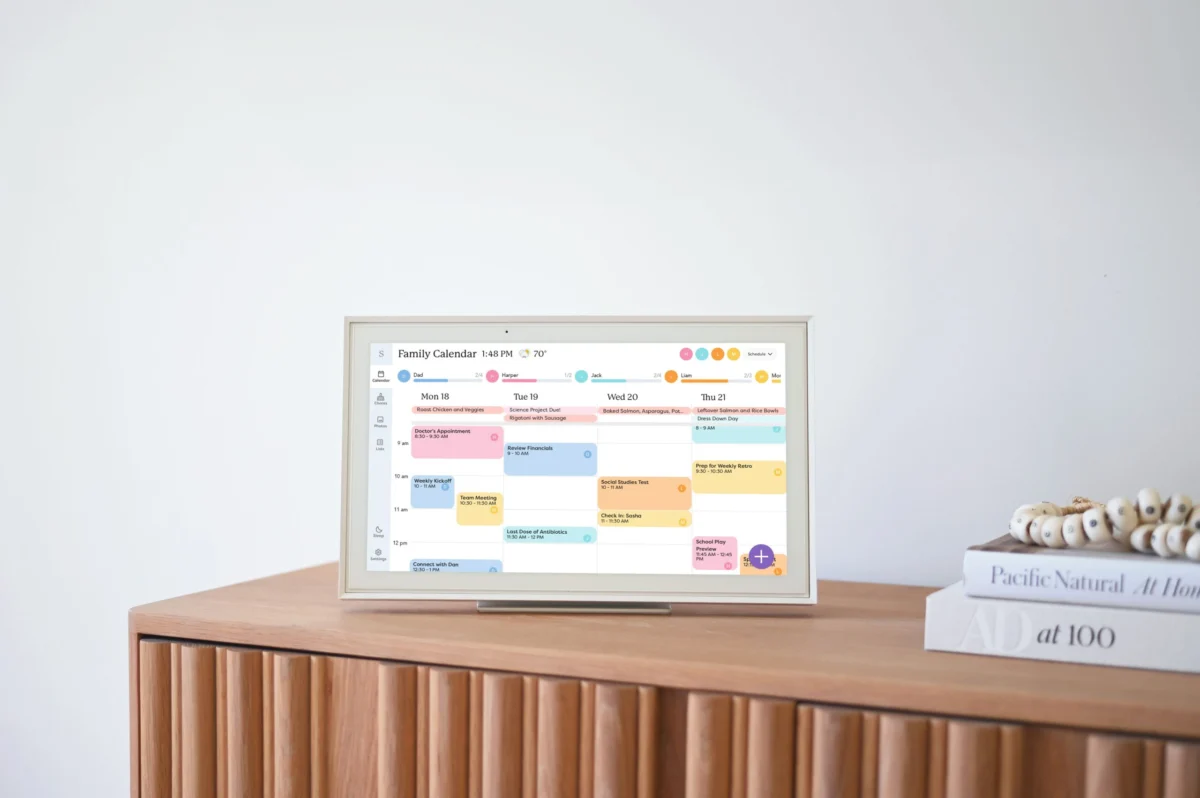
For the modern parent, the household is less of a home and more of a logistics hub. Balancing the disparate schedules of three children across three separate schools, coordinating extracurricular activities, and managing the fluctuating work calendars of two adults is a feat of administrative endurance. For years, the digital standard for this coordination has been the shared Google Calendar—a utilitarian tool that, while functional, often falls short of the holistic needs of a bustling family.
As households increasingly seek to move away from chaotic physical whiteboards and fragmented sticky notes, a new wave of hardware and software solutions has emerged. Among them, the Skylight Calendar—a dedicated touchscreen display designed to serve as the "digital hearth" of the home—has gained significant traction. But does a dedicated piece of hardware truly solve the cognitive load of parenting, or is it just another device to manage?
The Evolution of the Family Command Center
The premise behind the Skylight Calendar is simple: create a centralized, always-on visual representation of the family’s life. Unlike a smartphone app that remains buried in a notification drawer, the Skylight’s 15-inch touchscreen sits on the kitchen counter, acting as a beacon of information.
For many families, the transition to such a device is a rite of passage that coincides with the children reaching their pre-teen years. As adolescents begin to manage their own social calendars and academic commitments, the utility of a shared, transparent schedule becomes apparent. Younger children may lack the maturity to interact with these systems, but for teens and tweens—digital natives accustomed to touch interfaces—the Skylight becomes a tool for autonomy.
A Chronology of Integration
The setup process for such systems is designed to be low-friction, yet it requires an initial investment of time to synchronize disparate digital lives. The typical workflow for a family adopting the Skylight involves:
- Hardware Unboxing and Placement: Positioning the screen in a high-traffic area, typically the kitchen, to ensure it remains a natural focal point.
- Digital Synchronization: Importing existing data from Google, Apple, Microsoft, or Yahoo calendars.
- The "Color-Coding" Phase: Assigning specific hues to family members to provide instant visual clarity regarding who is where and when.
- Task Delegation: Moving beyond simple appointments to include household chores, such as waste management or pet care, effectively gamifying the "heavy lifting" of home maintenance.
- Mobile Mirroring: Distributing the companion app to every family member’s smartphone, ensuring that the "master schedule" is available on the go.
Supporting Data: Efficiency vs. Privacy
The shift to a public-facing digital calendar brings with it a unique set of trade-offs. While the transparency of a shared calendar allows children to proactively check for family obligations before committing to social plans, it also collapses the barrier between "parental logistics" and "private notes."
In early testing, users reported that personal notes—such as reminders to purchase birthday gifts or medical appointments—suddenly become visible to the entire family. This necessitates a change in digital hygiene. Users must learn to compartmentalize their note-taking, separating sensitive personal information from the shared family schedule.
The Role of AI in Reducing Cognitive Load
One of the most compelling aspects of modern calendar ecosystems is the move toward AI-assisted management. Features like Skylight’s "Sidekick" represent a significant leap in how families ingest information. Rather than manually typing in school events from a paper flyer or a forwarded email, users can leverage AI to parse images and text.
While current technology is not yet perfect—often struggling with the nuance of handwritten notes or complex formatting—it provides a crucial "starting point." By reducing the manual data entry required to keep a calendar updated, these tools lower the barrier to entry for busy parents, effectively acting as a digital personal assistant.
Comparative Landscape: Software-Only Solutions
While hardware devices like the Skylight offer a dedicated physical presence, the market is saturated with software-only alternatives that offer varying levels of complexity.
- Jam Family Calendar: A lean, intuitive software platform that mirrors many of the Skylight’s core functionalities. It is designed for families who prefer to keep their household management entirely on their existing mobile devices.
- Family Wall: A comprehensive suite that goes beyond scheduling. With features like real-time location sharing, digital document storage, integrated family chat, and budgetary tracking, it serves as a "super-app" for household operations. The inclusion of "Countdown to Special Days" provides a tangible psychological benefit, helping family members anticipate and prepare for birthdays and anniversaries without the need for constant reminders.
Implications for Modern Parenting
The integration of these tools into the home has profound implications for how families communicate. By centralizing responsibilities, parents can shift from being the sole "project managers" of the family to facilitators of shared responsibility.
The Shift Toward Autonomy
The most striking benefit observed is the change in behavior among older children. When the schedule is visible, the constant "Can I do this?" queries are replaced by "I checked the calendar, and it looks like I’m free on Thursday." This shift reduces the mental load on parents and fosters a sense of agency in children. They are no longer just passengers in the family schedule; they are active participants in its maintenance.
The Limitations of the Hardware
Despite the advancements, friction points remain. The lack of an internal battery in many wall-mounted units forces a tethered existence, limiting where the device can be used. Furthermore, while the 15-inch screen is excellent for viewing, the majority of input—such as adding new events or modifying tasks—still occurs on the mobile app. The device functions more as a "dashboard" than a "workstation."
Moreover, the "Subscription Economy" plays a significant role in the user experience. Many of the advanced features—including AI parsing and meal planning—are gated behind monthly or annual fees. For a family already managing multiple subscription services, this represents a recurring cost that must be weighed against the convenience provided.
Looking Forward: The Future of Home Coordination
As we move toward a more interconnected domestic life, the goal of these tools remains consistent: to reclaim time and reduce the "invisible labor" that often falls on one partner. The ideal system is one that is invisible when not needed, yet provides immediate, actionable clarity when consulted.
The transition from paper-based, fragmented systems to integrated digital ecosystems is not merely a technological upgrade; it is a cultural shift in how we define family responsibility. While no app or device can yet fold laundry or perform the actual labor of keeping a house running, the ability to outsource the planning of these tasks to an intelligent, shared system is a significant step toward a more organized, less stressed domestic life.
As families continue to experiment with these platforms, the focus will likely move toward greater interoperability. The dream of a truly seamless home—where the calendar, the grocery list, the budget, and the meal plan all talk to one another in real-time—is closer than ever. For now, the successful family command center remains a work in progress: a blend of digital convenience, parental diligence, and the ongoing effort to keep the household running in harmony.











