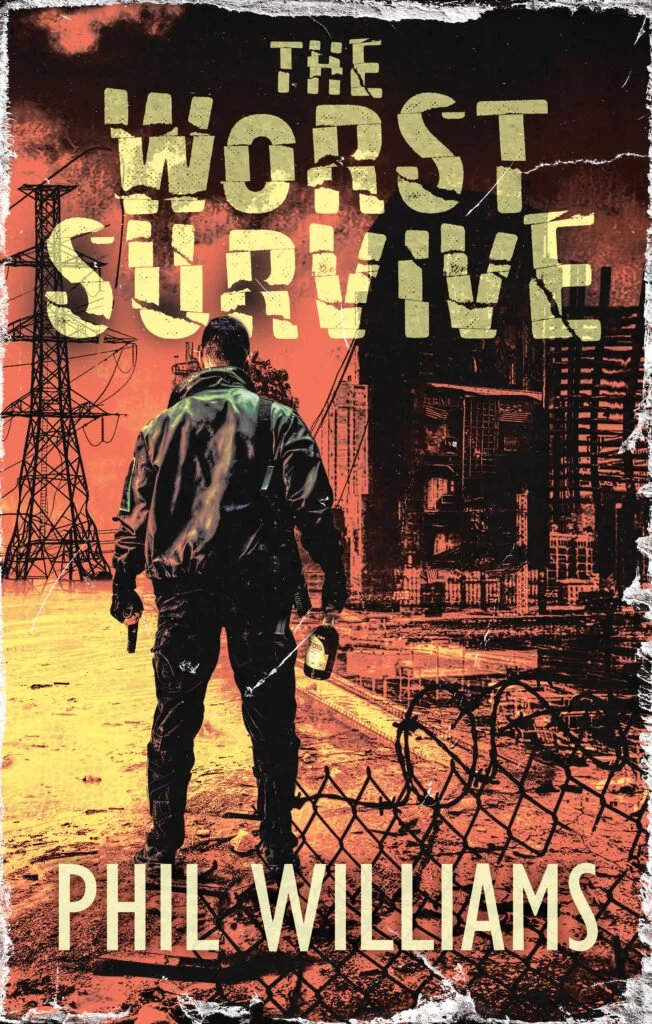
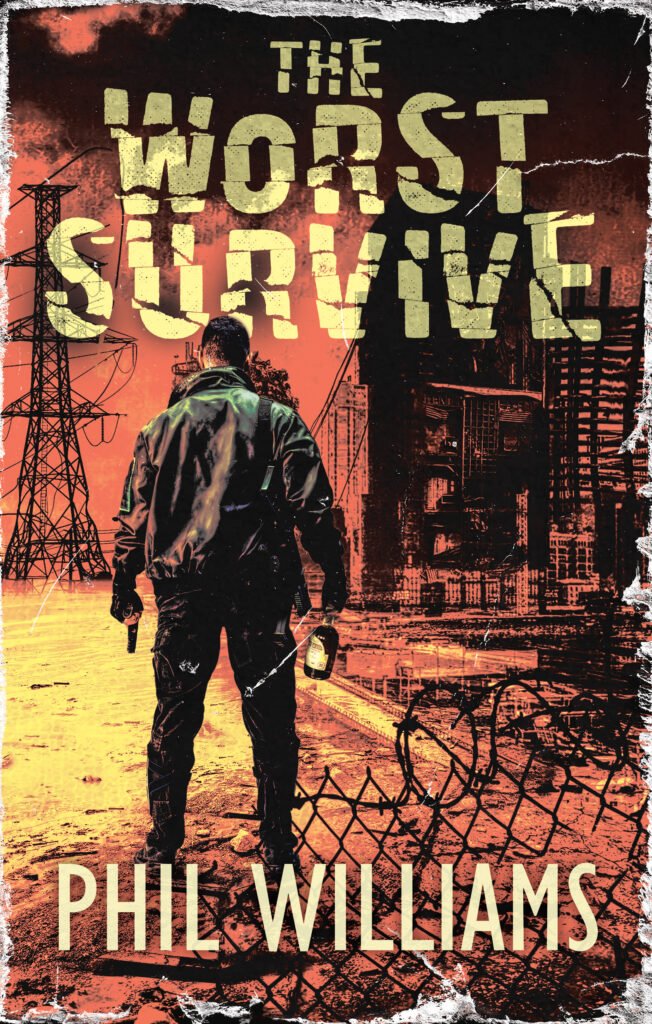
In the landscape of contemporary speculative fiction, few subgenres manage to capture the existential dread and kinetic energy of a collapsing society quite like the retro-future dystopia. Enter The Worst Survive, the latest visceral offering from author Phil Williams. Set against the scorched, lawless backdrop of a 2042 American Remnant, the novel serves as a masterclass in grit, blending the high-octane vehicular mayhem of Mad Max with the noir-drenched cynicism of Blade Runner and the uncompromising violence of Judge Dredd.
As the literary community turns its gaze toward the book’s July 28th release, early reviews—including an advance look by critic Julia Kitvaria Sarene—suggest that The Worst Survive is not merely a story about the end of the world, but a deep, uncomfortable excavation of the people who inhabit its wreckage.
The Core Narrative: A Descent into New Oak City
The premise of the novel is deceptively simple: an Englishman, a freedom fighter, and a scientist walk into a bar. But in the year 2042, the bar is not a place for jokes—it is a nexus for the desperate, the corrupt, and the lethal.
The protagonist, Scully, is a man defined by his lack of traditional heroism. He is a mercenary, a survivor with a significant drinking problem and a moral compass that points anywhere but north. Scully has no interest in the grand machinations of the "New Industry," the sprawling, dehumanizing political apparatus that governs the remnants of civilization. He wants enough coin for another round and, ideally, to be left alone.
However, the plot forces his hand. He is hired to protect Laine Faergrowe, a scientist who represents the "impossible"—a flickering, fragile light of hope in a world that has largely surrendered to entropy. As Scully quickly discovers, protecting a man who carries the potential to change the world is a death sentence. The assignment plunges him into a relentless chase across the American Remnant, where every gang, syndicate, and desperate scavenger is hunting for the same prize.
Chronology of a Crisis: Why 2042?
To understand the stakes of The Worst Survive, one must understand the environment. By 2042, society has not just fallen; it has been cannibalized.
- The Pre-Collapse Erasure: The history leading up to the narrative involves the disintegration of traditional governance, replaced by the "New Industry." This entity represents the triumph of corporate interests over human survival.
- The Inciting Incident: The recruitment of Scully at the local dive bar serves as the catalyst. This is the moment the reader is introduced to the stakes: an environment where a single "mark" can spark a city-wide war.
- The Mid-Point Escalation: As the journey progresses, the involvement of characters like the enigmatic Lena complicates the mission. The reader is kept in a constant state of flux, unsure if allies are truly friends or merely waiting for the moment to betray the party for a larger payout.
- The Climax: The narrative builds toward a revelation that shatters the "bigger picture," moving beyond the individual survival of the protagonists to reveal the systemic rot at the heart of their world.
Supporting Data: An Anatomy of a Protagonist
Scully is not a character designed to be "liked" in the traditional sense. He is, by his own admission, a man of violence. His internal monologue is colored by a cynical, sometimes abrasive worldview, particularly regarding his interactions with others.
Critics have noted that Scully serves as a litmus test for the reader. Those who prefer their protagonists to be beacons of moral clarity will likely find him repellant. However, those who appreciate the "anti-hero" archetype will find a layered, albeit deeply scarred, individual. Despite his protests to the contrary, Scully displays a fierce, if selective, protectiveness. Beneath the veneer of the "vicious lout" lies a man who, when backed into a corner, performs acts of loyalty that contradict his self-proclaimed status as a heartless survivor.
This duality is perfectly encapsulated in the novel’s pacing. Williams refuses to allow the reader—or the characters—a moment of reprieve. The action is described as "thick and fast," with combat sequences that are as much about endurance as they are about skill. It is a grueling, boots-on-the-ground perspective that emphasizes the physical cost of survival in a world that offers no mercy.
Perspectives and Official Critiques
Early industry analysis and reviews have highlighted the book’s uncompromising nature. In her review for Fantasy Faction, Julia Kitvaria Sarene noted: "Some books ease you in. This one drops you straight into the wreckage and dares you to keep up."
Sarene points out that while the protagonist’s commentary and attitude might pose a hurdle for some readers, they are essential to the book’s authenticity. "He’s not a good man. He’s not the villain either. That line is exactly where this book lives, and it’s a mean, bruising place to sit for a while."
The consensus among early readers is that the book thrives on its uncertainty. The supporting cast—particularly those like Lena, whose motives remain shrouded in ambiguity for the majority of the text—adds a layer of psychological tension that balances the high-octane physical conflict. The result is a narrative that forces the reader to constantly re-evaluate the status of every character they encounter.
The Implications of a Dystopian Future
The Worst Survive functions as more than just an action-packed thrill ride; it acts as a commentary on the nature of hope in a post-truth, post-industrial world. By making the "hope" in the story a scientist—a man of logic and progress—Williams highlights the friction between the need for advancement and the reality of a society that is too busy fighting for its next meal to care about the future.
The "New Industry" and the various gangs that inhabit the landscape are representations of a failed social contract. In the world of the novel, the only currency that matters is leverage. When Laine Faergrowe enters the equation, he effectively becomes the most valuable piece of leverage in existence.
Key Themes:
- The Ethics of Survival: Does the end justify the means? Scully’s journey forces the reader to confront whether a "good" goal can be achieved by "bad" people.
- The Fragility of Information: In a world of chaos, the truth—and the science Laine holds—is the most dangerous weapon.
- Tribalism vs. Humanity: The recurring focus on gangs and "bar-families" underscores the human need for belonging, even when that belonging is found among the most unlikely and violent of peers.
Conclusion: A Must-Read for the Genre Enthusiast
The Worst Survive is not a book for the faint of heart. It is a loud, bloody, and unapologetic descent into a world that has discarded its manners. It is an exploration of the "worst" of us, as the title implies, and the ways in which those very people might be the only ones capable of holding the line when everything else burns.
For readers who thrive on the frenetic energy of the dystopia subgenre, and who enjoy characters who are as morally complex as the world they navigate, Phil Williams has crafted an essential addition to the bookshelf. As the release date of July 28th approaches, the buzz surrounding the novel suggests that Scully’s journey through the wreckage of 2042 will be one of the most talked-about literary experiences of the summer.
Whether you are in it for the breakneck pacing, the sharp-tongued dialogue, or the deeper philosophical questions regarding human nature in the face of total collapse, The Worst Survive delivers. As one early reviewer summarized, it is a "frenetic, foul-mouthed ride through a world that won’t let you get comfortable," and ultimately, it is a ride that readers will likely find impossible to look away from.