Ammar Sabilarrohman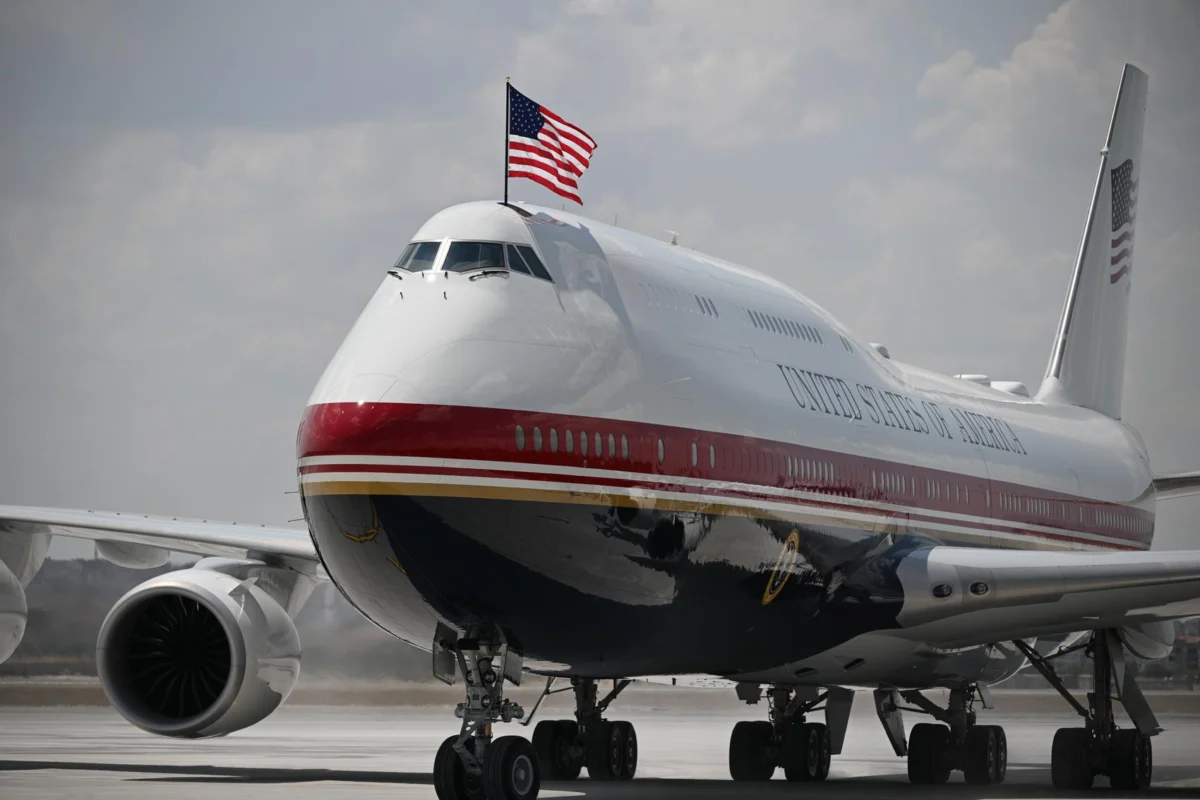
By AP Staff
In a dramatic escalation of tensions between the White House and the national press corps, the Trump administration issued federal subpoenas on Friday to several New York Times journalists. The legal action follows a series of investigative reports published earlier this week detailing significant security vulnerabilities regarding the newly inaugurated Air Force One, a jet gifted to the President by the government of Qatar.
The subpoenas, delivered by federal agents directly to the journalists’ homes, demand that they testify before a federal grand jury in Manhattan this coming Wednesday. The move has sparked immediate and widespread condemnation from media advocates and constitutional scholars, who characterize the use of law enforcement to compel reporter testimony as a grave infringement on the freedom of the press.
The Center of the Controversy: A Gifted Jet and Hidden Risks
The aircraft at the heart of the dispute is a custom-retrofitted jet that underwent a $400 million upgrade following its acquisition from Qatar. The jet, which entered official service only last week, has become the subject of intense scrutiny following a high-stakes series of flights during a period of extreme geopolitical volatility.
According to The New York Times, the newer aircraft lacks critical defensive systems present on the aging fleet of Boeing 747s that have served as Air Force One for decades. Specifically, reports indicate the plane may be missing advanced anti-missile countermeasures and electronic warfare suites deemed essential for a presidential aircraft.
The administration has vehemently denied these claims. In a statement issued Friday, White House spokesman Steven Cheung insisted the aircraft is "state-of-the-art," arguing that the administration intentionally utilizes "distraction and misdirection" as part of its protective strategy. "The new Air Force One has been fitted with high-level security protocols that ensure the safety of the President and his staff," Cheung stated.
Chronology of the Incident: From Turkey to Mildenhall
The controversy surrounding the aircraft reached a fever pitch during the President’s recent travel schedule, which coincided with the collapse of a shaky cease-fire between the United States and Iran.
- The NATO Summit: President Trump arrived at a NATO summit in Turkey aboard the new Qatari-gifted aircraft.
- The Mid-Trip Swap: On Wednesday, while en route to a trip to the Royal Air Force base in Mildenhall, England, the President departed on an older-model Air Force One. In an unusual logistical maneuver, both the new jet and the older jet flew to the Suffolk base.
- The Return: After arriving in England, the President switched to the new aircraft for the return flight to Joint Base Andrews.
The Times reported that this abrupt plane swap was performed at the urgent request of the Secret Service, who were allegedly concerned about the newer plane’s vulnerability as the U.S. launched airstrikes against Iranian targets and Iran responded by striking three Gulf Arab states. Given that Iran and Turkey share a border, the proximity of the new, potentially less-protected jet to a conflict zone raised immediate alarms within the intelligence community.
The President’s Defense
When confronted by reporters accompanying him during the return flight, President Trump dismissed the security concerns as speculative. He claimed that the stop in Mildenhall was merely an opportunity for U.S. service members stationed there to view the new aircraft.
When asked directly if he was aware of any credible threats against Air Force One from Iran, the President was dismissive. "I have a threat all the time. I’m No. 1 on their list," he remarked, suggesting that the logistical complications were of no significant concern to his safety or the integrity of the aircraft.
Legal Implications and Constitutional Concerns
The subpoenas target New York Times journalists Julian E. Barnes, Eric Lipton, Tyler Pager, and Eric Schmitt. The decision to serve these documents at the reporters’ private residences has been described by legal experts as an aggressive intimidation tactic.
David McCraw, the lead attorney for The New York Times, issued a blistering statement on Friday. "The appearance of federal law enforcement agents on the doorstep of news reporters should shock the conscience of any American who believes in the Constitution and the press freedom it protects," McCraw stated. He emphasized that the administration’s actions represent a departure from established norms regarding the protection of journalistic sources.
This is not the first time the current administration has utilized the Department of Justice to seek testimony from the media. Earlier this year, federal authorities issued similar subpoenas to reporters at The Washington Post and The Wall Street Journal. In both prior instances, the Justice Department ultimately withdrew the subpoenas following public outcry and internal legal pushback. However, the current effort targeting the Times suggests a hardening of the administration’s stance toward investigative journalism.
Technical Deficiencies: The $400 Million Question
The crux of the technical argument remains the $400 million retrofit performed on the Qatari jet. Critics within the aviation and intelligence sectors have questioned whether a foreign-sourced aircraft can ever be sufficiently "hardened" to meet the requirements of a U.S. presidential flight.
Standard Air Force One aircraft are equipped with:
- Encrypted Communications: Specialized hardware to ensure secure command-and-control capabilities.
- Anti-Missile Systems: Flares and electronic jamming devices designed to spoof infrared and radar-guided missiles.
- Hardened Infrastructure: Protection against electromagnetic pulses (EMP) and other electronic warfare threats.
If the newer aircraft lacks these features, it represents a significant downgrade in the President’s protective posture. The White House, while maintaining that the plane is secure, has not provided specific technical details to refute the Times’ reporting, citing national security protocols.
The Broader Political Context
The incident occurs at a moment of profound instability. With the Middle East currently embroiled in a regional conflict, the optics of a President flying in an aircraft that may be lacking in defensive capabilities are damaging. The administration’s suggestion that the "swap" was merely a matter of tactical "misdirection" highlights a shift toward a more opaque and combative relationship with the press.
Analysts suggest that the subpoenaing of journalists is likely an attempt to identify the anonymous sources within the Secret Service or the Department of Defense who spoke to the Times. By forcing reporters to reveal their sources, the administration hopes to plug leaks that have exposed internal disagreements over the President’s travel security.
Conclusion
As the Wednesday deadline for the grand jury testimony approaches, the legal battle is expected to intensify. The New York Times has indicated it will fight the subpoenas, setting the stage for a landmark court battle over the First Amendment and the right of journalists to protect their sources from government overreach.
The situation leaves the public with two conflicting narratives: an administration that claims to be using sophisticated, albeit secret, methods to protect the President, and a press corps that believes the government is attempting to hide a fundamental security failure behind a veil of legal intimidation.
For now, the new Air Force One remains in service, and the debate over its airworthiness—and the cost of the government’s efforts to suppress that debate—continues to dominate the political discourse.
© Copyright 2026 The Associated Press. All rights reserved. This material may not be published, broadcast, rewritten or redistributed without permission.


 Neng Nana
 Asro
Asro