

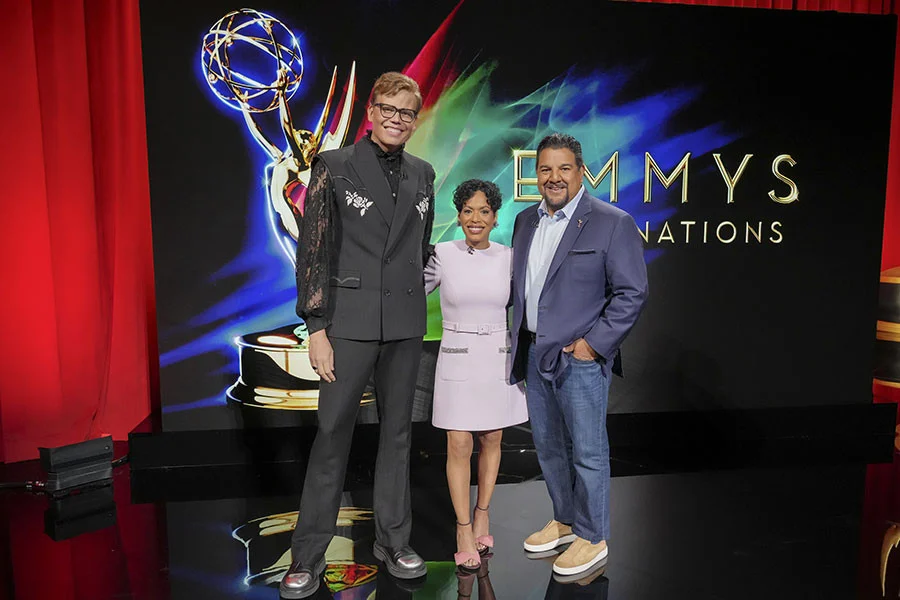
The television landscape underwent a seismic shift this Wednesday as the Television Academy unveiled the nominations for the 2026 Emmy Awards. Announced by The Bear star Liza Colón-Zayas, Somebody Somewhere actor Jeff Hiller, and TV Academy chair Cris Abrego, the list of contenders paints a portrait of an industry in transition—one where legacy juggernauts continue to break records while bold, late-breaking newcomers disrupt the established order.
As the industry digests the news, the Variety "Awards Circuit" podcast—featuring senior editors Michael Schneider, Emily Longeretta, and Jazz Tangcay—has convened a comprehensive roundtable to dissect the winners, the shock snubs, and the industry-wide implications of this year’s ballot.
The Titans of the Ballot: Historic Milestones
This year’s nomination cycle was defined by two HBO Max powerhouses that dominated the conversation from the opening bell.
The Reign of The Pitt
With 25 nominations, the gritty medical drama The Pitt has officially cemented its status as the show to beat. Leading the pack, the series secured a coveted spot in the Outstanding Drama category, while its ensemble cast dominated the acting fields with an impressive 13 nods. Notably, star Noah Wyle has been recognized in the Lead Actor category, setting the stage for what many pundits believe could be the show’s second consecutive win for Best Drama.
Hacks Breaks the Comedy Ceiling
If The Pitt is the drama heavyweight, Hacks is the undisputed king of comedy. In its fifth season, the series secured 24 nominations, officially shattering the record for the most Emmy nominations ever earned by a comedy series. By surpassing the previous record-holders—The Bear and The Studio, which both held the mark at 23—Hacks has proved that its cultural footprint only grows larger with time.
The spotlight is particularly bright for star Jean Smart. With this latest nomination, Smart is in prime position to claim her fifth Emmy for the role and her eighth overall. Such a victory would place her in a historic tie for the most Emmy acting wins by any performer in the history of the medium, a testament to her enduring brilliance.
The Newcomers: Apple TV’s Strategic Surge
While established series held their ground, the 2026 cycle was remarkably kind to freshman programs. Apple TV+ emerged as a dominant force with two of its flagship first-year shows making significant waves.
The horror-comedy Widow’s Bay proved to be the season’s most impressive sleeper hit. Despite premiering late in the Emmy eligibility window—a period traditionally considered a "dead zone" for awards consideration—the show secured 19 nominations. According to Michael Schneider, the success of Widow’s Bay was the result of a "relentless" word-of-mouth campaign that forced voters to prioritize the series despite an already crowded viewing schedule.
Joining the ranks of the elite was the twisty, high-concept drama Pluribus, which earned 18 nominations in its debut year. Meanwhile, Netflix’s Beef continued its critical momentum, leading the Limited/Anthology series category with 16 nominations.
Disappointments and the "Snub" Narrative
No Emmy morning is complete without a list of notable exclusions, and the 2026 roster provided plenty of fodder for debate.
Emily Longeretta expressed significant dismay regarding the treatment of Half Man. Despite a powerhouse performance from Richard Gadd, the series was largely overlooked by the Academy, a result Longeretta described as "shocking" given the show’s highly lauded, intricate writing. The exclusion of co-star Jamie Bell from the acting categories was cited as a particular point of contention among industry observers.
The "Sheridan Universe" also faced a surprising cold shoulder. Despite the immense star power of Billy Bob Thornton and Michelle Pfeiffer, projects like Landman and The Madison failed to garner a single nomination. Furthermore, while The Bear maintained a presence in the comedy categories, its lead, Jeremy Allen White, was conspicuously absent from the nominee list, signaling a possible shift in voter preference regarding the show’s current trajectory.
Broadcast TV and the Reality Competition Tug-of-War
The struggle for broadcast television remained palpable throughout the nomination process. With the exception of Abbott Elementary, which continues to be a darling of the Academy, traditional network television struggled to find traction against the streaming juggernauts.
However, there was a glimmer of hope for the legacy format. Dancing With the Stars made a triumphant return to the reality competition field after a ten-year nomination drought. The return was widely celebrated, though it came at a bittersweet cost for fans of other staples; the show’s inclusion seemingly displaced The Amazing Race, much to the chagrin of long-time fans like Michael Schneider.
Mariska Hargitay: A Milestone Year
Perhaps no figure in the industry is having a more consequential 2026 than Mariska Hargitay. Beyond her career-long consistency on Law & Order: SVU—which celebrated its 600th episode this year—Hargitay has been a focal point of cultural conversation. From her Broadway success to her critically acclaimed documentary My Mom Jayne, which secured two nominations, Hargitay’s versatility has been on full display.
Her appointment as the host for the 2026 Emmy Awards is a historic milestone; she will be the first woman to host the telecast in 15 years. Her presence is expected to bring a sense of gravitas and celebratory energy to a ceremony that is increasingly defined by the collision of prestige drama and digital-era disruption.
Expert Analysis: The Awards Circuit Roundtable
The Variety "Awards Circuit" team, comprised of Clayton Davis, Jazz Tangcay, Emily Longeretta, and Michael Schneider, continues to provide the definitive look at these developments.
For Tangcay, the nomination of Sally Field for Remarkably Bright Creatures stood out as a personal highlight. "Sally is just a legend," Tangcay remarked during the roundtable. "It was lovely to see her receive that recognition."
The podcast provides a deep dive into the nuances of these nominations, offering insights into:
- The Voting Shifts: How the Academy’s demographics are influencing the "Newcomer" vs. "Legacy" narrative.
- The Campaign Dynamics: Why late-cycle premieres are no longer the death knell they once were, thanks to social media buzz.
- The Platform War: How HBO Max and Apple TV+ have effectively cornered the prestige market, leaving broadcast networks to fight for the remaining scraps of cultural relevance.
Implications for the Future of Television
As we look toward the ceremony, the 2026 Emmy nominations suggest a television industry that is increasingly comfortable with its own evolution. The success of Hacks proves that comedies can sustain long-term excellence without losing their creative edge, while the rise of Widow’s Bay illustrates that the "prestige" gatekeepers are becoming more open to high-concept, genre-bending storytelling.
However, the lack of representation for legacy broadcast hits and the snubs of high-profile projects like those under the Taylor Sheridan banner suggest a narrowing of the "awards-worthy" lens. As streaming platforms continue to monopolize the nominations, the industry must grapple with what this means for the diversity of content—not just in terms of subject matter, but in terms of the platforms that bring those stories to life.
For now, the stage is set. The 2026 Emmy Awards promise to be a celebration of both established legends like Jean Smart and Sally Field, and the bold newcomers who have successfully captured the zeitgeist. As the Awards Circuit team continues to track these races, one thing is clear: in 2026, the only constant in television is the surprise.
To hear the full discussion on these nominations, subscribe to the "Awards Circuit" podcast via Apple Podcasts, Spotify, or your preferred podcast platform.










