

SPOILER ALERT: The following report contains major spoilers for the Season 28 premiere of Big Brother. Do not read further if you have not yet watched the episode.
In the twenty-eight-season history of CBS’s juggernaut reality competition Big Brother, the show has navigated houseguest scandals, massive power shifts, and complex social strategy. However, nothing in the annals of the franchise could have prepared viewers for the July 9 premiere, which featured a bizarre, prehistoric-themed twist that resulted in an unprecedented exit—and sparked a heated debate regarding the creative direction of reality television.
The Premise: A Time-Traveling Twist
The Season 28 premiere introduced a high-concept theme: "Time Travel." The fourteen new houseguests, eager to cement their legacies in the Big Brother house, were greeted with a set design that transported them—and the audience—to the Jurassic Period. The backyard was transformed into a dense, humid jungle, complete with tropical flora and a central, smoldering volcano.
To raise the stakes, producers brought back three seasoned veterans of reality competition: fan-favorite Big Brother 13 winner Rachel Reilly, Big Brother 26 standout Angela Murray, and Survivor 50 veteran Rick Devens. While the houseguests initially believed these three were entering the game as permanent players, the reality was far more fleeting. The producers announced that only these three veterans would be eligible to compete in the premiere’s Head of Household (HOH) challenge, with the remaining houseguests forced to watch from the sidelines.
The Chronology of the “Velociraptor Incident”
The sequence of events unfolded rapidly, blurring the lines between high-stakes competition and scripted absurdity.
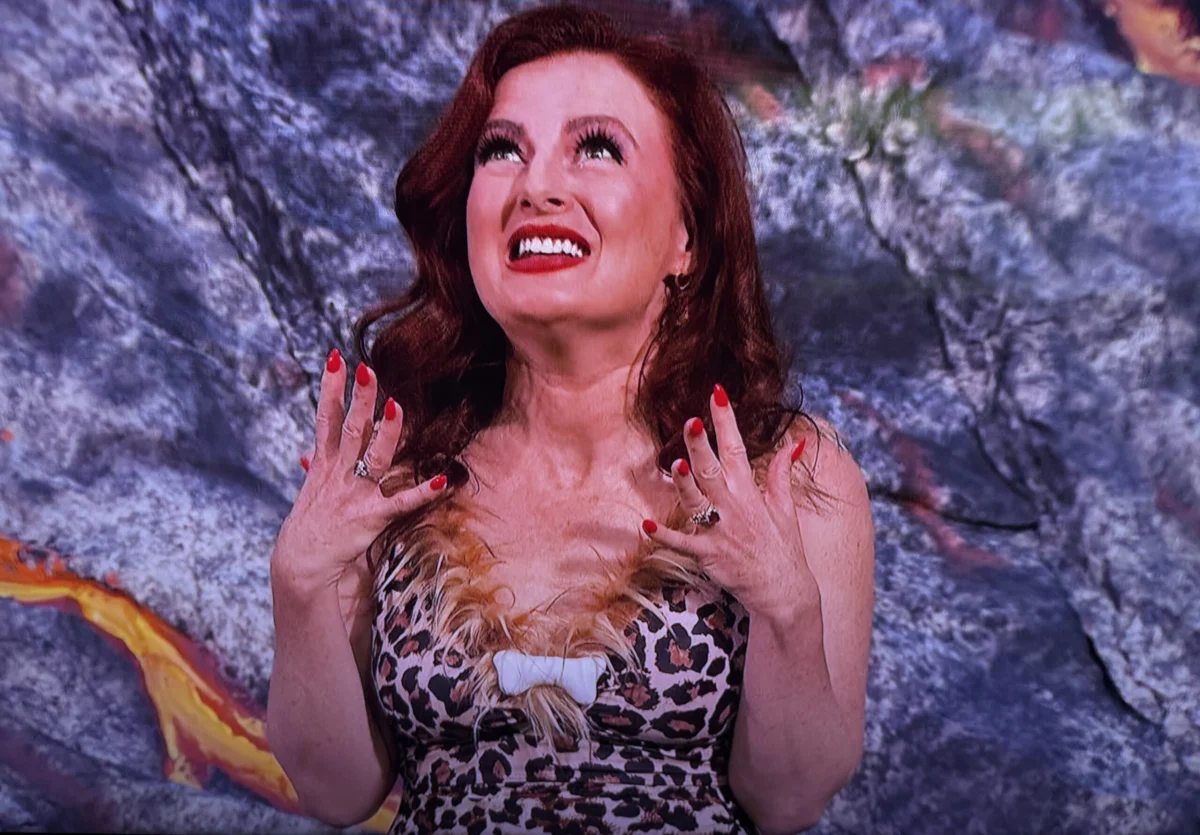
- The Setup: As the backyard became a prehistoric playground, the three veterans donned period-appropriate, albeit humorous, costumes. Reilly, in particular, was the focal point, as Julie Chen Moonves engaged her in a brief interview regarding her return to the franchise for the third time.
- The Ambush: Immediately following the interview, the atmosphere shifted from standard competition to cinematic chaos. A velociraptor—a high-end, realistic animatronic—suddenly burst from the jungle foliage.
- The Exit: In a sequence that defied all traditional Big Brother mechanics, the dinosaur proceeded to chase Reilly across the backyard, eventually "driving" her into the mouth of the erupting volcano.
- The Aftermath: The episode cut to the remaining contestants, who were left visibly stunned, breathing heavily, and struggling to reconcile the loss of a veteran player with the sheer absurdity of the method of departure.
Julie Chen Moonves, maintaining her professional composure despite the surreal turn of events, addressed the cameras to confirm that Rachel Reilly was officially eliminated from the game. "This is the most unexpected season premiere in the history of Big Brother," Moonves noted, promising that the game would continue despite the shocking loss. It was later revealed on the spin-off show Big Brother: Unlocked that Survivor 50’s Dee Valladares would be stepping in to fill the vacancy left by Reilly’s prehistoric demise.
Supporting Data: The Evolution of the Crossover
The inclusion of Rick Devens and Dee Valladares marks a significant shift in the Big Brother casting philosophy. While the show has historically kept its talent pool relatively insulated, the move to incorporate Survivor alumni is a calculated effort to unify the CBS reality ecosystem.
- The Precedent: The trend began in 2023 with the inclusion of legendary Survivor player Cirie Fields.
- The Strategy: By importing established personalities like Devens and Valladares, the production team aims to leverage cross-fandom engagement, bringing Survivor’s dedicated viewership into the Big Brother ecosystem.
- The Technical Shift: While crossovers are common in modern television, the "velociraptor" incident marks the first time in the history of the genre that a reality competition show has utilized high-budget practical effects to facilitate an eviction.
The Critical Backlash: "The Most Embarrassing Show on TV"
The audacity of the dinosaur-driven eviction did not land well with all segments of the media. BuzzFeed Canada was particularly pointed in its critique, publishing a scathing assessment that labeled the show "the most embarrassing show on TV right now."
The outlet’s commentary focused on the "absurd choices" made by the production team, questioning the artistic merit of a reality show that would abandon its social-experiment roots in favor of Jurassic-themed gimmickry. The article posed a rhetorical question to the fanbase: "There’s camp, and then there’s whatever this is. Why do we still watch this?"

The Defense: Frankie Grande Speaks Out
The criticism triggered an immediate and vocal defense from one of the franchise’s most recognizable alumni: Frankie Grande. The Big Brother 16 star, who became a cultural phenomenon following his tenure on the show, took to Instagram to address the BuzzFeed article directly.
Grande’s rebuttal was swift and unapologetic. He argued that the "campiness" of Big Brother is not a bug, but a feature—a core element of its DNA. "Shut up," Grande wrote in the comment section, asserting that the show’s willingness to embrace the ridiculous is exactly what gives it its enduring charm. He concluded his defense with a blunt message to detractors: "No one is forcing you to watch."
Implications for the Future of Reality TV
The events of the Season 28 premiere raise critical questions about the trajectory of reality competition television. By leaning into scripted-style narrative beats, Big Brother is positioning itself at a crossroads.
1. The Blurring of Genres
Historically, Big Brother relied on the unpredictable nature of human social interaction. By introducing external, "scripted" elements like the velociraptor, the producers are moving the show closer to the realm of variety entertainment. While this may alienate purists who prefer the raw, unadorned social strategy of early seasons, it may also attract a younger, more spectacle-driven audience accustomed to high-production-value content.
2. The Power of "Camp"
Frankie Grande’s defense highlights a crucial aspect of reality TV marketing: the "hate-watch" or "camp" appeal. Shows that are "so bad they’re good" often garner higher social media engagement than shows that are consistently competent but unremarkable. By embracing the absurdity, Big Brother ensures that it remains the subject of intense online discourse, keeping its brand relevant in a crowded streaming landscape.
3. Sustainability of the Format
The decision to replace an eliminated player with an alternate (Dee Valladares) suggests that the producers have prepared for the chaotic nature of this season’s twist. However, the reliance on high-concept gimmicks poses a long-term risk. If the "Time Travel" theme continues to escalate, the show risks losing the "human element" that makes the social game compelling.
Conclusion: A New Era or a Misstep?
Whether the velociraptor incident is remembered as a stroke of genius or a "jump the shark" moment remains to be seen. What is certain, however, is that Big Brother Season 28 has successfully captured the public’s attention. By challenging the traditional boundaries of the format and inviting the inevitable social media storm, the producers have ensured that this season will be analyzed, critiqued, and debated for months to come.
As the season progresses, viewers will be watching closely to see if the "Time Travel" theme continues to offer high-octane spectacle or if it serves as a distraction from the fundamental social dynamics that made the show a hit in the first place. For now, fans, critics, and alumni like Frankie Grande remain locked in a tug-of-war over the identity of a show that, for better or worse, refuses to be anything other than its authentic, chaotic self.
As the dust settles in the backyard and the remaining houseguests prepare for their next challenge, one thing is clear: in the world of Big Brother, the only thing you should expect is the unexpected—even if it comes in the form of a prehistoric predator.










