Muslim
For students of the Japanese language, few elements present as daunting a barrier to fluency as the "small, non-translatable words" known as particles (joshi). While they may appear to be mere afterthoughts attached to nouns or verbs, these tiny linguistic markers are, in fact, the structural scaffolding of the entire language. Without them, Japanese sentences would be little more than a collection of disconnected concepts.

This guide serves as a comprehensive exploration of the primary particles—ga, wa, o, ni, de, e, to, kara, made, no, toka, and the multifunctional ga—designed to demystify their roles and provide the foundation for grammatical mastery.

The Role of Particles in Japanese Syntax
Japanese is a SOV (Subject-Object-Verb) language, but it is also a highly context-dependent one. In English, the meaning of a sentence is largely derived from word order. In Japanese, however, the meaning is derived from the particles attached to the words.

Think of particles as the traffic signs of a sentence. They inform the reader whether a word is the subject performing the action, the object receiving the action, or the location where the action occurs. Because Japanese frequently allows speakers to omit the subject or topic if it is understood from the context, mastering particles is not just about grammar; it is about learning how to navigate the social and logical nuances of the language.

The Great Debate: Ga vs. Wa
The distinction between wa (は) and ga (が) is often the first major hurdle for learners. While textbooks often label wa as the "topic marker" and ga as the "subject marker," the reality is more nuanced.

The Topic Marker: Wa
Wa establishes the "theme" of the conversation. It signals to the listener: "As for this thing, here is what I have to say." It is used when discussing information already known to the listener or general facts. When you use wa, you are effectively saying, "Speaking of [X]…"

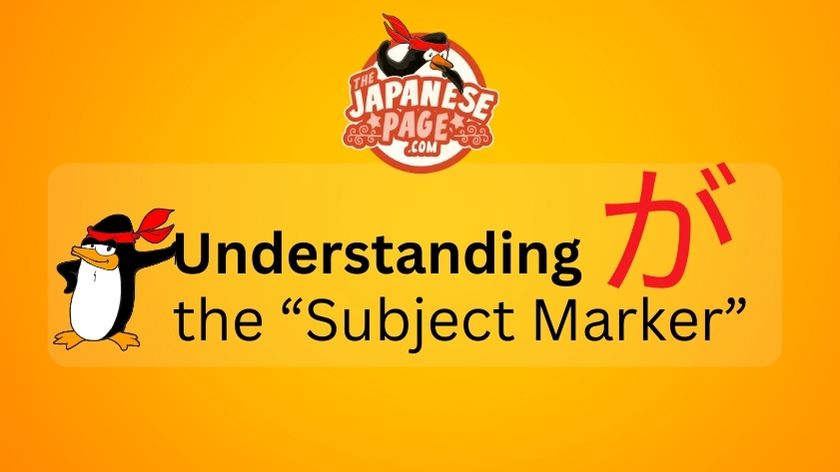
The Subject Marker: Ga
Ga is used to introduce new information. It answers the implicit question, "Who or what is performing this action?" It is also used to emphasize the subject specifically. For example, in a room full of people, if you want to identify who exactly ate the cake, you would use ga to highlight that specific individual.

Key Distinctions
- Question Words: Interrogatives such as dare (who), nani (what), or doko (where) almost always take the particle ga because they represent the unknown information that the listener is seeking.
- Subordinate Clauses: Within a complex sentence, the subject of a subordinate clause is generally marked with ga rather than wa to keep the main topic of the sentence clear.
Direct Objects and Transitive Actions: O
The particle o (を) is the primary marker for the direct object of a transitive verb. If you "eat an apple," the apple is the direct object, and it must be marked with o.
While modern pronunciation often renders it as "o," its historical romanization "wo" remains important for input methods on digital keyboards. It is crucial to note that while o marks the direct object, certain verbs—particularly those expressing desire (like hoshii—to want) or ability (like dekiru—can do)—take the particle ga instead, a frequent trap for even intermediate learners.

Spatial and Temporal Markers: Ni, De, E, and Kara/Made
Japanese uses a variety of particles to define the "where" and "when" of an action.

- Ni (に): Often called the "target" particle. It marks a specific point in time or a destination of arrival. It indicates existence (ni iru/aru—to be at a location) and the recipient of an action (ni ageru—to give to someone).
- De (で): This particle marks the "scope" or location of an action. Unlike ni, which implies existence or arrival, de is used when an action takes place at a location (e.g., "I studied at the library"). It is also used to indicate the tool or method used to perform an action (e.g., "I ate with chopsticks").
- E (へ): Primarily used for direction. It is interchangeable with ni in many contexts of movement, but e emphasizes the direction or the "towardness" of the travel rather than the destination itself.
- Kara (から) and Made (まで): These define boundaries. Kara is the starting point (from/since), while made is the ending point (until/as far as). Together, they allow for precise descriptions of travel or duration.
Connections and Relationships: To, Toka, No, and Mo
When you need to link nouns or express relationships, these particles become essential.

To (と)
To is the definitive "and." It implies a complete, exhaustive list. If you say "apple to orange," you are listing those two items and no others. It also functions as a quotation marker (used after a verb or thought followed by iu or omou) and as a conditional "if."

Toka (とか)
Unlike to, toka is used for non-exhaustive lists. It suggests that there are other items in the category that you haven’t mentioned, functioning similarly to "things like [A] and [B]."

No (の)
No is the possessive particle, but it is far more flexible. It functions as an attributive, linking nouns to describe them (e.g., "University Student"). It also acts as a nominalizer—turning verbs or adjectives into noun phrases, similar to adding "the one that is…" to an English sentence.

Mo (も)
Mo means "also" or "too." It replaces particles like wa, ga, or o to indicate that the subject or object being discussed shares a trait with a previously mentioned one. It can also be used to emphasize inclusion or to create "neither/nor" constructions.

Implications for Language Acquisition
The sheer variety of particles means that there is no "shortcut" to mastery. However, the chronology of learning is clear: start with the basic subject and object markers (wa, ga, o), then progress to spatial markers (ni, de, e), and finally layer in the complex relational particles (to, no, mo).

Official Perspectives on Grammar Study
Linguistic research into Japanese language pedagogy emphasizes "input hypothesis"—the idea that reading and listening to natural, context-rich Japanese is more effective than rote memorization of grammar rules. The particles are best learned through "chunking": seeing them in their natural habitat within sentences.

Why Students Struggle
The most common point of failure is attempting to find a 1:1 translation for particles in English. For instance, ni cannot always be translated as "at," nor can wa always be "as for." Because particles reflect the logical structure of Japanese thought rather than English, students must move away from translation and toward understanding the function—the "traffic sign"—that the particle serves.

Conclusion: The Path Forward
The mastery of particles is an ongoing process. As your Japanese proficiency grows, you will find that these markers provide the nuance that separates a mechanical speaker from a fluent one.

For those looking to deepen their understanding, the most effective strategy remains the same: read extensively, listen to native audio, and pay attention to which particle is being used to connect the dots. By viewing particles not as hurdles to be jumped, but as the essential architecture of the Japanese language, you will find that the path to fluency becomes significantly more navigable.

Remember: It will get easier with time. Continue to read, re-read, and immerse yourself in the natural flow of the language.


 Neng Nana
 Asro
Asro