

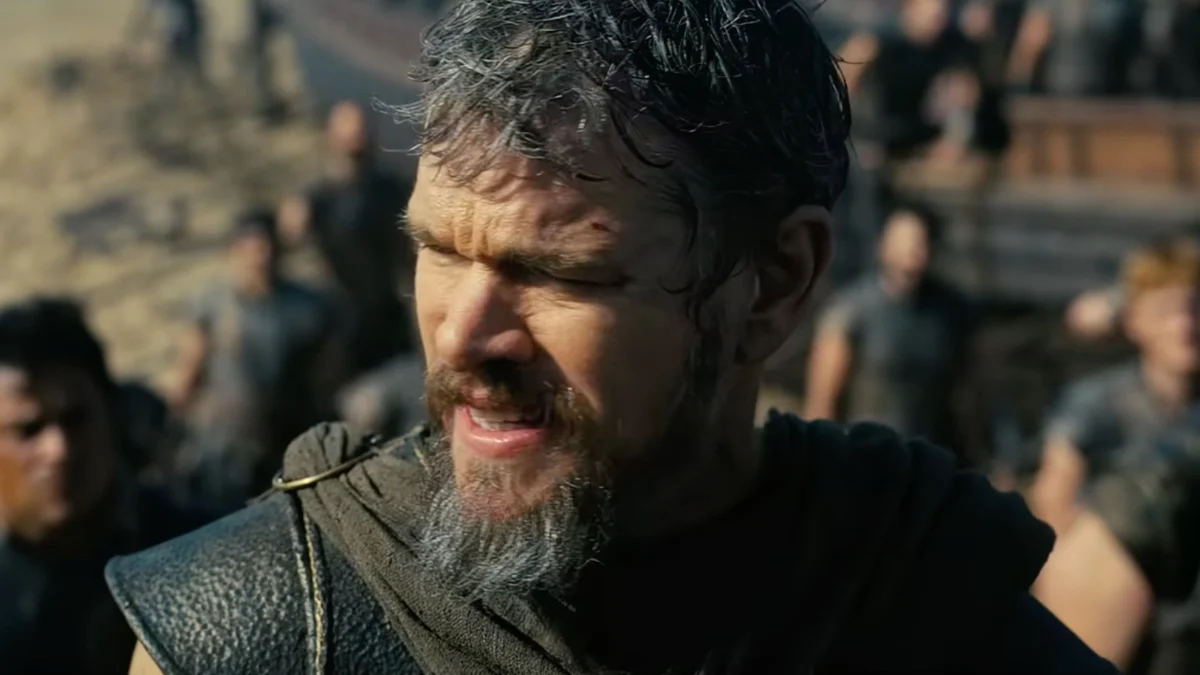
Homer’s The Odyssey stands as the bedrock of Western storytelling—a foundational pillar of literature that has been reimagined, parodied, and deconstructed for nearly three millennia. From the high-seas adventures of classical antiquity to the whimsical, unexpected reaches of SpongeBob SquarePants, the tale of Odysseus’ arduous return home is a narrative chameleon. However, the announcement that visionary filmmaker Christopher Nolan would tackle a traditional, large-scale adaptation of the epic sent shockwaves through the industry. With a July 17, 2026, release date locked in, anticipation has reached a fever pitch, driven largely by the film’s star, Matt Damon, who is now offering a glimpse into the thematic soul of this massive production.
The Genesis of a Modern Epic
For Christopher Nolan, whose career has been defined by high-concept explorations of time, space, and human obsession, The Odyssey represents a unique creative pivot. While his filmography is littered with complex puzzles—Inception, Tenet, and Interstellar—Nolan’s interest in Homer’s epic stems from a desire to return to the visceral, tactile roots of cinema.
Insiders suggest that Nolan is looking to channel the spirit of legendary stop-motion animator Ray Harryhausen, utilizing his signature IMAX cinematography to bring the mythical monsters and gods of the ancient Mediterranean to life. By stripping away the modern layers often applied to the text, Nolan aims to capture the "essentials" of the original epic: the raw scale of the landscape, the brutality of the sea, and the unyielding will of the human spirit.
A Rorschach Test of Themes: Matt Damon on the Core of the Story
As the production moves toward its 2026 premiere, the question remains: What is the specific narrative anchor for such a sprawling myth? During a recent press event, lead actor Matt Damon addressed the ambiguity of the adaptation, suggesting that the film’s message is intentionally fluid, mirroring the complexity of Homer’s own work.
"I think people, depending on the experience, the personal experience you bring into the theater, things are going to hit you in different ways," Damon told /Film. "Because it’s so many stories in one. Maybe it’s a love story for people, or a story about war. One of the people working on the film was a veteran, and he thought it was, he said this is all about PTSD. And I think it really depends on what you carry into it, and that’s the beauty of Homer."
Damon’s perspective underscores a crucial element of the film’s production philosophy: it is not intended to be a singular, didactic interpretation. Instead, the film acts as a mirror for the audience, allowing the viewer’s own life experiences—whether they see it as a tale of homecoming, a survival horror, or a political drama—to dictate the meaning of Odysseus’ struggle.
![The Odyssey Star Matt Damon Explains What Christopher Nolan's New Movie Is Really About [Exclusive]](https://www.slashfilm.com/img/gallery/the-odyssey-star-matt-damon-explains-what-christopher-nolans-new-movie-is-really-about-exclusive/l-intro-1783085677.jpg)
Chronology: From Ancient Verse to the IMAX Screen
The path to this adaptation has been long and paved with various attempts to capture the scope of the story.
- Ancient Period: Homer pens The Odyssey, cementing the archetype of the "hero’s journey."
- 20th Century: The story sees various iterations, most notably through the lens of fantasy adventure films that utilized practical effects to depict the Cyclops, Circe, and the Sirens.
- 2000: The Coen Brothers release O Brother, Where Art Thou?, a loose, bluegrass-infused adaptation that proved the story could be transplanted into vastly different cultural contexts, such as the American Depression-era South.
- 2024–2025: Christopher Nolan enters pre-production, focusing on the intersection of IMAX technology and practical, location-based filming to ground the myth in a sense of "real-world" geography.
- July 17, 2026: The official theatrical release of The Odyssey.
The "Journey" vs. The "Destination"
In literary analysis, The Odyssey is the quintessential "journey" narrative. Unlike The Iliad, which focuses on the claustrophobic rage of the Trojan War, The Odyssey is a story of dispersal, wandering, and the erosion of the self through time and trauma.
The film’s focus on the journey is not merely a stylistic choice; it is a structural necessity. Odysseus is a man fundamentally broken by war before he even begins his voyage home. By the time he reaches Ithaca, he is a stranger to his own kingdom, his own wife, and his own identity. Matt Damon’s performance is reportedly centered on this metamorphosis. The "hero" at the start of the film is not the same man at the end. Nolan’s commitment to this transformation suggests that the film will prioritize the psychological weight of the character’s experiences over the spectacle of the encounters, though the latter is expected to be visually breathtaking.
Supporting Data: Why Now?
The timing of a major Odyssey adaptation is not coincidental. In an era dominated by CGI-heavy superhero films and franchise sequels, audiences have shown an increasing appetite for "prestige epics"—films that offer massive spectacle while maintaining a grounded, character-driven emotional core.
Industry analysts point to the success of recent historical and mythic adaptations as a sign that viewers are ready for a return to the "Big Screen Experience." Nolan’s reliance on practical effects and his long-standing partnership with IMAX have turned his films into "event cinema." For The Odyssey, this means:
- Production Scale: The use of actual Mediterranean locations rather than green-screen environments to capture the light and texture of the Aegean Sea.
- Technological Integration: Advancements in high-resolution photography that allow the gods and monsters to be rendered with a sense of physical presence that was impossible during previous adaptations.
- Thematic Resonance: The post-war anxiety and the struggle to reintegrate into civilian life—central themes of the poem—remain as relevant today as they were in the 8th century B.C.
Official Responses and Industry Outlook
While Universal Pictures has kept the finer plot points under wraps, the industry reaction to the project has been overwhelmingly positive. Critics note that the pairing of Christopher Nolan’s meticulous, often mathematical approach to storytelling with the chaotic, emotional, and unpredictable nature of Homer’s epic creates a fascinating tension.
![The Odyssey Star Matt Damon Explains What Christopher Nolan's New Movie Is Really About [Exclusive]](https://www.slashfilm.com/img/gallery/the-odyssey-star-matt-damon-explains-what-christopher-nolans-new-movie-is-really-about-exclusive/intro-1783085677.jpg)
"Nolan is the perfect director to handle the ‘impossible’ logistics of the journey," says film historian Dr. Elena Vance. "His ability to manage vast, sprawling narratives without losing the intimacy of the protagonist is exactly what the source material requires."
Implications for Future Filmmaking
The success of this film could signal a shift in how Hollywood approaches public-domain classics. If Nolan can prove that a traditional, high-budget, serious-minded adaptation of a classical text can perform at the box office, it may embolden studios to move away from "reimagining" classics with modern irony and toward faithful, grand-scale interpretations.
Moreover, by emphasizing that the film is "up to the viewer," Nolan and Damon are effectively marketing the film as an intellectual exercise as much as an action-adventure. This broad appeal could capture both the cinephile demographic that follows Nolan’s technical achievements and the general audience looking for a resonant, universal story of survival and love.
As we look toward the summer of 2026, the question is no longer whether The Odyssey needs to be told again, but whether we are ready for the version that will define this generation. With Matt Damon at the helm of this mythical voyage, the journey, as they say, is truly just beginning.








