

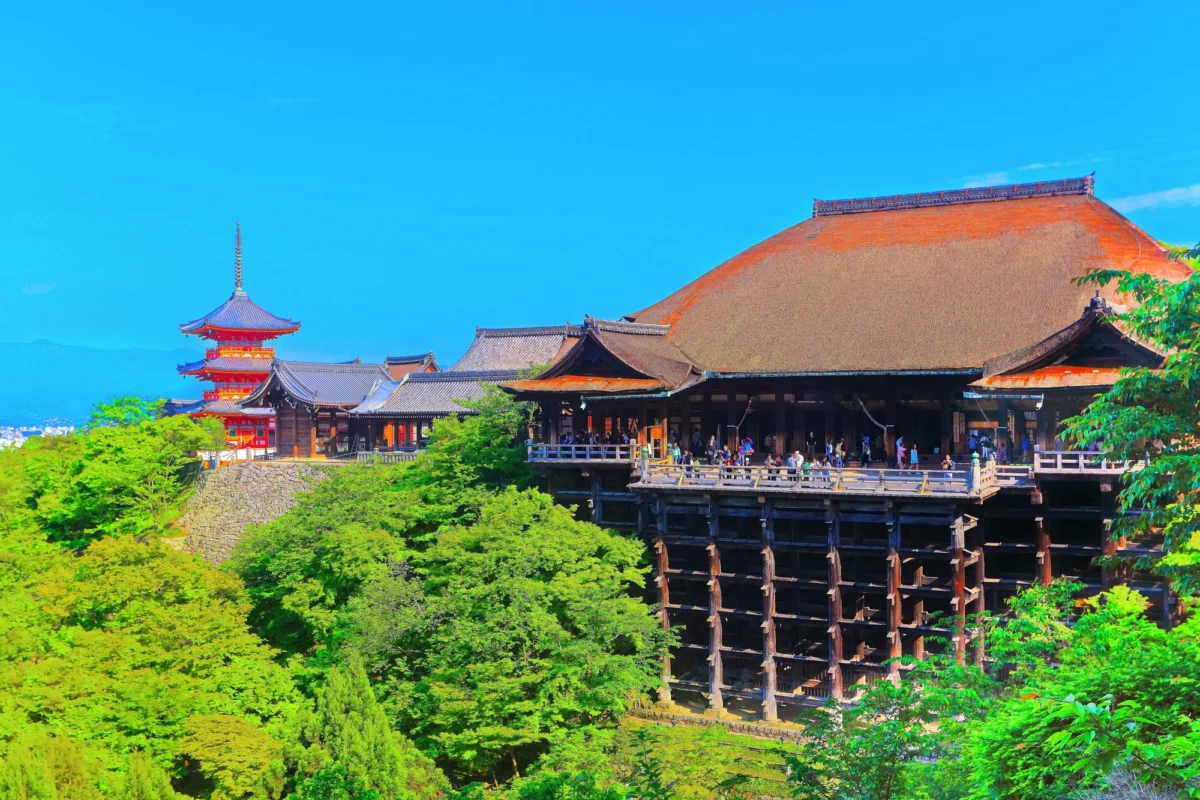
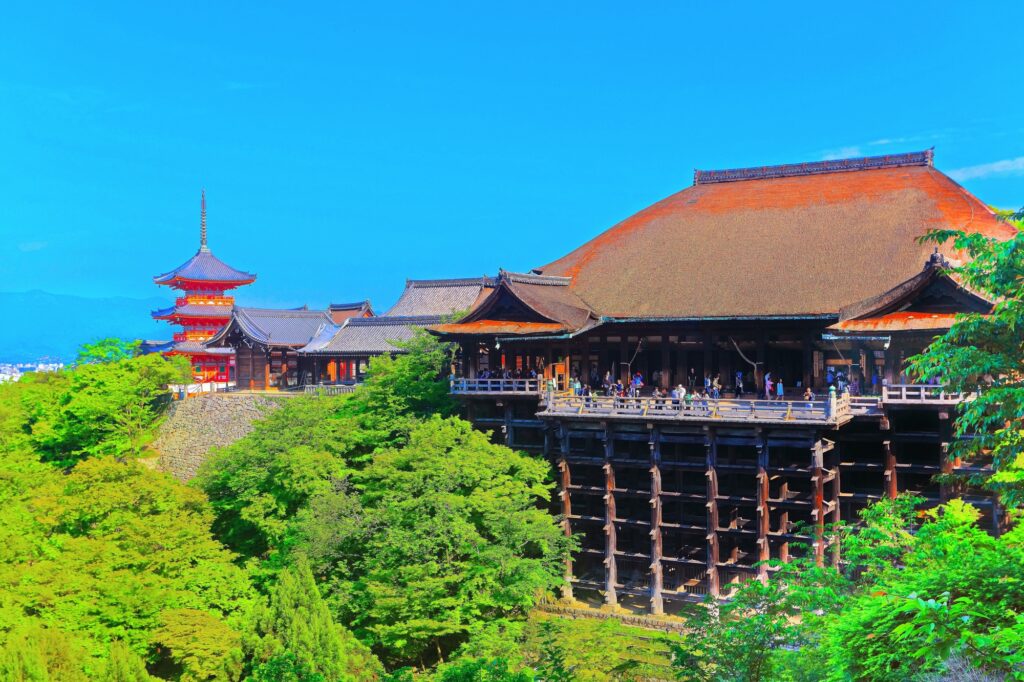
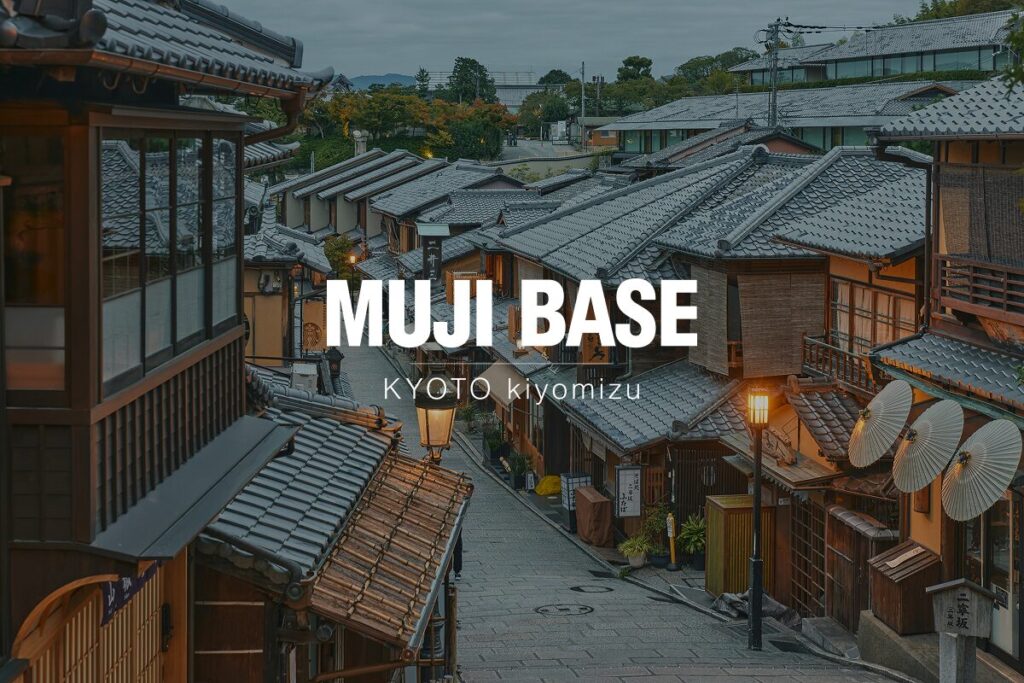
In the heart of Japan’s most historically significant city, where the scent of incense from centuries-old temples mingles with the modern aroma of third-wave coffee, a new hospitality experiment has emerged. Ryohin Keikaku, the parent company of the global retail juggernaut MUJI, has unveiled its latest project: MUJI BASE Kiyomizu. Situated just a stone’s throw from the iconic Kiyomizu-dera Temple in Kyoto, the hotel was marketed with a provocative premise: an “anti-tourism” experience. However, this branding has ignited a firestorm of controversy, raising fundamental questions about the definition of sustainable travel in a nation currently grappling with the unintended consequences of its own global popularity.
The Evolution of MUJI’s Hospitality Strategy
To understand the friction surrounding the Kiyomizu project, one must first understand the two distinct arms of Ryohin Keikaku’s hospitality division. The company first entered the space with the MUJI HOTEL brand—a concept centered on "optimized city travel." With properties in Tokyo’s Ginza district, as well as Shenzhen and Beijing, these hotels follow a "no-frills, no-excess" philosophy. They are designed for the urban traveler seeking functionality and aesthetic minimalism at a mid-range price point, starting at approximately ¥14,900 ($93 USD).
The second, more ambitious arm is MUJI BASE. Unlike the urban hotel chain, the BASE concept is explicitly focused on regional revitalization. The strategy involves the adaptive reuse of dormant assets—renovating shuttered schools, abandoned farmhouses, and historical structures—to breathe new life into struggling rural areas. Before the launch in Kyoto, the brand established four such bases across Japan, including the notable MUJI BASE KAMOGAWA in Chiba Prefecture, which occupies a renovated 100-year-old farmhouse. These projects generally demand longer stays, often requiring a minimum of two nights to ensure guests engage deeply with the local community.
The Kiyomizu Pivot: A Disruption of the Model
The opening of MUJI BASE Kiyomizu in May 2026 marks a radical departure from this rural-centric ethos. By taking over the former Amenity Hotel Kyoto in the heart of Higashiyama-ku, MUJI has moved its “local experience” model into one of the most congested tourist corridors in the world.
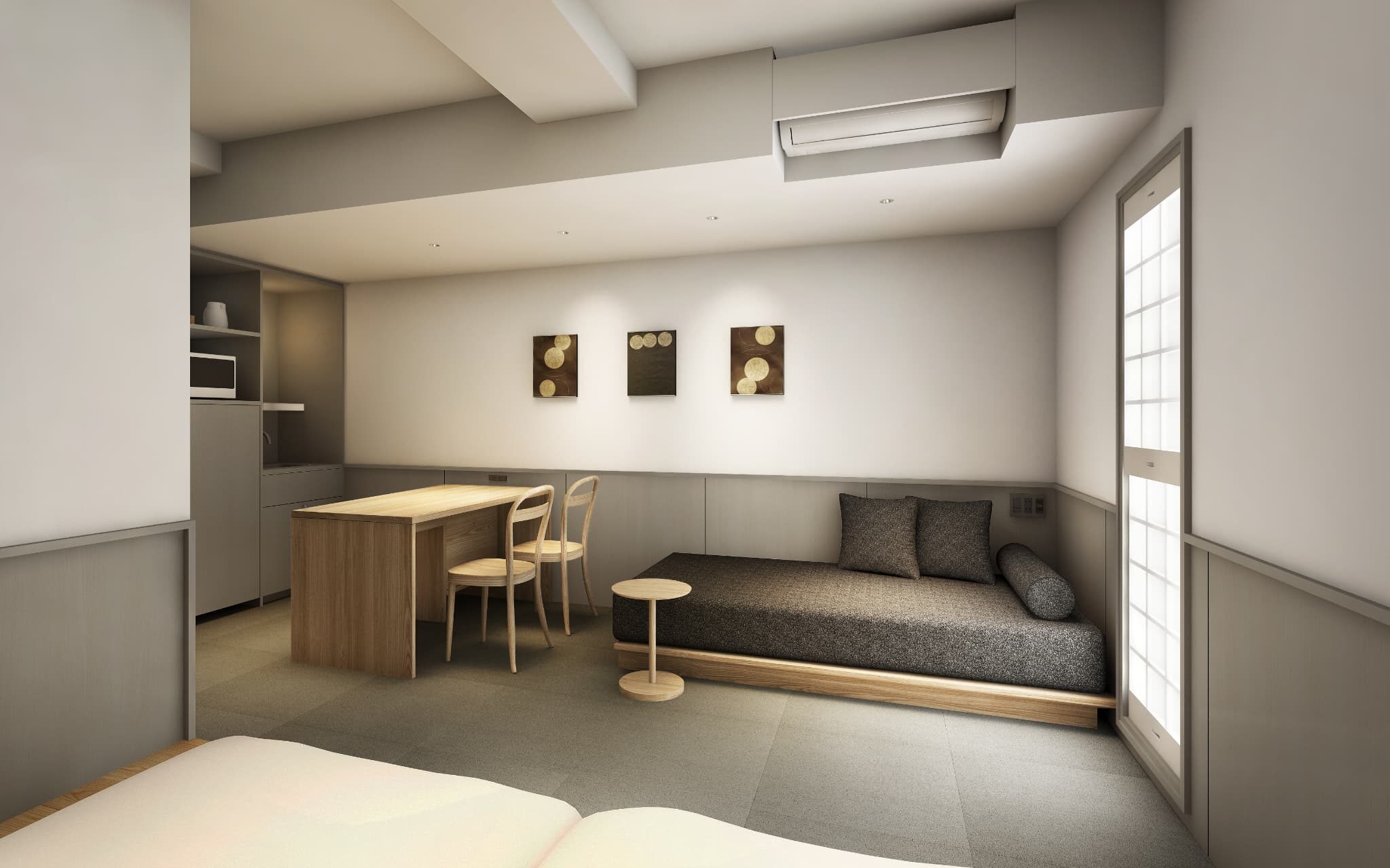
The hotel’s design is unmistakably MUJI. Approximately 90% of the furnishings and amenities are sourced from the company’s own home goods line. While the name "MUJI" (an abbreviation of Mujirushi Ryohin, meaning "no-brand quality goods") suggests a lack of artifice, the interior is a masterclass in deliberate, curated minimalism, adhering to the design philosophies of legendary creators like the late Tanaka Ikkō and current art director Hara Kenya.
To distinguish itself from standard hotels, the property provides an "outing kit." This curated set includes a signature MUJI water bottle, a canvas tote, and a bespoke map directing guests to nine hyper-local experiences, such as kintsugi pottery repair workshops and traditional tofu makers. For the early risers, the hotel organizes a 5:40 AM walking tour to Kiyomizu-dera, allowing guests to witness the temple grounds before the influx of daily visitors. They even offer morning radio calisthenics (rajio taisō), a quintessential Japanese cultural touchstone. The ground floor features a collaboration with the historic Kyoto roaster Ogawa Coffee, serving breakfast in the traditional obanzai style—a series of small, seasonal vegetable-based side dishes.
Chronology of the Controversy
The friction began almost immediately upon the announcement of the hotel’s marketing strategy.
- February 2026: Ryohin Keikaku announces the opening of MUJI BASE Kiyomizu, framing it as a hub for deep cultural immersion.
- May 2026: The hotel officially opens its doors. A feature in the Nikkei newspaper characterizes the property as an “anti-tourism” hotel, a term intended to describe the slow-travel, high-engagement nature of the stay.
- Late May – June 2026: The term “anti-tourism” gains traction on social media. Japanese netizens, already exhausted by the pressures of mass tourism in Kyoto, openly mock the label.
- July 2026: Public sentiment hardens. Forums on Yahoo! News become a primary venue for criticism, with residents accusing the corporation of greenwashing or "experience-washing" a project that objectively adds to the density of an already over-saturated neighborhood.
Overtourism: The Data Behind the Backlash
The skepticism directed at MUJI is not merely aesthetic; it is deeply rooted in the current crisis of overtourism in Japan. As the country welcomes over 40 million visitors annually, the pressure on infrastructure has reached a breaking point.
Kyoto, the epicenter of this struggle, has been forced to implement drastic measures. The city has introduced "tourist-only" bus lines to separate visitors from the local commute and has moved toward a two-tier pricing system for public transit to ensure residents aren’t priced out or crowded out of their own city.
Critics argue that by placing a hotel in the heart of the Higashiyama district—a zone already struggling with tourist congestion—MUJI is exacerbating the very problem it claims to solve. The "anti-tourism" label is viewed as particularly tone-deaf. If the goal were truly to alleviate the burden on Kyoto’s historical core, critics argue, the project should have been located in the city’s peripheral districts, or better yet, in one of the 25 prefectures that currently receive virtually no international attention.
Perspectives: Corporate Vision vs. Resident Reality
In response to the criticism, proponents of the project suggest that the "anti-tourism" branding refers to the behavior of the guests rather than the location of the hotel. They argue that by encouraging guests to participate in kintsugi or eat at local tofu shops, MUJI is redistributing wealth from big-ticket attractions to local artisans.
However, the consensus among local residents and online commentators remains skeptical. A common sentiment on social media platforms is that "you cannot get the real experience of living somewhere without staying multiple nights." Critics suggest that if MUJI were serious about its "base" philosophy, it would mandate a minimum stay of at least three nights to discourage short-term, "hit-and-run" sightseeing.
One prominent critic noted: "This isn’t anti-tourism; it’s full-on sightseeing. Why here of all places? It feels like an intrusion into our daily lives under the guise of an ‘authentic’ experience."
Implications for the Future of Japanese Tourism
The MUJI BASE Kiyomizu case serves as a microcosm for the broader challenges facing Japan’s hospitality sector. The country is currently suffering from a "dispersion problem." While Kyoto, Tokyo, and Osaka are bursting at the seams, nearly half of Japan’s 47 prefectures remain virtually absent from the top 100 list of tourist destinations.
The backlash against MUJI highlights a growing demand for corporate accountability. Consumers and residents are no longer satisfied with brands simply providing a beautiful space; they are demanding that hospitality providers consider the social and environmental footprint of their operations.
For MUJI, the challenge moving forward will be to reconcile its brand identity as a purveyor of "no-brand" simplicity with the optics of a corporate entity expanding into already fragile urban centers. If the brand continues to expand the BASE concept, it may need to pivot away from marquee destinations like Kiyomizu and return to the truly "off-the-beaten-path" locations that characterized its earlier, more successful efforts in rural Chiba.
Ultimately, the Kyoto project demonstrates that in an era of global overtourism, the term "authentic" has become a commodity. True authenticity, as many residents of Kyoto would argue, cannot be curated, packaged, or sold—especially not in the shadows of the city’s most crowded temples. For future travelers, the message is clear: if you truly wish to support local communities and avoid contributing to the degradation of iconic sites, the most "anti-tourism" act is to seek out the quiet, unheralded corners of the map.











