


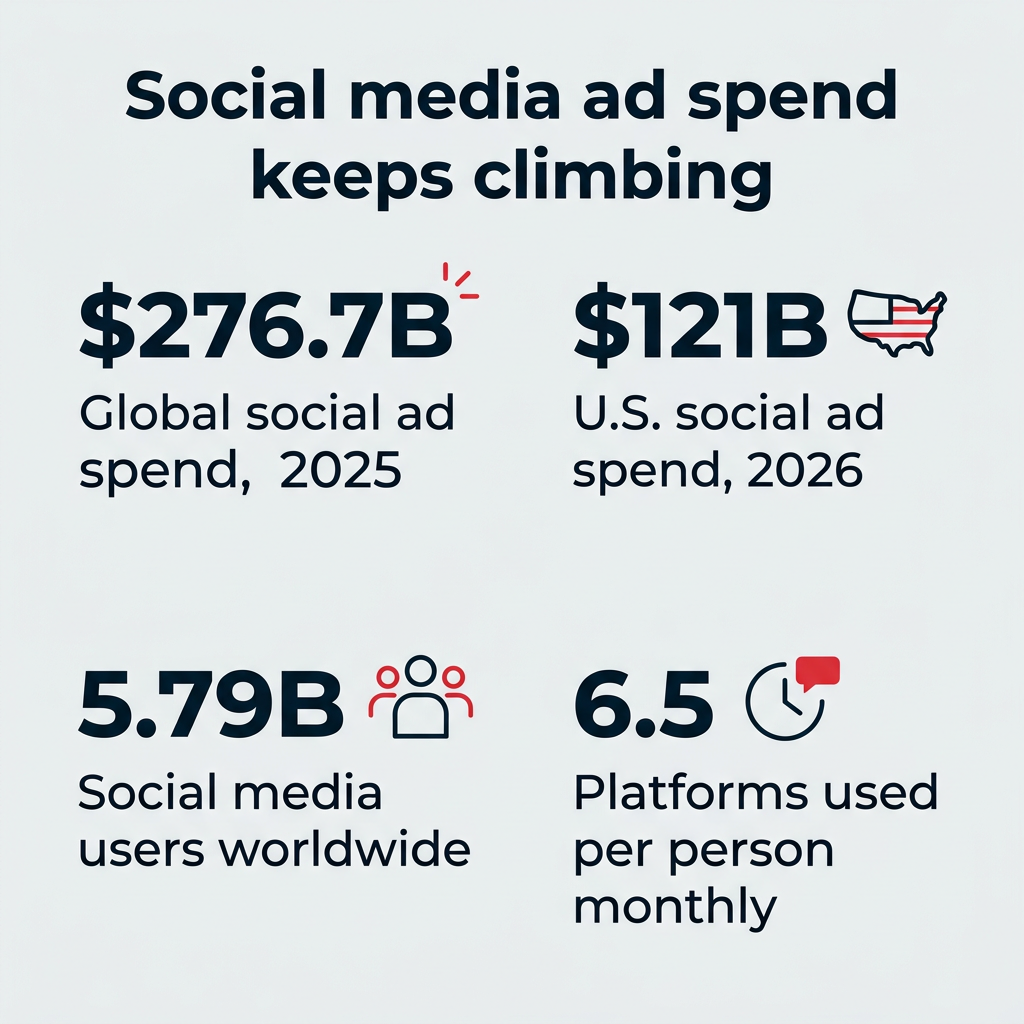
As we navigate through 2026, the digital advertising landscape has undergone a seismic shift. No longer just a secondary option for brand awareness, social media advertising has matured into the primary engine for customer acquisition, community engagement, and revenue growth. With global ad spend in this sector projected to reach a staggering $338.75 billion by the end of the year, understanding the mechanics of paid social is no longer optional—it is a business imperative.
The Core Fundamentals: What is Social Media Advertising?
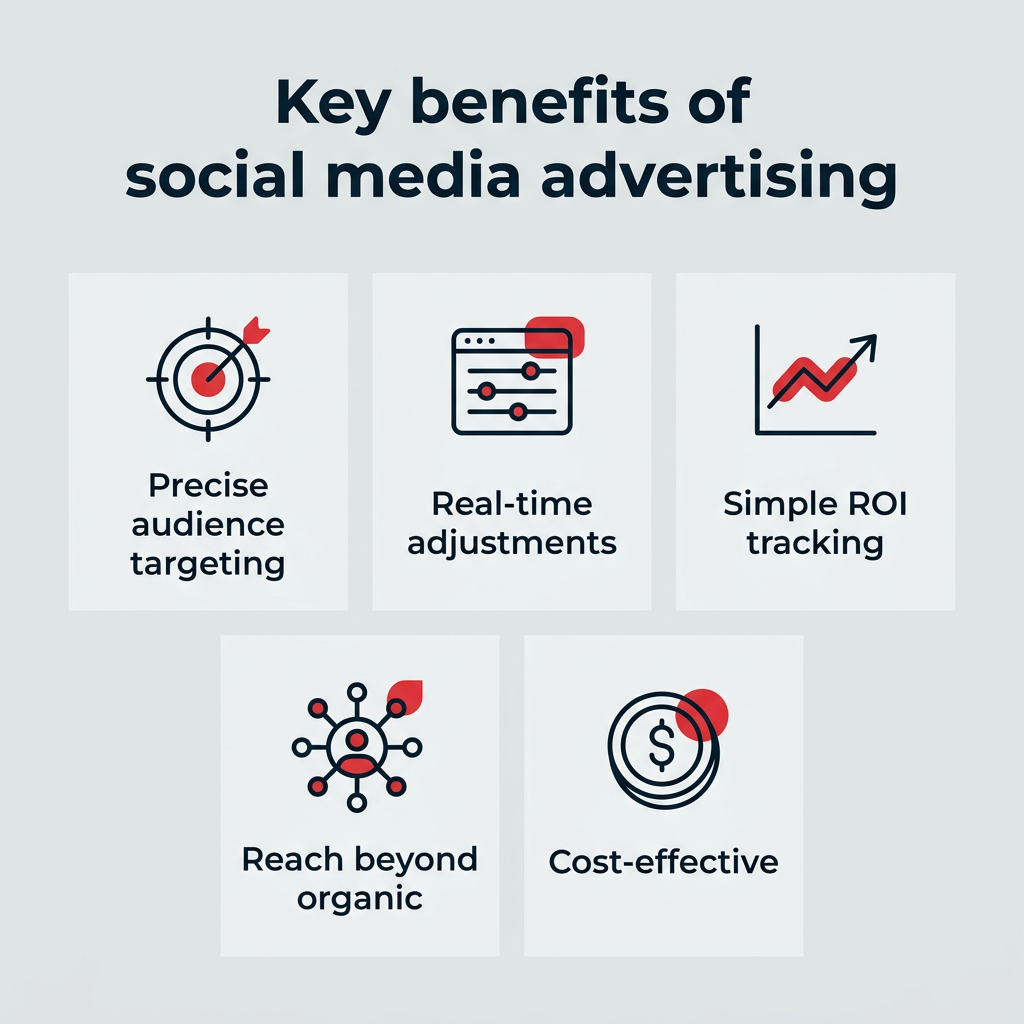
At its simplest, social media advertising is the practice of paying platforms—such as Meta (Facebook and Instagram), TikTok, LinkedIn, and X—to display promotional content to a highly specific audience.

The distinction between "organic" and "paid" is critical. Organic reach is the visibility your content receives based on the whims of a platform’s algorithm, which distributes your posts to your followers and potential new viewers based on engagement history. Paid reach, however, is deterministic. When you invest in social advertising, you bypass the volatility of algorithmic distribution, placing your message directly in front of an audience you have defined by demographic, interest, and behavioral criteria.
The Marketing vs. Advertising Dichotomy
While often conflated, marketing and advertising serve different roles within the same ecosystem.

- Social Media Marketing is the broad-spectrum strategy of building a brand. It encompasses the creative, community management, and the nurturing of a voice over time.
- Social Media Advertising is the surgical tool within that strategy. It provides the scale.
As Cedric Bruce-Kotey, Senior Manager of Paid Social at Hootsuite, notes, "Standard Meta ads are no longer the only way to reach users. The rise of TikTok, Snapchat, and Reddit has forced a new level of competition and creativity." The most successful brands today operate in a hybrid model: they use organic efforts to test what resonates with their audience, then leverage their paid budget to amplify those "winning" concepts to a wider, colder audience.
The Chronology of Paid Social Maturity
To understand where we are in 2026, we must look at the trajectory of the industry:

- The Early Era (2010–2015): Advertising was largely experimental. "Boosting" a post was the primary method, and targeting was rudimentary, focusing mostly on basic demographics.
- The Precision Era (2016–2020): Platforms introduced sophisticated tracking pixels and lookalike audiences. Brands began to see social media as a direct-response engine rather than just a billboard.
- The Privacy & Creative Pivot (2021–2024): With the introduction of stricter data privacy laws (such as GDPR and the end of third-party cookies), the industry pivoted. Creative quality replaced granular tracking as the primary driver of performance.
- The AI-Driven Era (2025–Present): Today, we rely on platform-native AI to handle delivery. Advertisers provide the creative and the business objective, and the platform’s algorithm does the "heavy lifting" of finding the right user at the right moment.
Supporting Data: Why Budgets Are Ballooning
The data is clear: the money is following the attention. In the United States alone, social network ad spending is expected to exceed $121 billion by the close of 2026. This surge is fueled by three factors:
- Platform Diversification: While Facebook remains a staple, advertisers are splitting budgets across TikTok (for short-form video engagement), LinkedIn (for high-intent B2B lead generation), and Pinterest (for high-conversion retail intent).
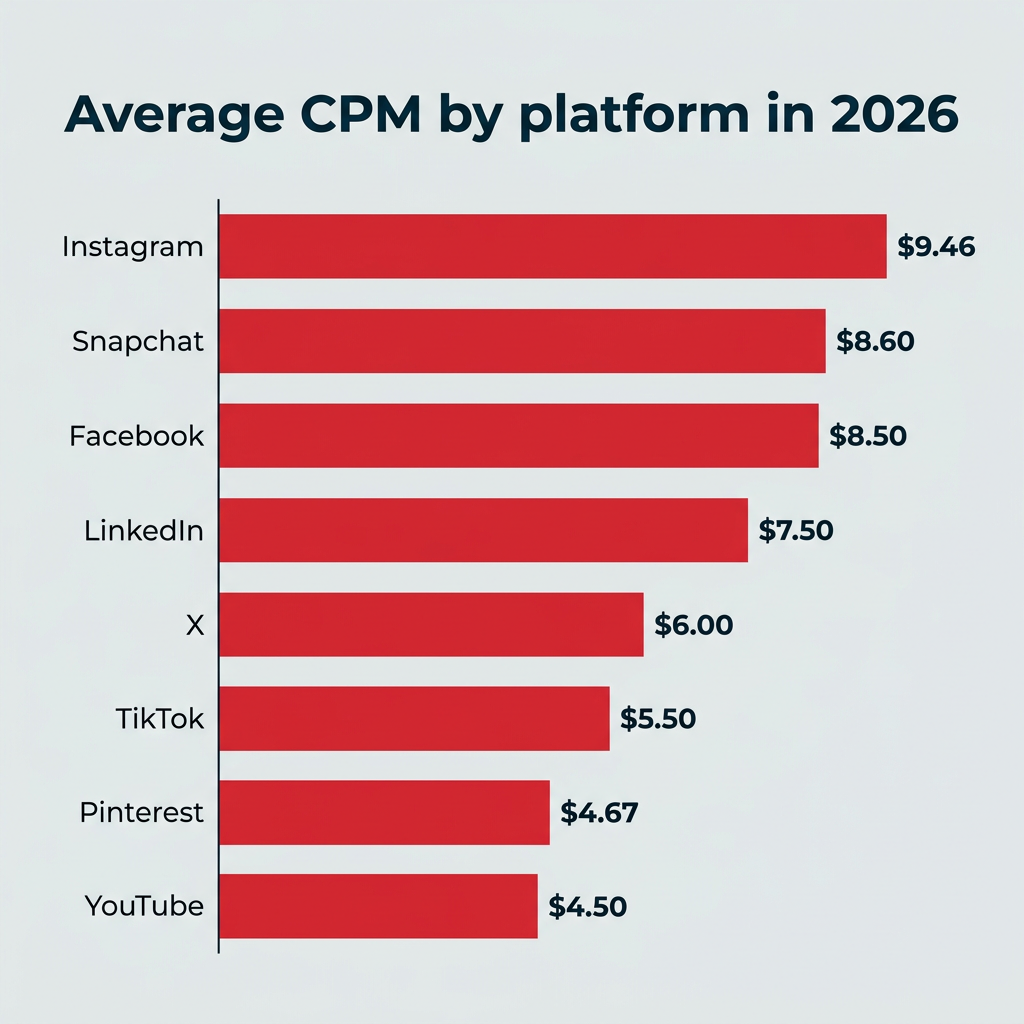
- Rising Costs: Competition for "eyeballs" has pushed the average Cost Per Mille (CPM) to between $4 and $10 across most major networks.
- Efficiency Gains: Despite higher costs, the ability to retarget users who have already engaged with a brand keeps Return on Ad Spend (ROAS) viable.
| Platform | Average CPM | Average CPC |
|---|---|---|
| $8 – $9 | $0.40 – $0.70 | |
| $9.46 | $0.50 – $0.75 | |
| TikTok | $4 – $7 | $0.50 – $1.00 |
| $6 – $9 | $5.00 – $12.00 | |
| YouTube | $4 – $5 | $0.10 – $0.30 |
Building a Winning Campaign: The Four Pillars
Before committing a marketing budget, every advertiser must master the four building blocks of a campaign:
1. Goal Setting
Objectives dictate the algorithm’s behavior. If you select "Awareness," the system prioritizes low-cost impressions. If you select "Conversions," the system identifies users with a history of purchasing behavior. Choosing the wrong objective is the fastest way to waste a budget.
2. Audience Targeting
Modern targeting has moved beyond simple age and location. Today, we utilize:
- Custom Audiences: Uploading customer lists to reach existing clients.
- Lookalike Audiences: Allowing the platform to find users who share traits with your best buyers.
- Behavioral Targeting: Reaching users based on their online purchasing patterns or intent.
3. The Creative Strategy
In the current landscape, the creative is the targeting. Algorithms analyze the imagery and audio in your ads to determine who would be interested in them. High-performing ads are increasingly "lo-fi"—videos that feel like native user-generated content rather than high-production television commercials.
4. Auction Dynamics
Social ad space is a real-time auction. You aren’t just paying for the slot; you are competing on "Ad Relevance." A highly relevant, engaging ad will often cost less than a poorly performing one, even if the competitor has a larger budget.
Industry Implications and Best Practices
For businesses looking to thrive in this environment, the following strategies are essential:
The "Organic-First" Approach
Never guess what your audience wants. Post organically, monitor engagement, and then "promote" the posts that show promise. This ensures you are putting money behind concepts that have already been validated by your community.

Continuous A/B Testing
As Cedric Bruce-Kotey emphasizes, "Optimizing ads is all about testing hypotheses." You should always be testing at least two variations of an ad—different hooks, different calls-to-action (CTAs), or different visual styles—to refine your ROI.
Embracing "Native" Advertising
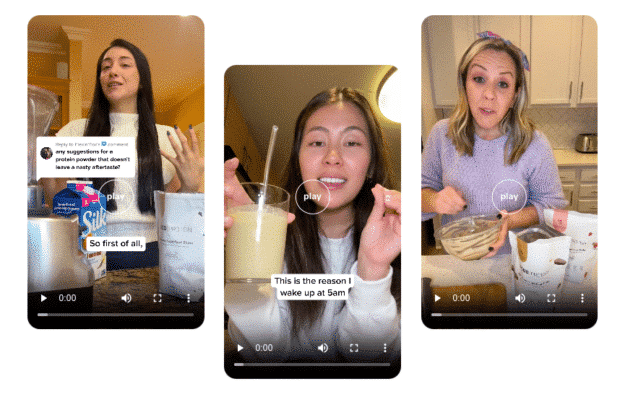
The most successful ads of 2026 are those that don’t look like ads. PureGym’s success with "lo-fi" Reels and Good Protein’s integration of creator content are prime examples. By mimicking the aesthetic of a platform’s organic feed, brands reduce "ad blindness" and increase engagement time.
The Role of Data Measurement
Tracking is the heartbeat of a campaign. Whether it’s tracking click-through rates (CTR) for awareness or conversion rates for sales, ensure you are utilizing tools like Google Analytics alongside platform-native dashboards. If you cannot track the path from the click to the purchase, you cannot optimize your spend.
Conclusion: The Path Forward
Social media advertising is no longer a "set it and forget it" channel. It is a dynamic, competitive, and highly rewarding environment. For small businesses, the barrier to entry remains low—with budgets as small as $5 to $20 per day, you can begin gathering the data needed to scale. For larger enterprises, the challenge is maintaining authenticity while managing massive, multi-platform campaigns.

The brands that will win in the second half of the 2020s are those that treat their social ads as a creative extension of their brand values. By focusing on clear objectives, testing rigorously, and respecting the native culture of the platforms they inhabit, businesses can transform their social media advertising from a cost center into a powerful, predictable, and scalable engine for growth.
This article is intended for informational purposes. For those looking to master these skills, consider downloading a comprehensive guide to social advertising to walk through the five steps of campaign construction—from setting your first budget to analyzing final performance metrics.











