Ammar Sabilarrohman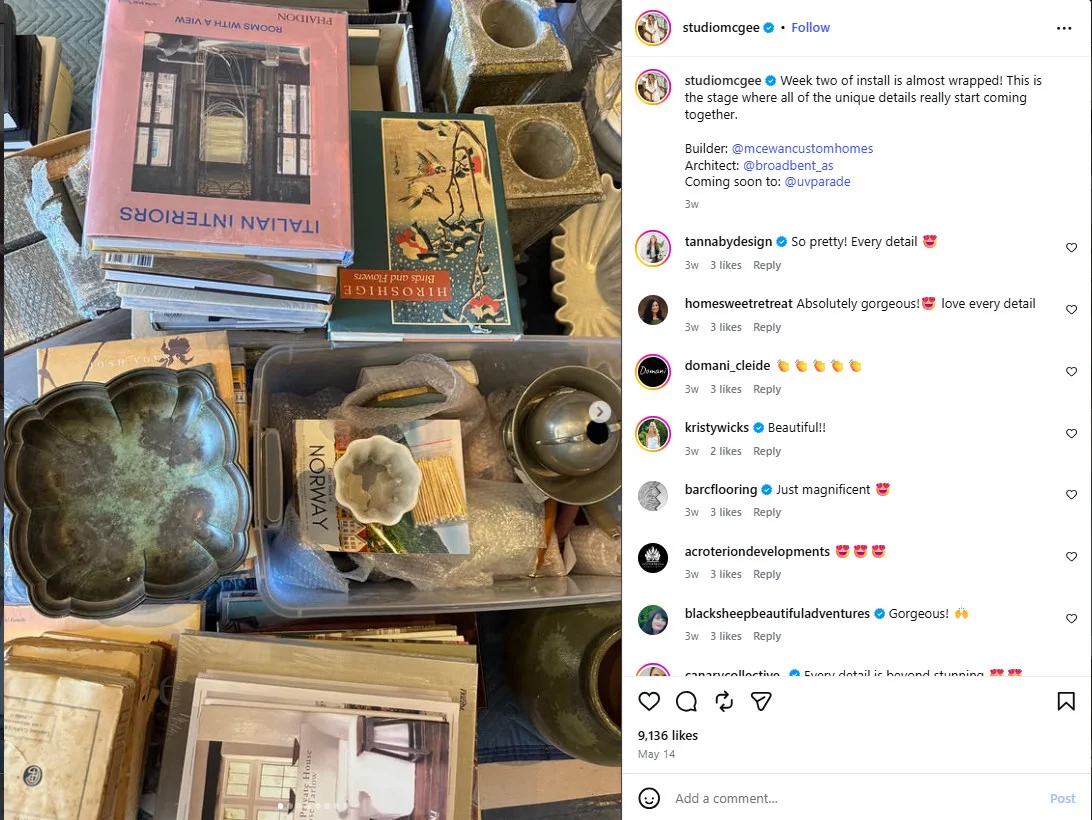
In 2014, Shea McGee was operating out of a spare bedroom. She had no full-time staff, no Netflix contract, and zero budget for paid advertising. Yet, she recognized a latent opportunity in a nascent platform: Instagram. "It was free, and it was visual," she reflected. "No one was using Instagram as a designer to promote their business—but I saw other businesses using it and thought there had to be something there."
Today, that "something" has transformed into a global design powerhouse with four million followers. However, for most interior designers, the journey from content creation to client acquisition is fraught with ambiguity. While a 2018 Forbes study noted that nearly 80% of interior designers are active on social media, only 17% consider it "very effective" for their business. This wide gulf between presence and performance suggests a systemic misunderstanding of the role social media plays in the modern design firm.
The Reality Check: Social Media as a Credibility Signal
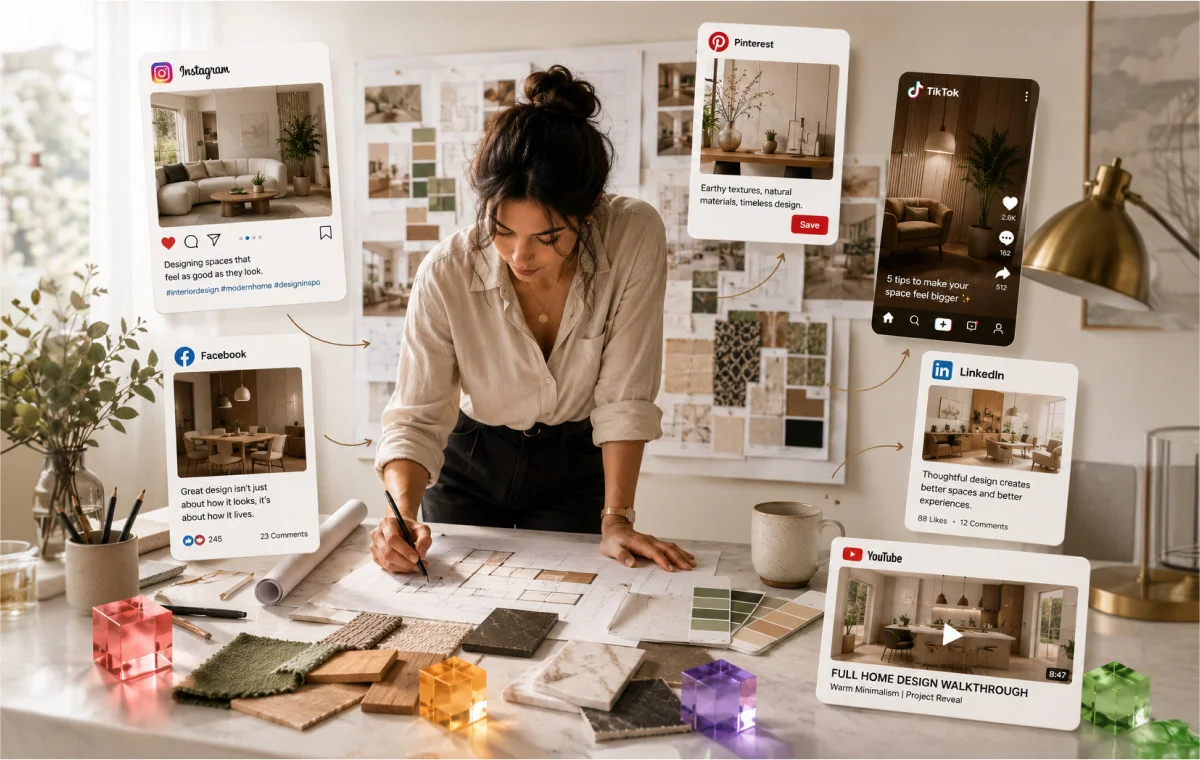
The most critical shift in mindset for a design business is recognizing that social media is rarely a "discovery engine." In the high-stakes world of interior design, clients rarely hire a professional based on a fleeting encounter with a viral video. Instead, social media functions as a validation tool.
Most clients discover designers through high-intent channels: Google searches, word-of-mouth referrals, or recommendations from architects and contractors. Before they make that initial inquiry, they conduct "due diligence." They visit your Instagram, browse your Pinterest, and scan your Houzz profile. Your feed is not necessarily where they find you; it is where they decide whether you are the right choice. If your feed is dormant, disorganized, or disconnected from the quality of your work, you are inadvertently signaling a lack of professional vitality.
Chronology of Platform Evolution for Designers
To navigate the modern digital landscape, designers must understand the evolution of how these platforms are consumed:
- 2010–2015 (The Portfolio Era): Platforms like Instagram were used primarily as digital scrapbooks. The goal was to post the most polished, high-resolution photography possible.
- 2016–2020 (The Engagement Era): The focus shifted to building "community." Designers began showing faces, behind-the-scenes glimpses, and personal brand elements to foster human connection.
- 2021–Present (The Search and Utility Era): Platforms are now functioning as search engines. Whether it’s Instagram’s keyword-optimized captions, Pinterest’s intent-driven visual search, or TikTok’s algorithm-led discovery, the goal has moved toward utility and discoverability.
Supporting Data: Why Intent Matters
The effectiveness of your social media strategy is directly correlated to the "buyer intent" of the platform’s audience.

- Pinterest: With over 631 million monthly active users, Pinterest operates as a visual search engine. Unlike the passive browsing of Instagram, Pinterest users are often in a "planning" phase—actively searching for kitchen renovations or living room layouts.
- Houzz: As a specialized platform, Houzz boasts 40 million monthly unique users, 90% of whom are homeowners actively planning significant improvements. Research shows that designers with at least three reviews on Houzz are 15 times more likely to be contacted than those without.
- TikTok: Contrary to the belief that it is only for a younger demographic, TikTok serves as a powerful cold-reach mechanic. The #interiordesign hashtag holds billions of views, providing a rare opportunity for designers to reach potential clients outside their immediate referral circle.
Official Perspectives: What the Experts Say
Designers like Caroline Turner, who leveraged TikTok to secure clients in markets ranging from the Upper East Side to Park City, note that the platform changes the nature of the client relationship. "TikTok clients arrive already knowing my material preferences and point of view," Turner explained to Business of Home. This creates a "warm" lead out of a "cold" viewer, significantly compressing the sales cycle.
Conversely, for commercial designers, the consensus is clear: LinkedIn remains the gold standard. Firms like IA Interior Architects utilize the platform to publish professional case studies and sustainability metrics. This registers with the corporate decision-makers, property developers, and architects who commission large-scale fit-outs.

The Platform-Purpose Framework
To avoid the exhaustion of "content fatigue," designers should adopt a strategic framework. Attempting to master every platform leads to a thin, inconsistent presence that ultimately harms your reputation.
| Platform | Primary Function | Buyer Intent | Best For |
|---|---|---|---|
| Portfolio Validation | Medium | All Residential Designers | |
| Evergreen Discovery | High | Planning-Stage Homeowners | |
| TikTok | Cold Brand Awareness | Low-Medium | Rapid Audience Growth |
| Houzz | High-Intent Discovery | Very High | Renovation-Focused Studios |
| B2B Credibility | Medium | Commercial/Contractor Referrals | |
| Local Paid Ads | High (Paid) | Local Client Acquisition |
Implications: Building a Sustainable Content System
The primary reason designers fail at social media is the lack of a system. When you rely on "instinctual posting," your feed breaks down the moment a project enters a busy phase.

The Batching Method
Consistency is the algorithm’s preferred metric. To maintain it without sacrificing your project management time, follow the three-step batching method:
- Documentation: Capture photos and videos during your regular site visits and material selections. This costs no extra time—you are already on-site.
- Synthesis: Spend one 60-minute session a week writing your captions and planning your visual flow. Using AI-powered tools can significantly speed up the copywriting process.
- Automation: Use a scheduling tool to push your content out at optimal times. This removes the "daily stress" of manual posting and ensures your presence remains professional even when you are on-site for an install.
Strategic Recommendations for Success
If you are a solo practitioner or a small studio (1–3 people), start by pairing Instagram and Pinterest. Instagram acts as your digital resume, while Pinterest works in the background to drive traffic to your website through search-optimized keywords.

If your primary goal is to grow your business into new territories, incorporate TikTok into your strategy. However, only do so once you have mastered the documentation habit on a primary platform.
For commercial firms, focus your energy on LinkedIn and Houzz. The professional tone required for these platforms aligns with the B2B nature of large-scale architecture and interior projects.

Conclusion: The Long Game
Social media should not be viewed as a chore, but as an extension of your firm’s architecture. It is a reflection of your process, your taste, and your professionalism. By focusing on intent-driven platforms, batching your production to fit your project schedule, and maintaining a high standard of visual and educational content, you transform your social profiles from passive feeds into active assets.
Remember the golden rule of modern digital strategy: A strong, consistent presence on two platforms will always outperform a thin, sporadic presence across five. Pick your channels, commit to a 90-day testing period, and let your digital presence validate the expertise your clients are already seeking. In the end, when a potential client searches for your name, what they find should be the final, convincing piece of evidence that you are the architect of their dream space.


 Laily UPN
 Nana Wu