Nila Kartika Wati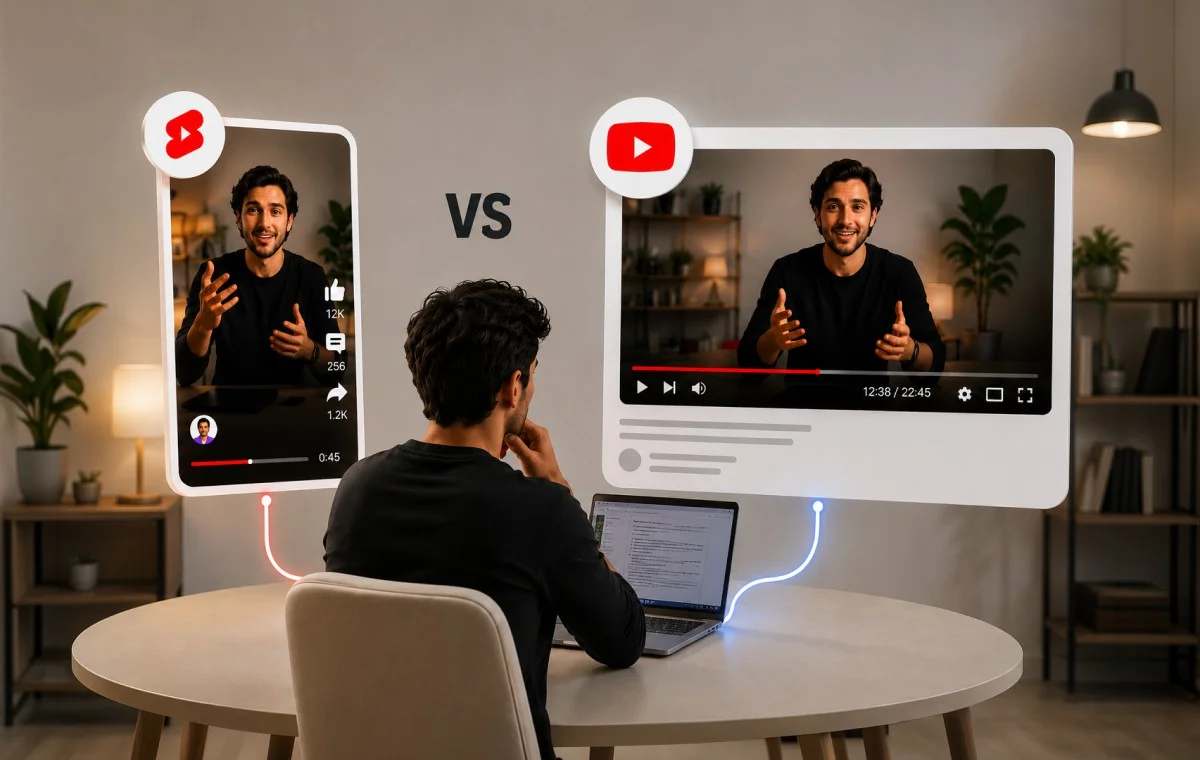
Is your brand’s YouTube strategy suffering from an identity crisis? You are not alone. Across marketing departments and creative agencies, leadership teams are increasingly demanding answers to a polarizing question: Why aren’t we posting more YouTube Shorts? Or, conversely, why are we still pouring thousands of dollars into long-form production when vertical clips garner ten times the views for a fraction of the investment?
The pressure is palpable. "Everyone else is doing it" is no longer a viable justification for a quarterly marketing report. To satisfy stakeholders and move the needle on business objectives, you need a data-backed framework that defines exactly what Shorts and long-form videos are meant to accomplish. This article provides the strategic roadmap for navigating YouTube’s evolving ecosystem, including recent algorithm shifts and a decision matrix for your brand’s content mix.
Understanding the Fundamental Divide
To build an effective strategy, you must first stop treating Shorts and long-form as the same content simply cut to different lengths.
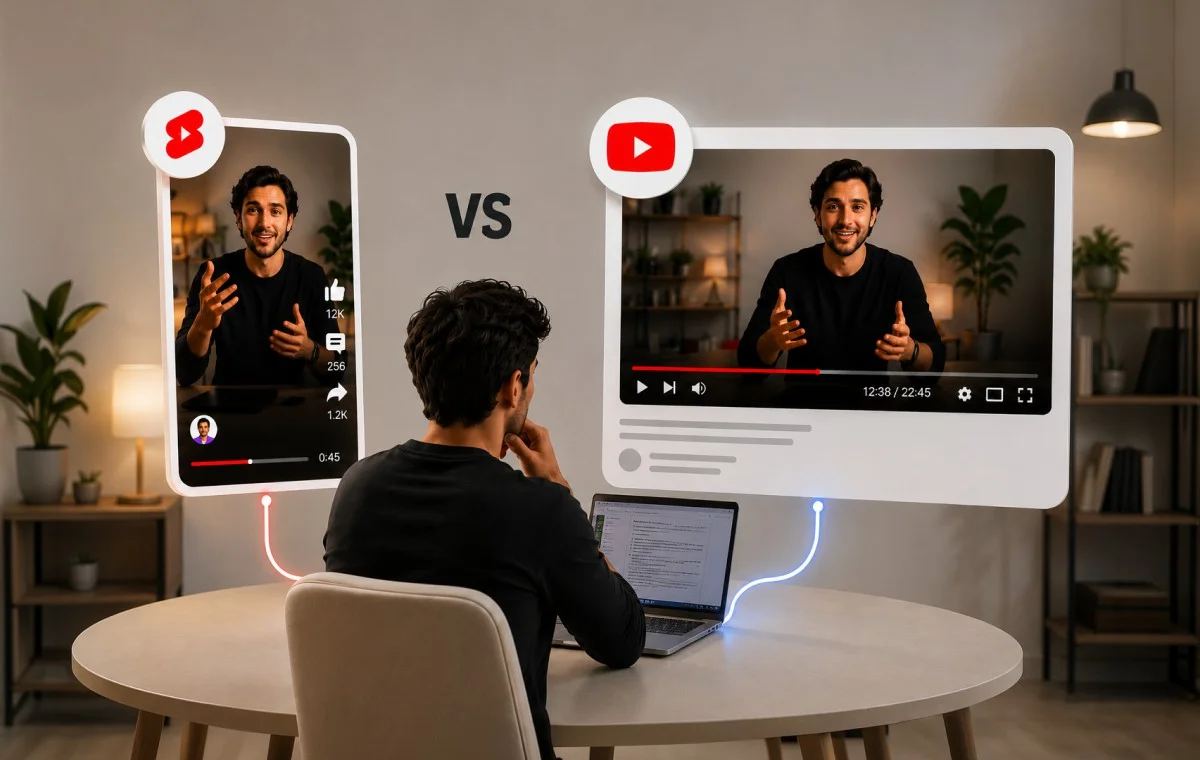
YouTube Shorts is a vertical (9:16) format, capped at three minutes, and optimized for the high-velocity, swipe-based discovery feed. It is a top-of-funnel tool designed to introduce your brand to cold audiences. Long-form video, the traditional horizontal (16:9) format, is the bedrock of authority. It is designed for viewers who arrive with intent, seeking depth, education, or entertainment that lasts 8–15 minutes or longer.
| Feature | YouTube Shorts | Long-Form Video |
|---|---|---|
| Orientation | Vertical (9:16) | Horizontal (16:9) |
| Primary Goal | Discovery & Reach | Depth, Trust & Retention |
| Algorithm Reward | Swipe-through & Replays | Session Time & Satisfaction |
| Revenue Model | Pooled Ad Fund (45% split) | Per-video Ad Revenue (55% split) |
By confusing these two, brands often end up with "zombie content"—videos that are too long to be punchy but too shallow to be valuable.
Chronology of the Algorithm Shift
If your channel’s performance has fluctuated significantly over the past 18 months, you are not imagining it. YouTube has overhauled its recommendation engine twice in the last year, fundamentally changing how content is discovered.
Phase 1: The Home Feed Contraction
In recent months, independent data analysts, including retention strategist Mario Joos, have documented a massive shift in the YouTube homepage layout. Across over 1,000 analyzed channels, there has been a documented reduction of up to 80% in the visibility of traditional long-form content on the home feed. The algorithm is now favoring personalized, high-engagement loops, effectively relegating many static long-form videos to search or subscription-only status.
Phase 2: The Pivot to "Session Contribution"
Previously, YouTube prioritized "Raw Watch Time"—the total minutes a user spent on a video. Today, the focus has shifted to "Session Contribution." The algorithm now ranks videos based on how well they keep a user on the platform after the video ends. If your long-form video serves as a "dead end," it is being deprioritized. Brands must now craft content that feeds into playlists or "watch next" loops, favoring deeper, series-based storytelling.
Supporting Data: The Revenue and Growth Gap
The financial reality of the platform is starkly lopsided. While Shorts are the engine for subscriber growth, long-form remains the engine for revenue.
- The Revenue Split: YouTube’s revenue-sharing model remains significantly more lucrative for long-form creators, who receive 55% of net ad revenue on specific videos, compared to the 45% share from a pooled Shorts ad fund.
- The Earnings Gap: On a per-view basis, long-form content consistently outperforms Shorts in CPM (Cost Per Mille). For brands looking for direct ROI, long-form remains the superior vehicle.
- The Growth Paradox: While Shorts can net you 10,000 subscribers in a week, those subscribers often exhibit lower "viewer velocity"—they are less likely to click on your long-form content. Conversely, long-form content builds a smaller, but significantly more loyal and higher-intent audience.
Does Long-Form Actually Build Trust?
There is no definitive white paper proving that a 10-minute video inherently builds more "trust" than a 60-second clip. However, the psychological and technical evidence points toward a "Connected TV (CTV) Advantage."
As more viewers shift to watching YouTube on their living room televisions, the dynamic of content consumption changes. On a TV, the "swipe-away" friction is higher. Viewers are in a "lean-back" mode, viewing the content as an experience rather than a snack. This environment naturally fosters longer session times and higher completion rates, which, in turn, creates a deeper association between the brand and the viewer.
The Strategic Decision Matrix
How do you decide the right mix? Your allocation should be dictated by your overarching business goal.
1. B2B Lead Generation (70% Long-Form / 30% Shorts)
B2B buyers require deep-dive demonstrations and objection-handling. Use long-form to build the case and use Shorts as "trailers" to drive traffic to the full video.
2. E-Commerce Awareness (30% Long-Form / 70% Shorts)
If your goal is to get a product in front of as many eyes as possible, prioritize volume. Shorts are your primary billboard.
3. Product Education (60% Long-Form / 40% Shorts)
Existing customers need tutorials. Use long-form for the "How-To" and Shorts for "Quick-Fix" tips.
4. Employer Branding (50% Long-Form / 50% Shorts)
A balance is essential here. Use Shorts for "day-in-the-life" culture snippets and long-form for authentic, interview-style storytelling.
Implications: Building a Sustainable Workflow
The greatest risk to your channel is not a "bad" video; it is inconsistency. The most successful brands have adopted a "Repurpose-First" workflow to ensure both formats are supported without doubling production time.
The "Clip-Worthy" Selection Process
When producing long-form, stop filming for the sake of length. Structure your content around three distinct pillars:
- The Hook: A 15-second opening that sets a clear stakes-driven narrative.
- The Insight: A high-value, self-contained realization or data point.
- The Call to Action: A clear instruction on what to do next.
If a 15-minute video doesn’t yield at least three to five of these "golden moments," your long-form structure is likely too loose.
Managing the Operational Bottleneck
The biggest challenge for agencies and internal teams is the logistical nightmare of maintaining a calendar for both formats. Using professional management tools is no longer optional. A centralized scheduler that allows you to manage Shorts and long-form uploads across multiple client accounts from a single dashboard is the only way to prevent your strategy from collapsing when deadlines mount.
Conclusion: The Path Forward
Your YouTube strategy should not be a reactive response to the latest trend. It must be a deliberate choice between discovery (Shorts) and depth (long-form).
By auditing your brand’s goals, adopting a "Session Contribution" mindset, and utilizing a repeatable repurposing workflow, you can move from a defensive position to an offensive one. Stop guessing which format works best and start measuring how each format serves the specific needs of your audience. The data is clear: the brands that win are those that treat YouTube not as a dumping ground for video files, but as a multi-layered ecosystem designed to nurture a viewer from their first swipe to their final purchase.


 Nana Wu
 Nana
Nana