Asro
Asro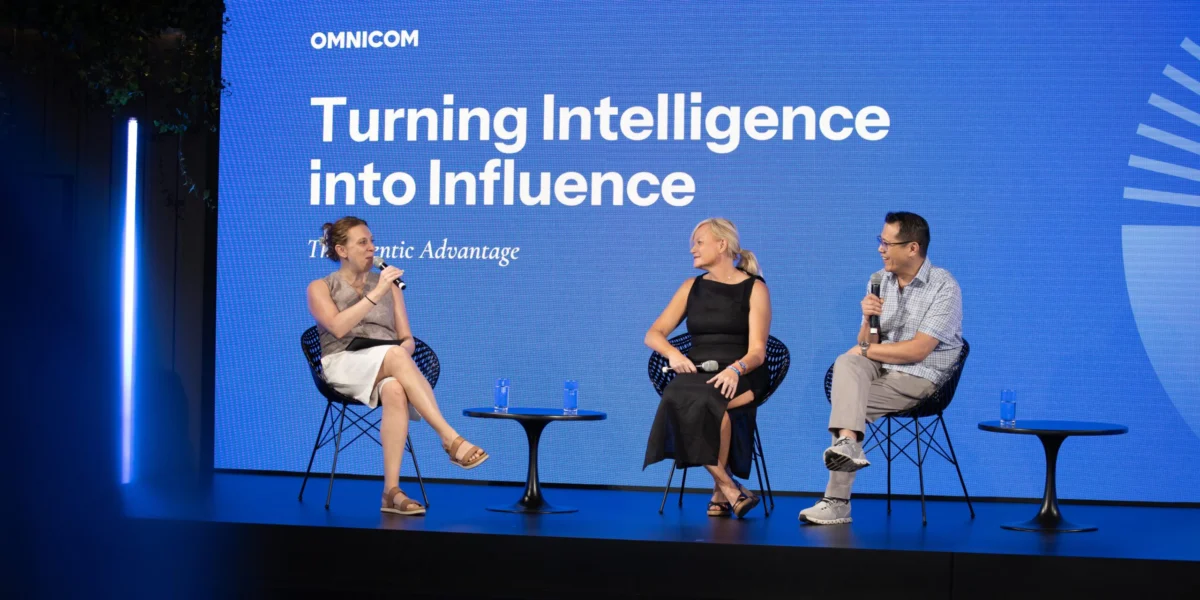
The marketing landscape is undergoing a tectonic shift, driven by the dual pressures of rapidly evolving generative AI and the constant demand for more efficient, high-impact creative output. As the industry gathers at global forums like Cannes Lions, the conversation has moved beyond mere trends toward the pragmatic realities of operational transformation.
During the recent Adweek Press Hour held at the Omnicom Space, ADWEEK executive editor Alison Weissbrot moderated a series of high-level discussions featuring industry leaders. These sessions peeled back the curtain on the mechanics of modern agency pitches, the cultural hurdles of integrating agentic AI, and the evolving definition of "influence" in an increasingly fragmented media ecosystem.
The Evolution of the Pitch: From Performative to Partnership
The traditional agency pitch process—often criticized for its opacity and resource-heavy demands—was the first subject under the microscope. The panel, featuring Victoria Fox (CEO, AAR), Ryan Kangisser (CSO, MediaSense), and Deepthi Prakash (COO, Omnicom Advertising Group), offered a sobering assessment of how agencies and clients can better align their expectations.
Redefining Assurance and Vulnerability
Victoria Fox framed the modern pitch not as a competition, but as a risk-mitigation strategy. "Pitches are like an insurance policy," Fox argued. For a client, the process is less about finding the ‘perfect’ creative output and more about securing the level of assurance and institutional confidence required to justify a long-term partnership. In this view, the pitch is the ultimate diagnostic tool for decision-making.
Ryan Kangisser introduced a human-centric counterpoint: perfection is not only impossible but often undesirable. He suggested that clients are actively searching for "vulnerability" in the pitch room. "A pitch does not need to be perfect, but it needs to show vulnerability to be believable," Kangisser noted. This shift highlights a departure from the polished, hyper-produced pitch decks of the past. Today’s clients are prioritizing compatibility and cultural alignment, seeking partners who are willing to admit what they don’t know, thereby signaling a genuine, collaborative relationship rather than a top-down vendor arrangement.
The Artificiality of the Pitch Environment
Deepthi Prakash provided a critical industry perspective on the disconnect between the pitch room and the boardroom. "Pitches are artificial environments and don’t necessarily correspond to real-world situations," she remarked. A persistent challenge in agency-client relationships is the gap between the promises made by executive leadership during the pitch and the actual daily operations handled by mid-level teams.
Prakash emphasized that for pitches to be effective, there must be fluidity in communication. As the industry grapples with rapid technological change, the rigidity of the traditional pitch process risks locking agencies into workflows that become obsolete before the contract is even signed.
The Age of Agency: Integrating Agentic Tools into the Workflow
As the conversation shifted toward the technological frontier, the focus moved from human relationships to human-machine collaboration. Jantzen Bridges (Global President, Credera) and Paolo Yuvienco (CTO, Omnicom) dissected the current state of "agentic" tools—autonomous systems capable of executing complex workflows with minimal human oversight.
The Challenge of Cultural Adoption
Both Bridges and Yuvienco agreed that the industry is in the "early stages" of agentic tool adoption, yet the implications for future workflows are profound. The primary hurdle, according to the panel, is not technical capability but cultural integration.
"Getting staffers to adopt agentic technology is the challenge," Yuvienco admitted. At Omnicom, the strategy has been to foster an "enablement environment." Rather than forcing compliance, the firm has leveraged its existing culture of innovation to make these tools intuitive rather than intimidating. By creating a sandbox for experimentation, the organization has managed to reduce the friction usually associated with new technology adoption.
Organizational Alignment as the Catalyst
From the client-facing side, Jantzen Bridges noted that the successful implementation of AI requires top-down commitment. When organizational leadership is aligned, the deployment of agentic tools across various departments becomes a streamlined process. Without this alignment, firms risk creating "islands of innovation" that fail to impact the bottom line. The goal is to move beyond AI as a novelty and integrate it as a foundational layer of enterprise transformation.
Redefining Influence: Intelligence, Integration, and Scale
The final segment of the Press Hour featured George Manas, Chief Growth and Solutions Officer at Omnicom Media Group, who provided a forward-looking analysis of how Omnicom is redefining its sphere of influence. Manas dismantled the antiquated notion that influence is merely a byproduct of media spend or volume, replacing it with a three-pillar framework: Intelligence, Experience, and Integration.
1. Influence Through Intelligence
In a noisy, attention-starved digital environment, scale is meaningless without intelligence. Manas argued that the future of marketing lies in utilizing data-driven insights to break through the clutter. "Influence is not only about scale but also intelligence," he stated. This requires the development of enhanced, hyper-personalized consumer experiences that resonate on an individual level rather than attempting to blast a message to the masses.
2. The Integration Mandate
The second pillar of Manas’s strategy is seamless integration. As consumers move fluidly between platforms—from social commerce to traditional broadcast to retail media—brands must ensure a cohesive experience at every touchpoint. Omnicom, he noted, is positioned to leverage its vast media scale not just to buy inventory, but to unlock unique value and exclusive partnerships for clients that competitors simply cannot access.
3. A New Bench of Creativity
Manas concluded by highlighting a significant internal pivot. Over the past 18 months, Omnicom has substantially bolstered its creative bench and sports marketing capabilities. By integrating these creative assets with their media scale, the agency has built a more robust offering. "We genuinely feel better positioned than ever to help clients navigate a few new realities," Manas asserted. This confidence is rooted in the belief that the convergence of creative excellence and media precision is the only way to deliver sustained growth in a volatile market.
Implications for the Industry
The insights shared during the Adweek Press Hour offer a blueprint for the next phase of the advertising and marketing industry. Several key implications emerge from these discussions:
- The Death of the "Perfect" Pitch: Agencies that continue to rely on hyper-polished, static presentations may find themselves losing out to those who emphasize transparency, vulnerability, and clear operational compatibility.
- The Human-AI Symbiosis: Adoption of agentic tools will be the primary differentiator between agile, high-performing agencies and those that become bogged down in traditional manual workflows. Success in this area will be defined by an organization’s ability to create a culture that encourages employees to embrace, rather than fear, automation.
- The Shift to Holistic Influence: The industry is moving away from siloed marketing. Media buying, creative production, and data strategy are being forced into a tighter orbit. Firms that can offer integrated, intelligence-led solutions will hold the most sway over their clients’ growth trajectories.
As these leaders prepare for the remainder of the year, the consensus is clear: the future of marketing will not be won by those with the biggest budgets, but by those who can best navigate the "new realities" of technological speed, the necessity of human connection, and the mandate for total integration. For those looking to shape what’s next, the roadmap provided at the Omnicom Space serves as both a warning and a call to action.
In a world where the only constant is change, the ability to pivot—while maintaining the core integrity of the brand-consumer relationship—will remain the ultimate competitive advantage. As Omnicom and its peers continue to experiment and iterate, the rest of the industry would do well to take note of these shifting paradigms.


 Evan Lee Salim
 Rifan Muazin