Pevita Pearce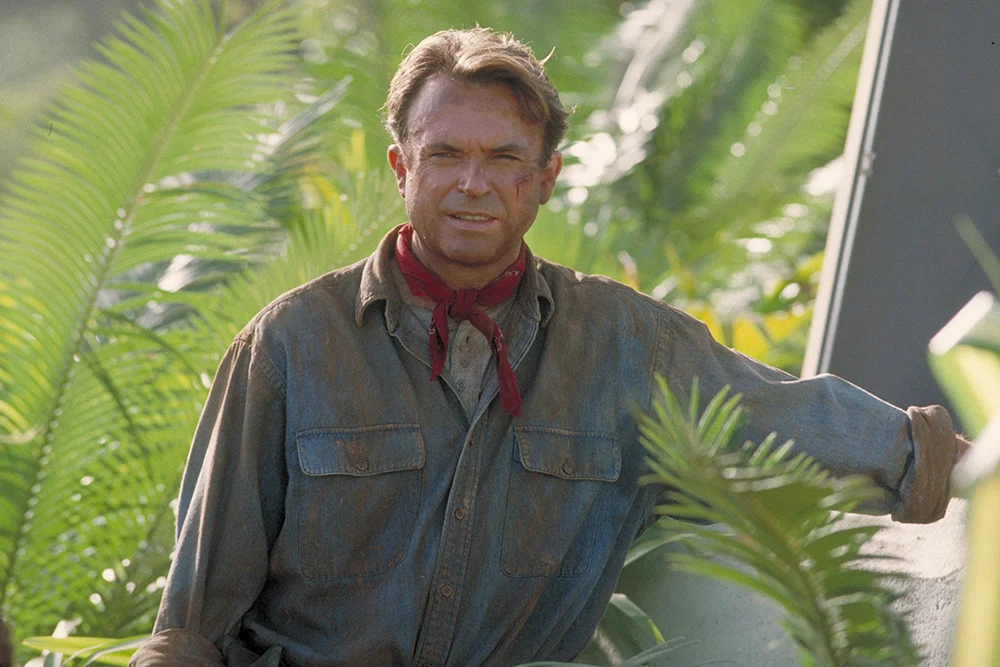
For nearly two decades, Sam Neill existed as one of the most reliable, chameleonic, and quietly essential fixtures of international cinema. To the casual viewer, he was a face that felt familiar—a sturdy presence capable of radiating either a comforting, masculine decency or a chilling, intellectual menace. Yet, it wasn’t until he reached the age of 45 that the industry’s gatekeepers finally affixed the "star" label to his name.
Neill never fit the archetype of the Hollywood leading man who demands the spotlight; he never chased the high-octane, all-guns-blazing roles that define the typical A-lister. Instead, he cultivated a career rooted in a rare, professional humility. By serving as a steadfast pillar for some of the most formidable female performances in cinema history, Neill carved out a niche that was both commercially viable and artistically significant.
The Formative Years: A Pillar for Giants
Long before he was dodging prehistoric predators, Neill’s career was defined by his ability to modulate his performance to elevate those around him. He possessed an uncanny knack for being the perfect scene partner, an intelligent collaborator who understood that his role was often to provide the friction against which a lead actress could shine.
In the early chapters of his career, Neill’s filmography reads like a syllabus for prestige cinema. He provided the steady, grounded support for Judy Davis in the seminal My Brilliant Career (1979); he held his own against the intensity of Isabelle Adjani in the unsettling Possession (1981); and he navigated the psychological complexities of Dead Calm (1989) alongside a burgeoning Nicole Kidman. His collaborations with Meryl Streep in Plenty (1985) and A Cry in the Dark (1988) further solidified his reputation as a "director’s actor"—someone who was carefully etched, modulated, and entirely selfless.
If he wasn’t a household name during these years, he was something perhaps more valuable: he was an actor in constant, high-level demand. His humility was his greatest currency, a professional trait that made him a favorite among auteurs who needed an actor who wouldn’t "pull focus" from the narrative core.
1993: The Year of the Dual Identity
The year 1993 stands as a peculiar, career-defining paradox for Neill. It was the year he ascended to the Hollywood A-list, yet he did so without changing his fundamental approach to his craft. He found himself at the center of two vastly different cinematic worlds: the gargantuan, populist spectacle of Steven Spielberg’s Jurassic Park and the intimate, visceral landscape of Jane Campion’s The Piano.
In Jurassic Park, Neill played Dr. Alan Grant, a role that saw him first-billed in a global mega-blockbuster. He had his own action figure, his own iconic hat, and the weight of a franchise on his shoulders. Yet, Neill was under no illusions. He understood, as did producer Kathleen Kennedy, that the true stars of the film were the "dazzlingly rendered" dinosaurs. As Kennedy famously noted at the time, the role of Alan Grant "isn’t an intensely complicated part." Neill was chosen because he was professional, affordable, and—crucially—capable of anchoring the human element without distracting from the technical marvels on screen.
Simultaneously, Neill was delivering a performance of startling, prickly vulnerability in Jane Campion’s The Piano. As the abusive, cuckolded husband of Holly Hunter’s character, Neill was the antithesis of the heroic Dr. Grant. He portrayed the character’s priggish insecurity and impotent rage with a nuance that many actors of his profile would have avoided. While he was being fashioned as a Hollywood action hero in the press, he was quietly delivering a masterclass in domestic villainy on the other side of the world.
Supporting Data: A Career Defined by Artistic Diversity
Neill’s refusal to be pigeonholed as a Hollywood commodity is evidenced by the sheer breadth of his work. While Jurassic Park granted him the "leverage" to choose his own path, he frequently utilized that leverage to pivot toward smaller, riskier, and more intimate projects.
His filmography is a testament to this philosophy:
- Genre Deconstruction: Working with John Carpenter on In the Mouth of Madness (1994), he leaned into the surreal and the psychological.
- Global Art-House: Projects like Sally Potter’s Yes (2004) displayed his willingness to inhabit challenging, non-commercial narratives.
- Indigenous Storytelling: His role in Warwick Thornton’s Sweet Country (2017) highlighted his commitment to Australian and New Zealand cinema, favoring stories of historical weight over blockbuster spectacle.
- Collaborative Spirit: His work with Taika Waititi in Hunt for the Wilderpeople (2016) showcased a late-career willingness to embrace comedy and whimsy, proving he was never precious about his image.
Official Perspectives: The Philosophy of the "Service" Actor
Neill’s own reflections on his career have remained consistent for decades. Even at the height of the Jurassic Park craze, he told the Los Angeles Times that he possessed a "penchant for small films"—a habit that reportedly frustrated his agents but fueled his own creative fire. He viewed acting not as a pursuit of stardom, but as a form of service to the story.
This is perhaps most evident in his retrospective view of The Piano. Despite the film receiving eight Oscar nominations and Holly Hunter taking home the Academy Award, Neill himself went unrecognized by the Academy. Yet, he famously described the experience as having a "medal on my chest." To Neill, being part of a seminal feminist work of art was of higher value than the individual accolades that often follow a "star" performance. "It’s a film that will always have a place in cinema history," he wrote years later. "And I served in it."
Implications for Modern Stardom
The legacy of Sam Neill serves as an important counter-narrative to the modern concept of the "celebrity actor." In an industry that often prioritizes brand management and social media metrics, Neill’s career trajectory offers a roadmap for longevity.
By refusing to let the success of a "cultural colossus" like Jurassic Park dictate his artistic identity, Neill avoided the "leading man burnout" that claims so many others. He used the commercial success of the blockbusters to fund his creative curiosity. This balance allowed him to remain relevant for over four decades, transitioning from a reliable supporting player to an elder statesman of international film.
In recent years, his transition into an accidental social media icon—sharing candid, humorous, and deeply grounded glimpses into his life on his farm in New Zealand—has only reinforced the public’s perception of him as one of the industry’s "nice guys." However, to view him merely as a charming personality is to miss the point. Sam Neill’s career is a testament to the idea that the most interesting actors are often those who are willing to disappear into the work.
He never needed to be the biggest star in the room; he only needed to be the most honest one. As the industry continues to evolve, the "Neill model"—prioritizing artistic integrity, supporting fellow creators, and embracing the unpredictability of one’s own craft—remains a beacon for those who view acting not as a race to the top, but as a long, rewarding journey of service to the screen.

 Siti Muinah
 Lina Hope