Jia Lissa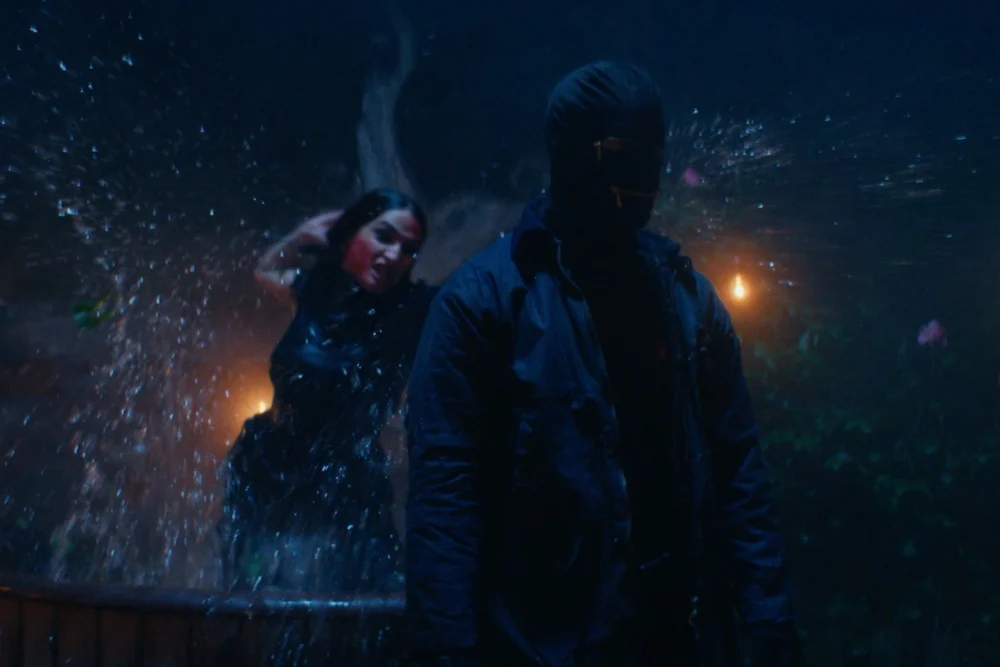
New Zealand-based sales powerhouse Black Mandala has officially announced a major expansion of its international distribution catalog, acquiring five high-profile horror features. The company, known for its strategic focus on genre cinema, has curated a collection that spans the breadth of the horror spectrum—from the desolate landscapes of the Sonoran Desert to the rain-slicked, stylized corridors of a supernatural giallo.
This acquisition move underscores Black Mandala’s continued influence in the independent horror market, positioning the firm as a bridge between visionary global filmmakers and international audiences. The slate, comprising The Tree House, Babybacks, The Driftless, Saturnalia, and The Shug, represents a calculated effort to capitalize on the current global appetite for diverse, high-concept genre storytelling.
A Diverse Portfolio: The Five New Acquisitions
The newly acquired titles are as geographically and thematically varied as they are ambitious. Each film brings a unique cultural inflection to the horror genre, ranging from psychological thrillers rooted in European folklore to creature features born of British superstitions.
1. The Tree House (Spain)
Directed by Luis Calderón, The Tree House is a Spanish slasher-thriller that has already garnered significant critical acclaim, including honors for best international feature and best production at various film festivals. The film stars Goya Award nominee Sandra Escacena alongside Claudio Portalo, Kandido Uranga, Apolonia Lapiedra, and musician Mala Rodríguez.
The narrative follows Ale, a woman haunted by the sudden, violent death of her partner during a fall from a treehouse overlooking the Zeanuri forest. When she returns to the site a year later to seek evidence of foul play, she finds herself trapped in a lethal game of cat-and-mouse. Set against the atmospheric backdrop of Spain’s Basque Country, the film promises to be a visceral exploration of grief and vengeance.
2. Babybacks (USA/International)
Written and directed by Geno Marx, Babybacks represents a gritty foray into survival horror. The plot centers on a young couple desperately fleeing cartel hitmen through the unforgiving terrain of the Sonoran Desert. Their attempt to find sanctuary with an outwardly benevolent older couple quickly devolves into a nightmare when they realize their hosts are predators with far more sinister motives than the cartels they were running from. The film has already secured a prestigious selection for the 2026 International Horror & Sci-Fi Film Festival, signaling strong anticipation within the genre community.
3. The Driftless (USA)
Midwestern filmmaker Tim Connery’s The Driftless takes a structural approach to horror, utilizing an anthology format to explore the dark folklore of America’s Driftless Region. Framed by a mysterious antique-store owner, the film weaves together four distinct tales. With a cast including Ira Amyx, Torrey Hanson, and Justin Marxen, the project has established a formidable festival track record, collecting 18 awards to date from institutions such as Eerie Horror Fest, Grimmfest, and Midwest WeirdFest.
4. Saturnalia (International)
Directed by Daniel Lerch, Saturnalia is a masterclass in homage, described as a supernatural giallo set in 1979. The film’s aesthetic and auditory identity are elevated by an original score from Claudio Simonetti—a founding member of the legendary band Goblin and a long-term collaborator with Italian horror maestro Dario Argento. The story follows Miriam Basconi, who is sent to the prestigious Alstroemerias Academy following the suspicious deaths of her parents. There, she unravels a conspiracy involving disappearances and a headmistress harboring ancient, dark secrets. After a successful 2025 world premiere at the Raindance Film Festival, the film has solidified its status as a festival circuit darling.
5. The Shug (UK)
Martin J. Pickering directs this British folk-horror creature feature set in the dense woods of Cambridgeshire. The narrative focuses on an alcoholic man, burdened by a traumatic childhood encounter, who is forced to confront his past when his daughter goes missing during a camping trip. Teaming up with an investigative journalist and a paranormal YouTuber, he ventures into the woods to track the creature known as "The Shug." Inspired by real-life reported sightings, the film has achieved high marks for its practical effects and screenplay, winning accolades at the Boston Indie Film Festival and the Catacombs Film Festival.
Strategic Implications for the Genre Market
The acquisition of these five features is not merely a content play; it represents a strategic shift in how independent horror is marketed globally. By grouping films that rely on "strong concepts, memorable imagery, and committed filmmakers," Black Mandala is effectively creating a "seal of quality" for festival programmers and streaming platforms.
For independent filmmakers, the partnership with Black Mandala offers a vital pipeline to global markets. In an era where genre cinema is increasingly fragmented, having a dedicated sales agent that understands the specific nuances of "Midwestern folklore" versus "British folk-horror" is essential for maximizing a film’s commercial potential.
Official Commentary: Defining the Vision
Michael Kraetzer, the driving force behind Black Mandala’s acquisitions, emphasized the necessity of a clear identity when selecting titles. "We are extremely excited about these five films," Kraetzer stated in a recent press release. "Each one approaches horror from a completely different direction, but they all have what we are looking for: a strong concept, memorable imagery, committed filmmakers, and a clear identity."
Kraetzer’s philosophy suggests that the "international appeal" of independent horror rests on its ability to ground universal human fears in specific, culturally resonant settings. Whether it is the Basque Country, the Sonoran Desert, or the forests of Cambridgeshire, these films rely on location and atmosphere to build tension, a trend that Black Mandala clearly intends to champion in the coming years.
The Future of Independent Horror Distribution
As Black Mandala continues to grow its portfolio, the company is also refining its approach to distribution, focusing on holistic strategies that include festival circuit management, targeted marketing, and long-term digital strategies. By working closely with filmmakers to build their brand identity, the company is helping to foster a new generation of genre directors who are capable of delivering high-quality content on indie budgets.
The current slate is a microcosm of the wider horror industry, which is currently enjoying a renaissance. Audiences are moving away from traditional "jump-scare" fare in favor of films that prioritize atmosphere, folklore, and complex character dynamics. By securing titles that lean into these elements—such as the giallo-inspired Saturnalia or the creature-feature authenticity of The Shug—Black Mandala is positioning itself at the vanguard of this shift.
Conclusion: A New Standard for Genre Cinema
The acquisition of these five features by Black Mandala marks a significant moment for the international horror community. By championing diverse, high-quality projects, the company is ensuring that independent voices continue to be heard on a global stage. As these films transition from the festival circuit to broader commercial release, they are poised to define the horror aesthetic for the next several years, proving that even within the most niche sub-genres, there is a massive, hungry audience waiting for stories that are bold, unsettling, and, above all, masterfully crafted.
For the horror enthusiast, this slate represents a promising roadmap for the future of the genre: one where the lines between psychological depth and visceral terror are blurred, and where international stories are finally finding the global platform they deserve.


 Nila Kartika Wati
 Nana Muazin