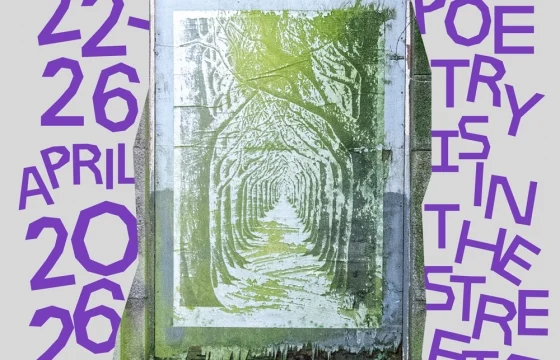
ABERDEEN, Scotland – From April 22 to April 26, 2026, the Granite City will undergo a radical transformation. Nuart Aberdeen, long regarded as a titan in the global street art circuit, is shifting its focus away from the monumental, hyper-realistic figurative murals that have defined the genre for the last decade. Instead, this year’s edition is embarking on a bold, provocative experiment: it will be the world’s first street art festival dedicated primarily to poetry and text-based intervention.
Under the curatorial vision of founder Martyn Reed, Nuart 2026 aims to democratize public art, stripping away the barriers of entry that have, perhaps inadvertently, turned street art into an elite, spectacle-driven industry.
The Genesis of a Linguistic Shift
For years, the street art landscape has been dominated by massive, technically complex murals. While these works provide undeniable visual impact, they often require significant institutional funding, specialized equipment, and elite artistic training. Reed argues that this has created a disconnect between the art and the public.
"As curators and producers, we have a responsibility to ensure the culture’s development and survival," Reed explains. "The only way to do this is to inspire those without the privilege of a fine art degree to have a go themselves. No one stands in front of a ten-story tower block mural and thinks, ‘I’ll pop home and try this on the side of my house.’"
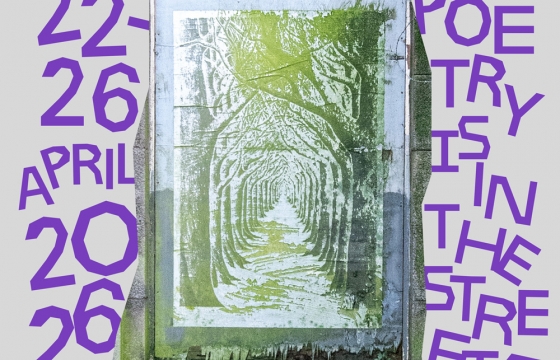
The inspiration for this year’s thematic pivot draws from two distinct historical touchstones. The first is the 1968 Paris student uprising, specifically the rallying cry, “La poésie est dans la rue” (Poetry is in the Streets). The second is a reflection from British graffiti pioneer Mode2, who once noted that the beauty of early graffiti was its simplicity: to participate, one only needed to know their "ABCs." By pivoting to text and poetry, Nuart 2026 is attempting to reclaim that raw, egalitarian spirit.
Chronology of the 2026 Festival
The five-day festival is structured to facilitate a dialogue between the urban environment and the written word:
- April 22 – Opening & Orientation: The festival kicks off with a series of public forums and workshops focusing on the power of the written word in public spaces. Participating artists begin the initial phase of site-specific text interventions.
- April 23 – The Human Scale: Artists move away from the high-rise gable ends and into the city’s cracks and crevices. Expect "human-scale" works—stencils, paste-ups, and spontaneous poetic interventions—designed to provoke thought rather than demand awe.
- April 24 – Community Engagement: A central pillar of the Nuart ethos, this day is dedicated to mentorship. Previous festival volunteers—some of whom have since become professional artists—will lead sessions for local residents, encouraging the "DIY" spirit that defined the early days of street art.
- April 25 – The City as Canvas: As the works reach completion, the city of Aberdeen serves as a living gallery. The focus shifts to how text changes the way pedestrians navigate the city, turning daily commutes into literary experiences.
- April 26 – Reflection & Legacy: The festival concludes with a wrap-up event, analyzing the impact of the text-based works on the city’s cultural fabric and the long-term goal of fostering the next generation of local creators.
Supporting Data: Why Text Works
The rationale behind this shift is backed by observation. Nuart’s research suggests that while massive murals are appreciated, they are rarely replicated by the public. Conversely, smaller, text-based, or stencil-driven works demonstrate a higher "mimicry rate"—the degree to which the public is inspired to engage in similar creative acts.
The festival’s curatorial team has identified that the ease of creating a text-based piece—requiring only a stencil, a marker, or a simple print-out—lowers the psychological threshold for participation. By emphasizing this, Nuart is moving from being an "event of spectacles" to an "incubator of creators." This is a crucial strategy for the sustainability of the arts, especially in an era where digital consumption often replaces physical creation.
Official Responses and Curatorial Philosophy
The transition to a poetry-focused festival has been met with cautious optimism from partners and sponsors. Balancing the tourist-friendly aesthetic of a mural-heavy city with the intellectual, sometimes abrasive nature of text-based art is a delicate dance.
"There is a tension," Reed admits, "between the needs of sponsors and the need to create works of genuine curiosity. But we believe that by stripping back the art to its linguistic core, we are actually creating something more ‘magical’—a city that speaks to its inhabitants."
The city council and local partners have remained steadfast in their support, recognizing that Nuart Aberdeen is no longer just a weekend event, but a fundamental part of the city’s identity. The collaboration is seen as a progressive model for how municipalities can interact with contemporary street culture without stifling its rebellious, transformative energy.
Implications: The Future of Urban Expression
The implications of the 2026 edition are significant. If Nuart succeeds in proving that text can revitalize a city’s street art culture, it may signal the end of the "Mural Era" that has dominated global street art festivals for the past decade.
The Artists Leading the Charge
This year’s roster features a mix of established local voices and international provocateurs, all tasked with utilizing the city’s infrastructure as a poetic medium. The lineup includes:
- Alisa Oleva (UK)
- Ciarán Glöbel (SCT)
- dr.d AKA Subvertiser (UK)
- HICKS (UK)
- James Klinge (SCT)
- KMG (SCT)
- Molly Hankinson (UK)
- Remi Rough (UK)
- Robert Montgomery (SCT)
- The Rebel Bear (SCT)
- The Writing Is On The Wall (UK)
- Trackie McLeod (SCT)
- V2k | (LT – SCT)
These artists are not just decorators; they are urban commentators. By prioritizing language, they force the viewer to stop, read, and contemplate, rather than simply walk past a decorative facade.
A Call to Action
The ultimate goal of Nuart 2026 is to remove the "guarded" nature of art. By moving away from the "fine art" pedestal, Reed and his team hope to remind the public that art does not need to be hidden behind the walls of institutions. It can be—and should be—part of the everyday urban experience.
As the festival unfolds, the success of this experiment will be measured not by the number of photos posted to social media, but by the number of citizens who, inspired by the poetry on a city wall, pick up a stencil or a pen and begin to create their own. In doing so, Nuart is not just decorating Aberdeen; it is attempting to re-awaken the creative agency of its population.
In an age where public space is increasingly privatized and controlled, Nuart Aberdeen 2026 stands as a defiant reminder: the streets belong to those who are willing to write on them. Whether it is a call to revolution or a quiet, poetic observation, the words placed on these walls will define the city’s discourse for months—and perhaps years—to come.