

A client sends a message that keeps every agency owner up at night: "We have 40,000 followers. Why isn’t anyone buying?"
As an agency professional, your immediate instinct is to audit the content, check the posting frequency, or suggest a paid ad boost. But if you are being honest, you don’t have a good answer. You’ve been running the same generic "community playbook"—post, engage, repeat—that you apply to every account on your roster.
The standard advice on community building—pick a platform, post consistently, engage—isn’t necessarily wrong, but it is dangerously incomplete. It ignores a fundamental failure mode: most brands choose their platform and build their schedule before they ever define exactly who the community is for. This article flips that narrative. We are moving from a follower-first model to an Ideal Customer Profile (ICP) first model, providing a blueprint that works across any industry without requiring you to reinvent the wheel for every client.
The Two Silent Killers of Community Growth
Most community launches fail not because of a lack of creativity, but because they ignore two structural traps that are entirely avoidable.
The 30-Day Silence Problem
Many brands launch a Facebook Group or Discord server with a burst of manufactured excitement—a welcome post, a few polls, and a discount code. Then, the silence sets in. Every post lands in a vacuum. The truth is that communities with fewer than 50 active members almost never generate organic discussion on their own. This is a "membership density" problem. Without a critical mass of active participants, the environment feels like an empty room, and your prospects will simply walk away.
The Platform Default Trap
The second failure is choosing a platform based on trends rather than fit. If your agency’s process for choosing a platform is "what did the last client use," you aren’t running a strategy; you’re flipping a coin. A community is only effective if it lives where your ICP already trusts the medium. If your client is a B2B enterprise software company, a casual Facebook Group might alienate the very decision-makers you are trying to reach.
Defining the Foundation: Audience vs. Community
Before launching, agencies must address a core confusion: the difference between an audience and a community.
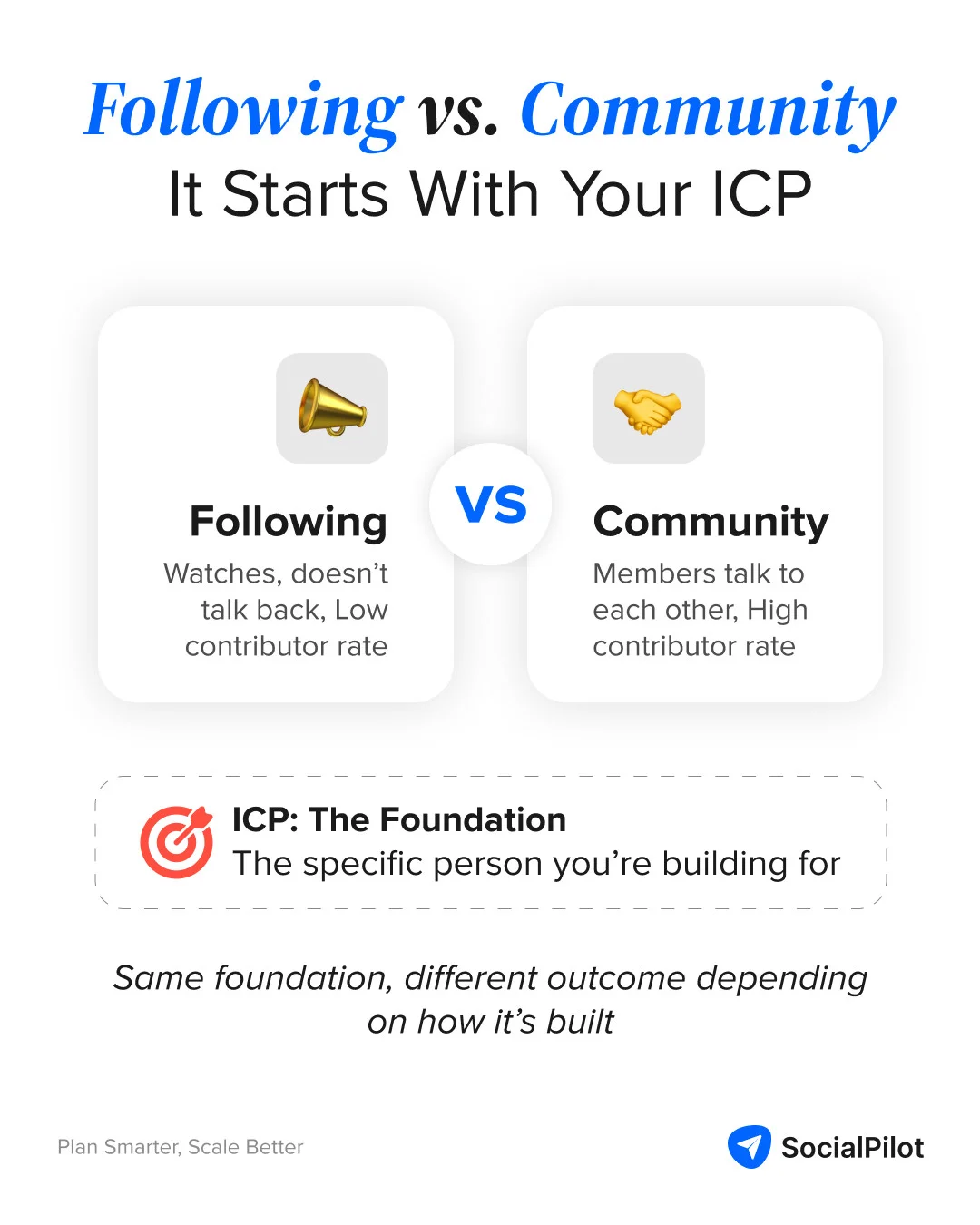
- An Audience: Mostly listens. They consume your content, but the relationship is vertical—Brand to Follower.
- A Community: Talks back. Its members interact with one another without the brand acting as the mandatory moderator.
The key metric here is the active contributor rate. A page with 40,000 followers and a 1% contributor rate is just an audience wearing a community’s clothes. Conversely, a group with 400 members and a 15% contributor rate is a powerhouse of high-intent buyers.
The Trust Topology
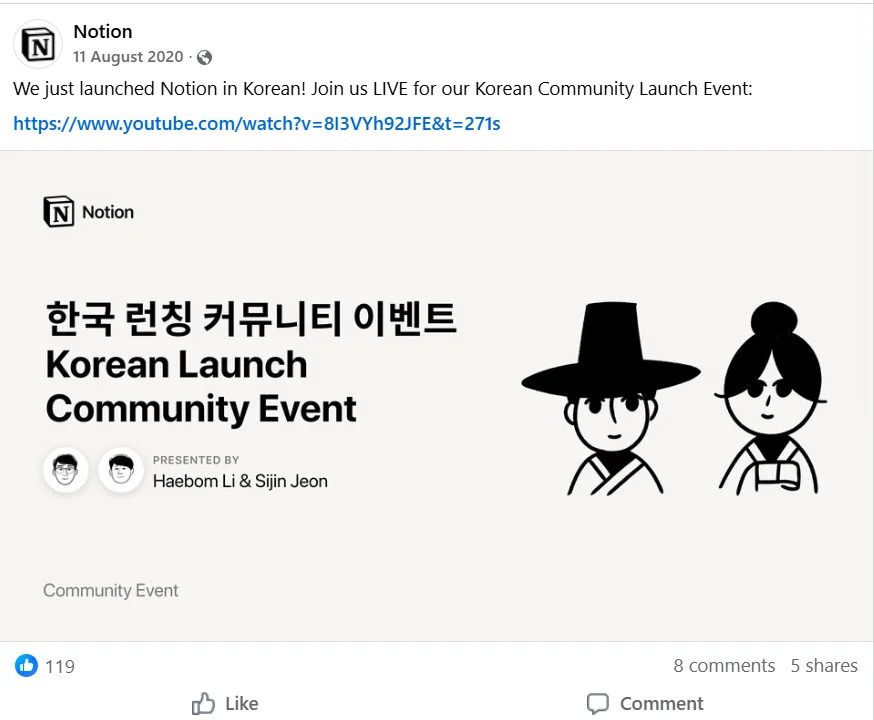
Every ICP has a "Trust Topology"—a map of where they already place their confidence. A CFO evaluates software through LinkedIn peer discussions; a fitness enthusiast trusts a private Facebook Group where they can share their progress. Your job isn’t to build trust from scratch; it’s to identify where that trust already lives and build your community within that existing infrastructure.
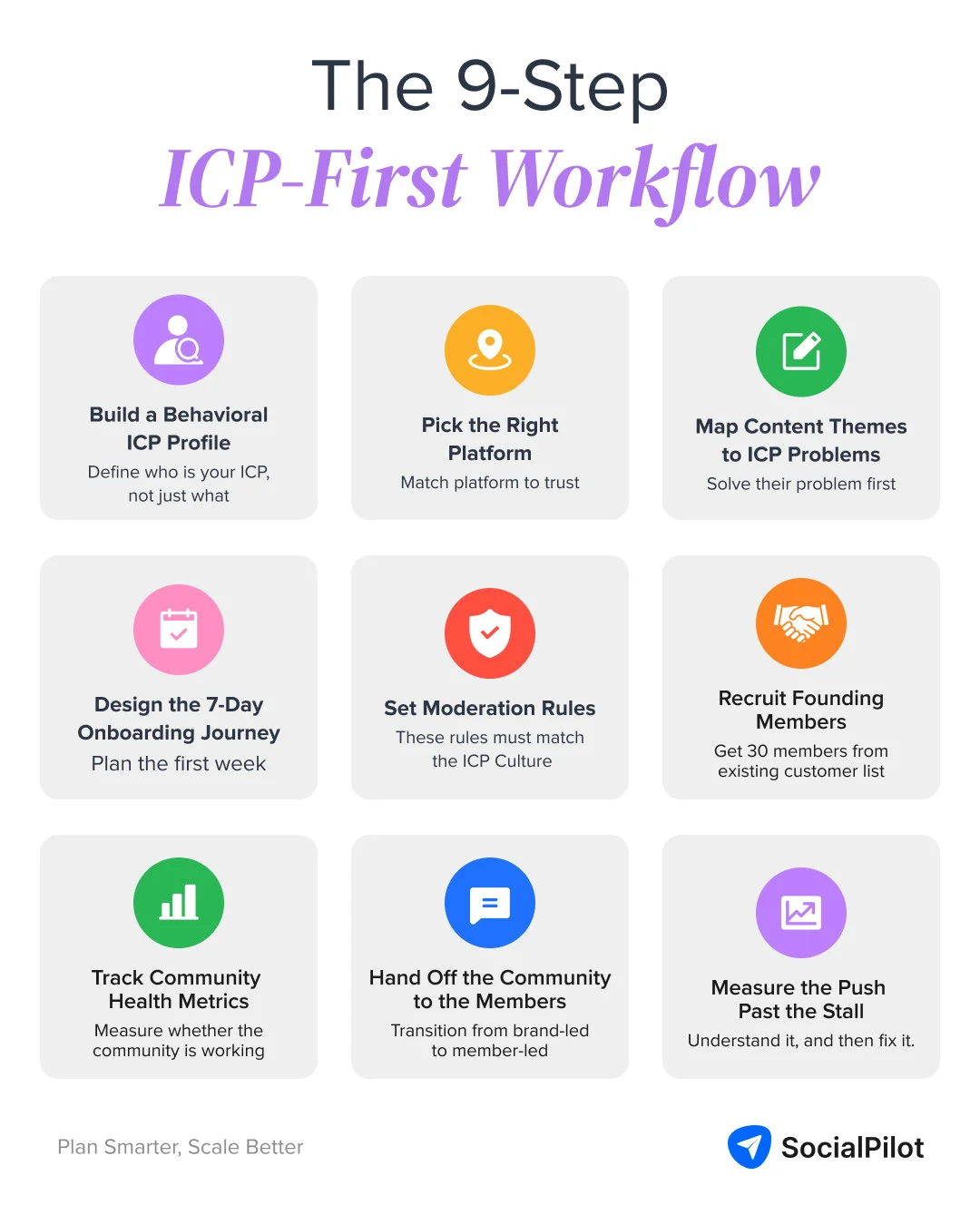
The 9-Step ICP-First Workflow
To move away from the "cascade of mistakes" where one bad assumption ruins every downstream decision, follow this rigorous nine-step process.
Step 1: Build a Behavioral ICP Profile
Stop focusing on age ranges and job titles. Start with behavior. What is your ideal customer actually doing?
- Weak: "Marketing managers, 28–45."
- Strong: "Juggles 4+ disconnected tools, has manually copy-pasted report data into a spreadsheet this week, and searches for ‘automate lead scoring’ on Google."
Step 2: The Decision Matrix
Once you have the behavioral profile, use a decision matrix to pick the platform.
- B2B Decision-makers: LinkedIn Groups (Professional context).
- SMB/Local Business: Facebook Groups (Broad reach).
- Gen Z/Creators: Discord (Real-time, high-engagement chat).
Step 3: Mapping Content to Problems
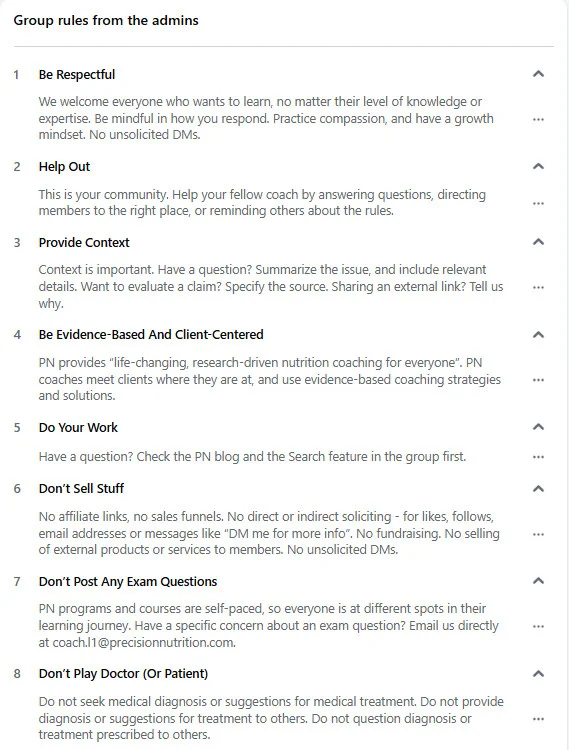
List the three problems your ICP is trying to solve this quarter. Do not focus on product features. If your client sells a marketing tool, the content should be about how to fix broken reporting workflows, not about the tool’s latest update.
Step 4: The 7-Day Onboarding Journey
New members join and often leave within a week because they don’t see immediate value. Design a seven-day "welcome" sequence that delivers one small, actionable "win" for the member.
Step 5: Moderation Rules
Your rules should mirror your ICP’s culture. A technical B2B space needs strict, on-topic moderation. A creator-focused community might require a more relaxed, personality-driven approach.
Step 6: The Cold Start (Founding Members)
Before the public launch, hand-pick 20–30 founding members from your client’s warmest leads. If you don’t have 50 active members in the first 90 days, you are still in the cold-start phase. Keep recruiting until that threshold is met.
Step 7: Mapping Metrics to Outcomes
Stop reporting on "follower count." Start reporting on Active Contributor Rate and Member-Driven Referrals. If you can prove that 10 new customers joined because an existing member referred them, the client will never question the community’s value again.
Step 8: Weekly Activation Rituals
Shift the burden of engagement from the brand to the members. Recurring rituals—like a "Member Spotlight" or a "Weekly Challenge"—give members a reason to talk to each other without you needing to post every day.
Step 9: Managing the Stall
Every community hits a stall between months three and six. This is not a failure; it is a signal that you need to refresh your "founding members" list and hand off more leadership rituals to the community itself.
Real-World Case Studies
Notion: The Power of Ambassadors
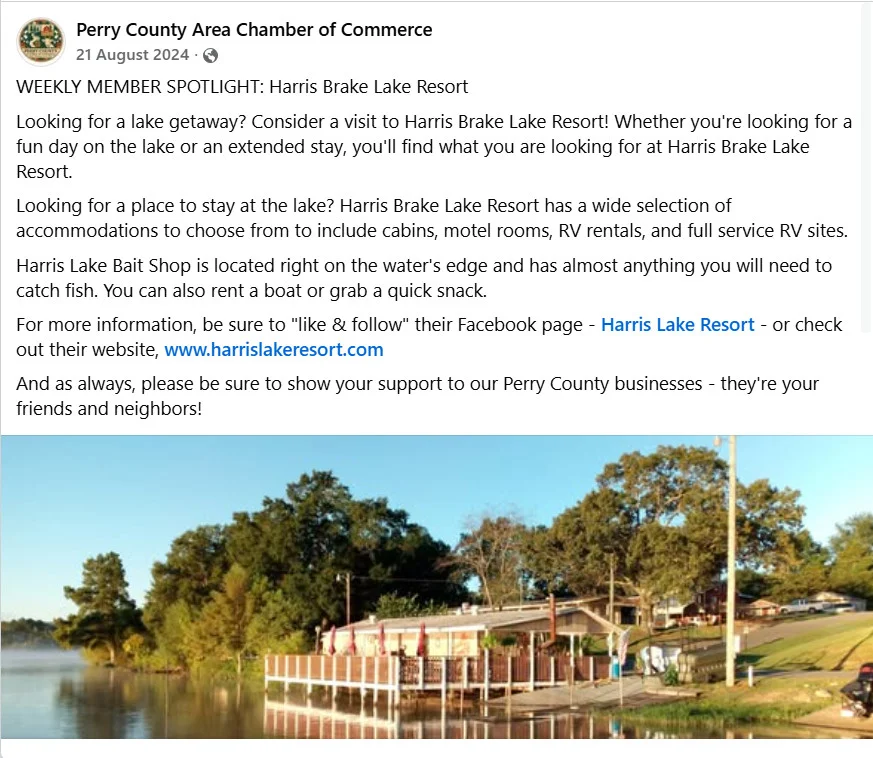
Notion built its community by identifying users who were already creating templates for free. They didn’t target "Notion users" at large; they targeted the creators. By formalizing these power users into an ambassador program, they built a global network that grew the brand organically.
Airbnb Host Clubs
Airbnb realized that the hosts were their most valuable asset. They didn’t try to mix hosts and guests in one space. They created separate, exclusive spaces for hosts to discuss pricing and guest management. The result? Hosts who participate in these clubs earn 2.5 times more revenue than those who don’t.
The Role of AI in Scaling Your Agency
AI can significantly accelerate your workflow without sacrificing the "human touch" required for high-level community management.
- Sentiment Analysis: Use tools like Dovetail to analyze customer support tickets and sales calls. This allows you to define your behavioral ICP in hours, not weeks.
- Content Drafting: Use AI to draft posts based on your mapped content themes, then manually refine them to ensure they sound like a real person.
- Cross-Platform Management: Utilize MCP (Model Context Protocol) connectors to manage scheduling and delivery status across multiple client accounts from a single interface, saving hours of administrative overhead.
Note: AI cannot determine if a member needs a private DM or a public shoutout. Those judgment calls remain the core value of an agency professional.
Implications: Preventing "Drift"
A community that works today can lose its way six months from now. This is known as "community drift." To prevent this, implement a Quarterly ICP Audit. Spend 30 minutes every quarter reviewing your most active members. Are they still the people you set out to serve? If not, investigate why.
If the community has attracted a new, adjacent audience, decide whether to serve them or protect the original space. The account with 500 "right-fit" members is the one that renews the retainer; the account with 50,000 "wrong-fit" followers is the one that eventually cancels.
By shifting your focus to the ICP and following this structured workflow, you move from being a "social media manager" to a "community strategist." This is how you stop the panicked client messages and start delivering the business results that define a successful agency-client partnership.











