

Introduction
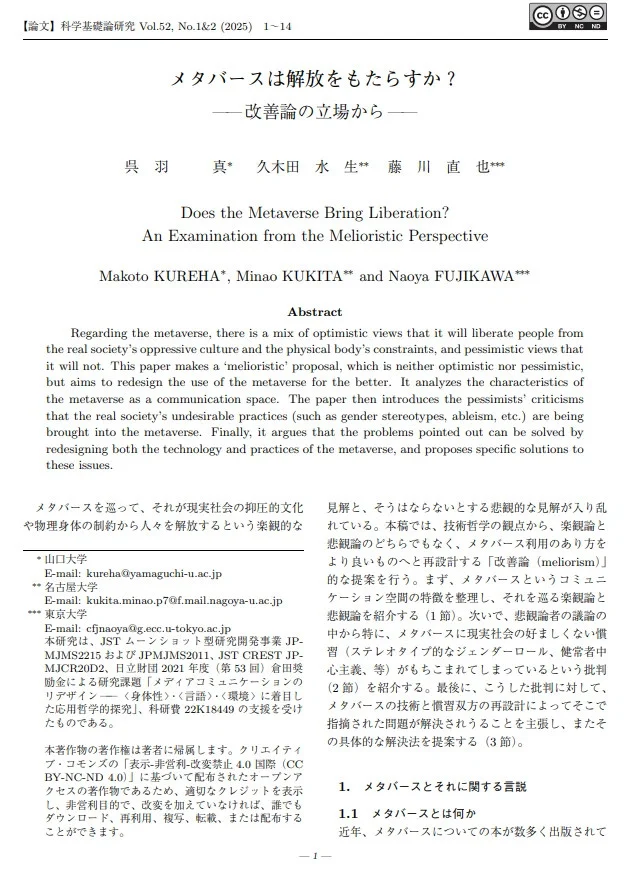
The digital landscape has been irrevocably altered by the rise of Virtual YouTubers (VTubers)—content creators who utilize computer-generated avatars to interact with global audiences. What began as a niche subculture within Japan’s digital sphere has rapidly ascended to become a multi-billion dollar industry, influencing everything from mainstream entertainment to social interaction patterns in virtual reality (VR) spaces. A recent retrospective study published in the academic journal Kisoron (Vol. 52, Issue 1-2, 2025) provides a comprehensive analysis of this phenomenon, charting the evolution of VTubers from their origins to their current status as icons of digital identity.
Main Facts: Defining the VTuber Phenomenon
At its core, a VTuber is a creator who adopts a 2D or 3D digital persona, or "avatar," to perform for an audience. Unlike traditional streaming, where the creator’s physical face is the focal point, the VTuber medium decouples the performer’s physical identity from their digital representation.
Key findings from the recent Kisoron analysis emphasize that this technology is not merely a "costume." It is a sophisticated form of "melioristic" communication—a method of self-expression that allows performers to transcend physical limitations and societal expectations. By utilizing motion-capture software and high-fidelity rendering, creators can cultivate a persona that exists independently of their real-world self, fostering a unique, parasocial, yet deeply engaged relationship with their fanbase.
Chronology: From Niche Roots to Global Mainstream
The trajectory of VTuber culture can be divided into several distinct phases:
- The Incubation Phase (Pre-2017): Early experiments in virtual performance were limited by high hardware costs and a lack of standardized software. Concepts existed, but the technology was largely inaccessible to the general public.
- The "Kizuna AI" Explosion (2017–2018): The emergence of Kizuna AI served as the industry’s "Big Bang." She popularized the term "VTuber" and demonstrated the potential for a virtual character to host variety shows, play video games, and interact with live chat, effectively proving the viability of the business model.
- The Proliferation Phase (2019–2021): The COVID-19 pandemic acted as a massive accelerant. As physical interaction became restricted, the world moved online. The VTuber medium provided a sense of intimacy and community that traditional "human" content often struggled to replicate under lockdown conditions.
- The Integration and VR Era (2022–Present): The focus has shifted from simple YouTube streaming to integrated virtual environments like VRChat. The line between "streamer" and "virtual resident" has blurred, with creators now hosting events inside persistent virtual worlds.
Supporting Data: The Academic Perspective
The Kisoron study aggregates several critical academic perspectives on the industry. Notable literature referenced in the study includes:

- Yamada & Ota (2022): Focused on the symbiosis between VRChat culture and the VTuber movement, highlighting how users transition from viewers to "virtual participants."
- Hoshino (2022): Analyzed the "AT (Artificial Technology) YouTuber" phenomenon, detailing how 3D CG modeling allows for nuanced emotional expression that feels authentic to the viewer.
- Prix Genre (2021): A critical study on the sociological impact of virtual identity, which won acclaim for its deep dive into how performers negotiate their "real" self versus their "virtual" self.
The data suggests that the average VTuber audience is not merely "watching" content; they are participating in a digital ecosystem. Platforms like J-STAGE and various academic repositories are now documenting this as a legitimate subject of media studies, reflecting the industry’s transition from an internet fad to a cultural fixture.
Official Responses and Industry Sentiment
The professionalization of the industry has been spearheaded by major agencies such as Cover Corp (Hololive) and Anycolor (Nijisanji). Their official stances emphasize "technological democratization." By providing creators with proprietary motion-capture technology and backend support, these agencies have lowered the barrier to entry, allowing thousands of independent creators to join the fray.
Conversely, academic circles—as noted in the Kisoron report—have expressed cautious optimism. Scholars like Liudmila Bredikhina have argued that while the medium offers unprecedented freedom for marginalized voices to find community, it also presents challenges regarding the ownership of digital identity and the psychological toll of "always-on" virtual performance. The industry is currently in a state of self-regulation, with discussions regarding the ethical use of AI in avatar creation and the protection of creator rights becoming standard at industry summits.
Implications: The Future of Virtual Identity
The implications of the VTuber phenomenon extend far beyond entertainment. We are witnessing the birth of a new "Digital Citizenship."
1. Sociological Impact
The ability to inhabit a digital body allows for a form of "identity play" that was previously impossible. This has massive implications for individuals who may feel constrained by their physical appearance, location, or social status. The VTuber model provides a blueprint for how future social media will function—not as a collection of photos and text, but as a collection of virtual personas interacting in real-time.

2. Economic Disruptions
The VTuber industry has created entirely new job categories: Live2D animators, virtual riggers, digital costume designers, and virtual concert producers. The traditional entertainment industry is increasingly looking toward these virtual stars for brand partnerships and endorsements, as VTubers often boast higher engagement rates than their human counterparts.
3. Technological Convergence
The growth of VTubing is driving advancements in consumer-grade hardware. Affordable motion-capture, facial-tracking via smartphones (e.g., iPhone X depth-sensing), and high-speed streaming infrastructure are all being refined to support the demanding requirements of virtual performance. As we approach the era of the "Metaverse," the VTuber is the template for the average user’s avatar—highly expressive, animated, and capable of holding an audience’s attention.
Conclusion
The report in Kisoron serves as a milestone, marking the moment VTuber culture moved from the fringes of YouTube to the center of digital discourse. It is a testament to the human desire for connection, showing that even in a digital, synthetic, or virtual space, the need for authenticity remains paramount. Whether through the lens of sociology, technology, or pure entertainment, the VTuber is here to stay, representing the next logical step in the evolution of human performance. As we look toward the future, it is clear that our digital shadows are becoming just as important as our physical selves.








