

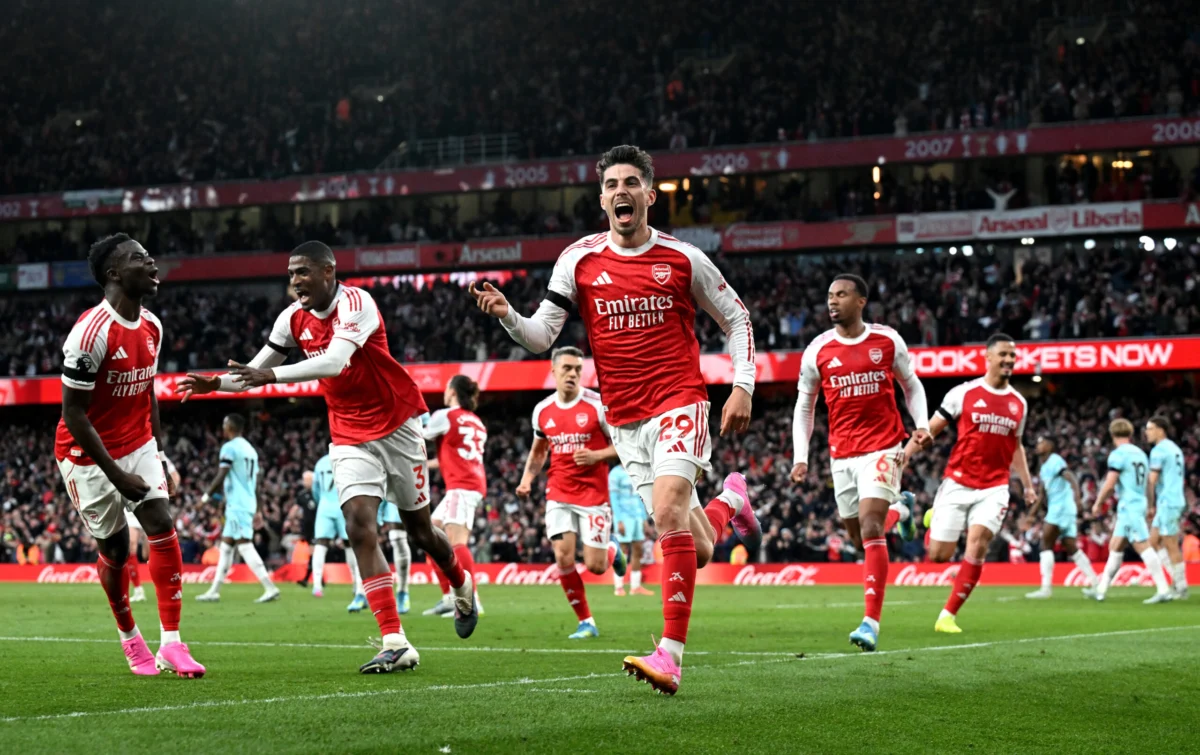
The landscape of global sports broadcasting is undergoing a seismic shift. As the final whistle blows on the current Premier League season, it also signals the conclusion of a 22-year partnership that fundamentally redefined how football is consumed worldwide. IMG, the global sports and entertainment giant, is officially ending its long-standing tenure as the producer for Premier League Productions (PLP).
For over two decades, the collaboration between IMG and the Premier League transformed the English top flight from a popular domestic product into a global cultural phenomenon. Now, as the League prepares to bring its production operations in-house through the newly established "Premier League Studios," the industry is watching closely to see how this transition will affect the future of sports media.
The Final Huddle: A Milestone Moment
The mood at Stockley Park, the nerve center of Premier League broadcasting, was one of reflective camaraderie rather than mourning. Barney Francis, Chief Business Officer at IMG, and John Hollywood recently sat down with Deadline shortly after concluding a final "Premier League Huddle"—a recurring staff meeting designed to celebrate the team’s achievements and outline future strategies.
This particular gathering carried the weight of history. It was the final assembly before the keys to the kingdom were handed over to the Premier League itself. "We had a kind of farewell as we part company," Francis noted, acknowledging that while the contract is expiring, the relationship remains intact. The event featured reflections from former IMG Managing Director of Worldwide Sports Production, Graham Fry, who offered insights into the early, pioneering days of the partnership.
For the staff, it was a moment to acknowledge the sheer scale of the evolution they facilitated. From humble beginnings in 2004—producing a few live games and basic magazine shows—the operation ballooned into a 24/7 global engine, delivering hundreds of live matches annually alongside an exhaustive library of shoulder content.

A Chronology of Growth: From 2004 to 2026
To understand the significance of this separation, one must look at the trajectory of the partnership. When the deal was inked in 2004, the media landscape was dominated by linear television. High-definition was in its infancy, and social media, as we know it today, did not exist.
- 2004–2010: The Formative Years. IMG helped the Premier League establish a consistent, high-quality production standard that allowed the league to export its games to international broadcasters with confidence.
- 2010–2018: The Digital Acceleration. As the Premier League’s popularity exploded in markets like Asia and North America, the demand for "shoulder content"—interviews, tactical analysis, and behind-the-scenes features—soared. IMG scaled its operation at Stockley Park to meet this demand, utilizing cutting-edge studio technology.
- 2018–2024: The Tech Transformation. The shift to cloud-based editing, 4K production, and the integration of sophisticated metadata systems like "Turnstile" allowed the Premier League to monetize its massive archive. This era saw the creation of viral hits, such as the widely viewed featurette on Jack Grealish and Finlay Fisher, which garnered 50 million views worldwide.
- 2026: The In-House Pivot. Following a unanimous vote by the 20 Premier League clubs in October 2024, the League opted to internalize production, aiming to capture greater value and maintain closer control over its content assets.
Supporting Data: The Global Reach of the Premier League
The statistics behind this partnership are staggering. The Premier League now generates roughly £2 billion ($2.7 billion) in revenue from overseas markets alone, outpacing its domestic UK revenue of approximately £1.7 billion. This shift toward an international-first model is largely thanks to the consistent, world-class production quality delivered by PLP, which ensured that a viewer in Mumbai, Tokyo, or New York received the same premium experience as a fan at a pub in London.
The technical infrastructure built by IMG allowed the league to produce as many as 215 matches per year in 4K, all while managing an archive that has become one of the most valuable collections of sporting footage in history. The ability to instantly pull iconic moments—like Sergio Aguero’s 2012 title-winning goal—and package them for regional broadcasters has been a key driver of the league’s enduring relevance.
Official Responses and the Logic of the Split
Both Barney Francis and John Hollywood were keen to stress that this was an amicable "divorce," driven by a shared, forward-thinking ambition. When asked about the "inevitable question" of why the partnership is ending, Francis was candid about the evolution of the Premier League’s business model.
"We went through a lot of conversations about what a future might look like," Francis explained. "We’re ambitious. We never sit still… It just so happened that the Premier League had a similar mindset, which is about improving and driving efficiency. It was inevitable that at some point they were going to want to own it."

Richard Masters, CEO of the Premier League, previously articulated that taking production in-house provides the league with "optionality." By owning the means of production, the league is better positioned to launch a direct-to-consumer service in the future, should the broadcast landscape shift further away from traditional licensing models.
Francis, who previously held executive roles at Sky Sports, noted that only a handful of organizations—specifically the Premier League, the NFL, and the NBA—have the scale and capital to manage the risks associated with such a massive production undertaking.
Implications: A New Chapter for IMG and the League
The departure from the Premier League contract is undeniably a financial milestone for IMG, yet both Francis and Hollywood maintain that the company is in "rude health." Under the umbrella of Ari Emanuel’s TKO Group Holdings, IMG has been preparing for this transition for years.
For the Premier League
The launch of Premier League Studios represents a massive capital expenditure (Capex) commitment. However, it provides the league with unprecedented control over its brand identity. By bypassing third-party production houses, the league can streamline its workflows, experiment with new formats, and integrate its content closer to its international licensees, including giants like Sky, Prime Video, TNT Sports, and DAZN.
For IMG
For IMG, the end of the PLP contract is not a retreat, but a pivot. The firm remains a production powerhouse, retaining contracts with the English Football League (EFL), the Saudi Pro League, and Major League Soccer (MLS).

John Hollywood emphasized that the "uncoupling" has actually acted as a catalyst for growth. "It is a chance to reimagine our business, pivot, look at our tech stack and our plan for staff," Hollywood said. He noted that the company has seen an uptick in interest from other clients who recognize that IMG now has the "bandwidth" to support new, large-scale initiatives.
The company is also leaning into the future of the industry by focusing on talent development. Acknowledging the challenge of training the next generation of broadcast operators—especially in markets like the U.S. where soccer is competing with established domestic leagues—IMG is prioritizing the recruitment of young media professionals who "live and breathe" the sport.
A Legacy of Innovation
As the final matches of the 2025/26 season conclude, the industry’s focus will shift toward the legacy of the IMG-PLP partnership. It was a relationship defined by "symbiotic" growth; each side pushed the other to be faster, more creative, and more efficient.
The success of the partnership was perhaps best exemplified by the challenges of the COVID-19 pandemic. During that period, the production service continued uninterrupted, becoming a vital lifeline for a global population in lockdown. The fact that the content continued to flow, with authorities facilitating access to Stockley Park to ensure the world could watch football, remains a testament to the essential nature of the product they built.
Conclusion: A Graceful Exit
Despite the magnitude of the change, the tone remains resolutely positive. "They go with our blessing and we part with their blessing," Hollywood remarked.

As IMG looks to the future, with "a couple of very big projects in different sports" waiting in the wings, the team at Stockley Park is focused on one final task: ensuring the transition is seamless. "What we must make sure is that on the last match-day round that we all hug each other and say goodbye with smiles on our faces," Francis concluded. "Because we should reflect on 22 great years."
The Premier League will move forward into a new era of self-sufficiency, while IMG prepares to apply the lessons learned at the pinnacle of football broadcasting to the next frontier of global sports entertainment. The partnership may be over, but the standard it set will remain the benchmark for the industry for years to come.











No comments yet. Be the first to join the conversation!