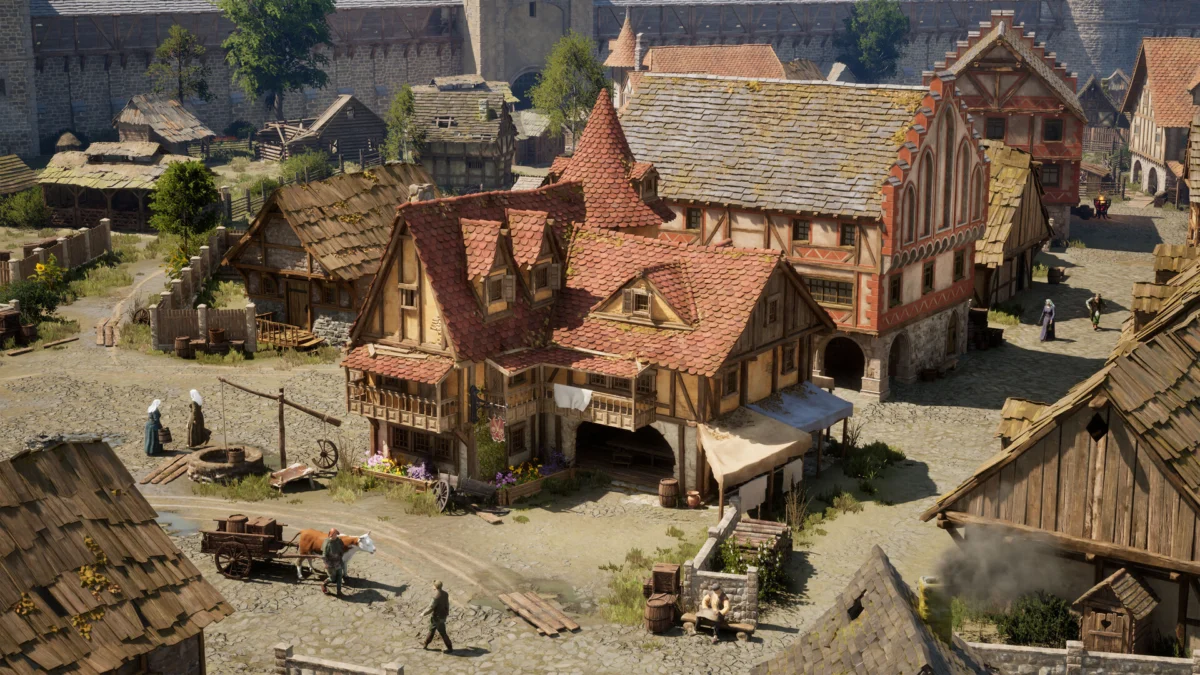
The landscape of economic simulation games is set for a significant, albeit slightly delayed, addition. THQ Nordic and developer Ashborne Games have officially announced that The Guild: Europa 1410—the highly anticipated next chapter in the storied medieval life-simulation franchise—will be shifting its Early Access debut from its previously slated July release to September 2026.
This decision, while disappointing to fans eager to begin their dynasty-building, is framed by the developers as a necessary step to integrate player feedback and deliver a more robust initial experience. By consolidating their post-launch roadmap into the initial release, the team aims to set a higher standard for the game’s first public appearance on Windows PC via Steam.
The Core Facts: A Shift in Timeline
For those closely tracking the development of The Guild: Europa 1410, the shift marks a two-month delay. The game, which promises to blend deep economic strategy with personal dynasty management, was originally scheduled for July 16, 2026. Following the evaluation of data gathered during the recent Steam Next Fest, the studio has opted for a September 2026 window.
This is not a traditional "development hell" delay; rather, it is a strategic pivot. Ashborne Games has confirmed that the content originally planned for the first major post-launch update will now be bundled into the initial Early Access release. This means that players who jump into the game in September will be met with a more feature-complete build than originally intended, effectively condensing the development cycle to provide a better "Day One" experience.
Chronology of Development and Feedback
The journey to this decision began in earnest during the recent Steam Next Fest, where The Guild: Europa 1410 emerged as a breakout hit. To understand the gravity of the decision, one must look at the timeline of the game’s recent public interaction:
- Pre-Next Fest: Anticipation built as Ashborne Games teased new mechanics, emphasizing a move toward historical accuracy and deeper political maneuvering.
- Steam Next Fest (June/July 2026): The playable demo was released to the public. It performed exceptionally well, ranking as the 25th most-played demo out of over 4,000 entries.
- Feedback Integration (July 2026): The developers received thousands of detailed reports from the community. These reports highlighted specific pain points and desired features, allowing the team to identify exactly where the game needed more polish.
- The Decision (Late July 2026): Recognizing that the current build required more time to meet the high expectations set by the franchise’s legacy, the team opted to delay the launch to September.
- The Path Forward (September 2026): The new target for the Early Access launch.
Supporting Data: Why the Delay Matters
The success of the demo provided Ashborne Games with a massive dataset. According to the studio, tens of thousands of players engaged with the demo, providing a level of telemetry and qualitative feedback that is rarely available to indie-adjacent developers.
The primary driver for the delay appears to be the sheer volume of "aspirational" feedback. Players were not just reporting bugs; they were suggesting improvements to the economic loop, the complexity of political alliances, and the progression speed of dynasties. By taking the extra time, Ashborne Games is prioritizing "content parity." By moving the planned September update into the base Early Access launch, they ensure that the "first impression" of the game is significantly more stable and content-rich.
Official Response: The Developer’s Perspective
In a candid statement, the team at Ashborne Games expressed their gratitude to the community. They acknowledged the enthusiasm surrounding the title and emphasized that the decision was made with the long-term health of the project in mind.
"First of all, a big ‘Thank you!’ goes out to all players who checked out the demo of The Guild: Europa 1410 during Steam Next Fest," the studio stated in an official announcement. "We’re equally grateful for the detailed, extensive feedback that thousands of you shared with us. It’s already helping us understand even better what players expect from The Guild: Europa 1410 as it heads toward Early Access. Based on what we’ve learned from the demo, we’ve decided to move our Early Access release date from July 16 to September 2026."
The studio also clarified the status of their post-launch roadmap. Despite the delay, the commitment to long-term support remains unchanged. Key pillars of the game—including multiplayer integration, the introduction of additional maps, new professions, and complex mechanics involving politics and dynasty progression—are still on the table.

Implications for the Genre and the Franchise
The Guild series occupies a unique niche in the gaming world. It is one of the few franchises that successfully marries the granular detail of a business simulation (managing markets, supply chains, and production) with the social and political intrigue of a medieval life simulator.
1. Elevating the "Early Access" Standard
In recent years, the gaming industry has seen a shift in how Early Access is perceived. Consumers are increasingly wary of "bare-bones" launches. By choosing to include the first planned content update in the initial launch, Ashborne Games is making a calculated move to mitigate negative reviews and build trust with their core demographic. This strategy positions the title as a more "complete" experience right out of the gate.
2. The Weight of Legacy
The Guild: Europa 1410 carries the burden of its predecessors. Older entries in the series, while beloved for their innovation, were often plagued by technical instability and complex, sometimes opaque, systems. Ashborne Games is clearly aware that they are being measured against both the potential of the genre and the technical pitfalls of the past. The decision to delay shows that the publisher, THQ Nordic, is allowing the developers the necessary breathing room to refine these systems rather than forcing a rushed release.
3. Community-Driven Development
The fact that a demo ranking 25th out of 4,000+ titles has led to a strategic delay highlights the power of the current Steam ecosystem. Developers now have the ability to gauge real-world performance before a full launch. For The Guild: Europa 1410, this means the final product will likely be more reflective of what the community actually wants, rather than what the developers thought the community wanted.
Looking Toward September
While September 2026 is still a few months away, the studio has promised that the waiting period will not be entirely silent. They have confirmed that an update to the current demo is in the works. This update is expected to give players a "first look" at some of the improvements and gameplay refinements they have implemented based on the feedback gathered since the Steam Next Fest.
For fans of the series, this is an encouraging sign. It suggests that the development team is not just working behind closed doors but is continuing to use the community as a sounding board.
What to Expect at Launch
When The Guild: Europa 1410 finally arrives on Steam in September, players can expect a more polished experience with:
- Refined Economic Loops: Adjustments to how supply and demand impact the player’s businesses.
- Balanced Progression: A more intuitive way to grow a family dynasty from humble beginnings to a merchant empire.
- Expanded Initial Content: Features originally slated for late 2026 that will now be present at launch.
- Enhanced Stability: A technical foundation built on the feedback of thousands of testers.
Conclusion
The decision to delay The Guild: Europa 1410 is a hallmark of a mature development process. In an industry where deadlines are often prioritized over quality, Ashborne Games’ willingness to listen to their community and adjust their strategy is a positive indicator.
While the wait for September may feel extended for those who played the demo and were left wanting more, the result will likely be a stronger, deeper, and more satisfying economic strategy game. As the studio prepares for the final push, the community remains in a position of heightened expectation, waiting to see if The Guild: Europa 1410 can truly revitalize the genre and set a new standard for medieval simulation.