Developer/Publisher: Take IT Studio!
Platforms: PlayStation VR2 (Reviewed), PC VR, Meta Quest
Genre: Simulation / VR
The landscape of virtual reality gaming is often defined by spectacle—dashing through neon-soaked cyberpunk cities or battling mythical beasts with motion-tracked swords. Yet, amidst the adrenaline-fueled experiences, a quieter sub-genre has emerged as a cornerstone of the medium: the "job simulator." While many titles in this space struggle to transcend the novelty of their premise, Take IT Studio!’s Electrician Simulator VR proves that there is a profound, meditative satisfaction to be found in the mundane. By translating the methodical, tactile nature of electrical work into a virtual environment, the studio has crafted an experience that is as rewarding as it is surprisingly zen.
The Main Facts: Wiring a New Reality
At its core, Electrician Simulator VR is exactly what it advertises: a digital recreation of the professional electrician’s workflow. Players are dropped into a series of residential environments, tasked with diagnosing electrical failures, installing new fixtures, and ensuring that homes are up to code. The game operates on a mission-based structure, where each job serves as a self-contained puzzle.
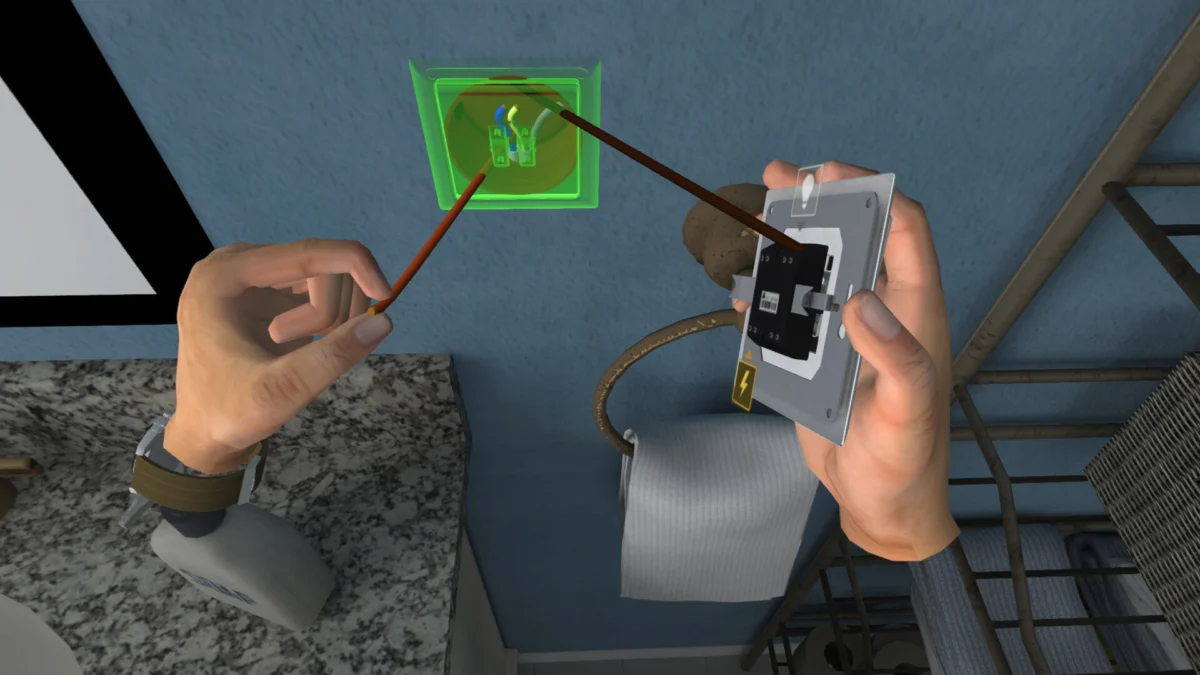
What distinguishes this title from its "flat" counterpart is the physicality. In the original non-VR version, completing a circuit was a matter of clicking an icon or pressing a button. In VR, you are physically reaching into a wall, unscrewing a faceplate with your dominant hand, grabbing a wire, and securing it into a terminal. This shift from input-based actions to gesture-based manipulation fundamentally changes the player’s relationship with the game. It is no longer about clearing a checklist; it is about the sensory satisfaction of a job well done.
Chronology of the Experience: From Novice to Pro
The gameplay loop in Electrician Simulator VR is meticulously paced, allowing players to acclimate to the virtual toolkit before introducing more complex architectural challenges.
Phase 1: The Basics (The "Light Bulb" Era)
The opening hours are deceptively simple. The game eases players in with menial tasks: replacing a blown light bulb, swapping out a frayed wall socket, or resetting a tripped circuit breaker. During these early stages, the focus is on mastering the haptic feedback of the controllers. The game utilizes the PS VR2’s advanced haptics to simulate the resistance of a screwdriver or the satisfying "click" of a switch, grounding the user in the virtual environment.
Phase 2: Troubleshooting and Diagnostics
As the game progresses, the "customer" needs change. You begin to encounter intermittent power outages and faulty wiring layouts that require the use of specialized tools, such as multimeters and circuit testers. This is where the game transitions from a simple interactive toy to a problem-solving simulation. The challenge shifts from "how do I do this" to "where is the fault located?"

Phase 3: Complex Infrastructure
By the final act, players are tackling full-scale wiring projects. This involves running cables through studs, managing wire gauges, and connecting complex junction boxes. While the game intentionally avoids the lethality of real-world high-voltage work, it captures the logistical frustration—and triumph—of routing electricity through a finished room.
Supporting Data: Why Simulation Works in VR
The success of Electrician Simulator VR highlights a critical trend in the gaming industry: the "Simulation Boom." According to recent market analysis, titles that emphasize process-oriented gameplay—such as PowerWash Simulator or PC Building Simulator—have seen a surge in popularity among demographics that traditionally avoid competitive shooters or high-stakes action games.
The "VR-ification" of these titles acts as an accessibility bridge. By mapping game actions to real-world hand motions, the barrier to entry is lowered significantly. Data from playtests indicates that users are more likely to persist through "boring" tasks (like stripping wires) in VR than on a monitor, because the brain perceives the action as an accomplishment rather than a chore. The tactile feedback provides a dopamine hit that standard controller inputs simply cannot replicate.
Official Responses and Developer Intent
Take IT Studio! has been vocal about their desire to create a "digital sandbox" rather than a rigorous educational tool. In a recent statement, the developers clarified their stance on realism:
"Our goal was to evoke the feeling of being a skilled tradesperson without the inherent dangers or the years of apprenticeship required. We want players to experience the satisfaction of fixing something that was previously broken. If you walk away feeling like you understand how a light switch works, we’ve succeeded—but don’t go trying to rewire your actual kitchen."
This transparent communication is vital. The studio has acknowledged the "rough edges"—the occasional interface bug or tracking hiccup—as part of the evolving nature of VR development. They have committed to ongoing updates, promising to refine the physics-based interactions and expand the catalog of available electrical components.
Implications: The Future of Virtual Labor
The implications of Electrician Simulator VR extend beyond the gaming sphere. As VR hardware becomes more refined, we are likely to see a convergence between entertainment and vocational training. While this game is not a substitute for a certification, it acts as a low-stakes simulator for the basic principles of electrical flow and safety.

The "Rough Edges" Argument
It is important to address the limitations. The game is not a simulation in the strictest sense of the word. A professional electrician would likely find the game’s simplification of load balancing or local building codes to be humorous, if not outright baffling. The visuals, while functional, do not push the boundaries of what the PS VR2 is capable of. Furthermore, the early-game control scheme can feel clumsy; reaching for a tool that is clipped to your belt sometimes results in the player grabbing thin air or dropping items.
However, these flaws do not fundamentally break the experience. For the intended audience—players looking for a "cozy" game or those who enjoy the methodical nature of organizing and fixing—these issues are minor inconveniences in an otherwise rewarding loop.
Beyond Entertainment
There is also a broader question regarding the future of the simulation genre. If Electrician Simulator VR can make the mundane act of replacing a socket feel engaging, what other professions could benefit from this treatment? The potential for plumbers, HVAC technicians, or even specialized carpentry simulators is massive. We are entering an era where "digital work" is becoming a legitimate form of relaxation, providing a productive outlet for players who feel overwhelmed by the fast-paced, high-stress nature of modern life.
Final Verdict: A Connection Worth Making
Electrician Simulator VR is a testament to the idea that immersion is not just about hyper-realistic graphics or massive open worlds. Sometimes, it is about the simple, quiet act of picking up a tool, identifying a problem, and seeing a room light up because of your specific, individual effort.
While it lacks the polish of a AAA blockbuster and may frustrate those seeking a true-to-life training manual, it excels as a piece of "digital therapy." It encourages a level of patience and focus that is rare in today’s gaming market. By turning the drudgery of household maintenance into a game of skill and rhythm, Take IT Studio! has successfully wired a unique path into the hearts of simulation enthusiasts.
Whether you are a fan of the genre or just looking for a way to wind down after a long day, this title offers a spark of genuine joy. It may not pay the bills or teach you to be a master sparky, but it succeeds in the only metric that truly matters: it makes you feel capable, one wire at a time.