

The landscape of personal technology is undergoing its most significant shift since the advent of the smartphone. As generative artificial intelligence transitions from browser-based chatbots to integrated agents capable of executing complex workflows, a fundamental question has emerged: How do we actually interact with these systems?
While the tech industry has spent the last two years flooding the market with passive “context-capture” devices—AI pins, smart rings, and ambient notetakers—a new wave of hardware is emerging with a different focus. Moving away from the "always-listening" paradigm, startups are beginning to prioritize agency, control, and tactile interaction. At the forefront of this shift is Aina, a Bengaluru- and San Francisco-based startup that recently announced a $5.5 million funding round, signaling a maturation in the market for AI-native hardware.
Main Facts: Aina’s Strategic Vision
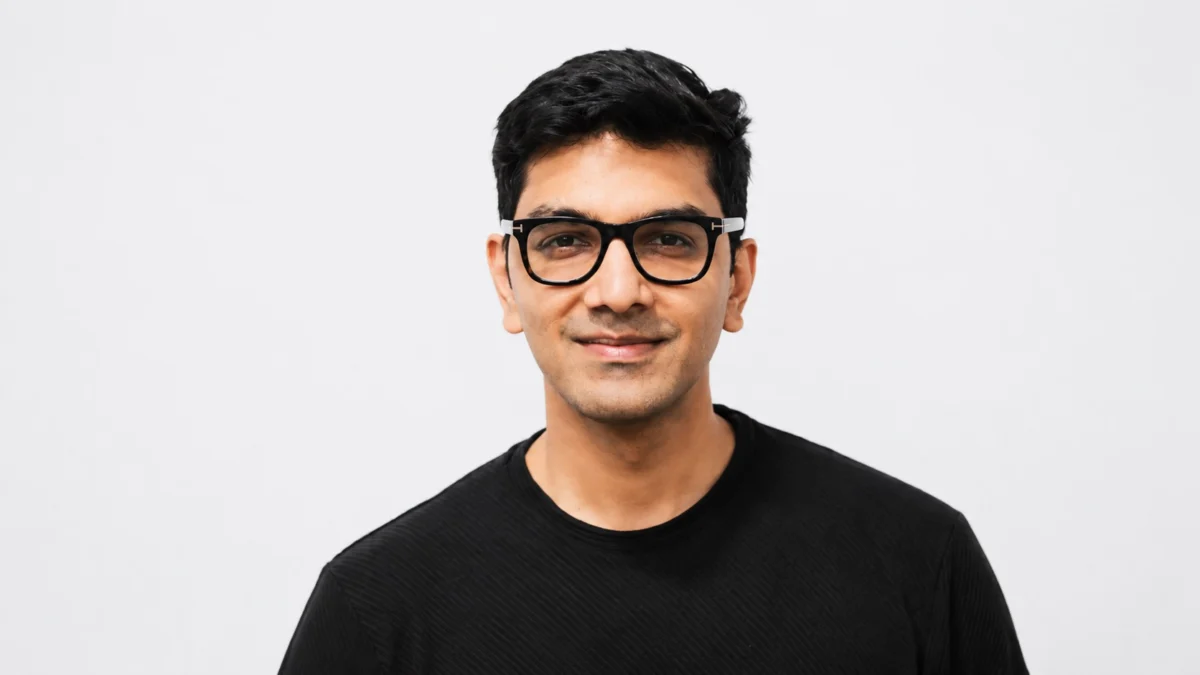
Aina, which means "mirror" in Hindi, is positioning itself as a bridge between human intent and machine execution. Founded by Apoorv Shankar, a veteran of the hardware industry with deep roots in the smart-wearable space, the company aims to move past the limitations of current AI hardware.
The startup’s latest funding round was led by Redstart Labs (a subsidiary of Info Edge India) and 360 ONE. The round also saw participation from notable global investors, including MIXI Global Investments, Antler, and the Blume Founders Fund. The cap table is further bolstered by high-profile individual investors who recognize the potential of the interface layer, including the newly appointed head of WhatsApp, Kunal Shah, Razorpay co-founders Harshil Mathur and Shashank Kumar, and Scribd founder Tikhon Bernstam.
Aina’s initial product, Dune, is a context-aware, three-key macro keypad. While it may seem modest in an era of multi-modal large language models, the device serves a specific, high-frequency purpose: controlling the digital environment. Dune allows users to manage meeting mic/camera states, trigger complex scripts, and run application-specific workflows with a single physical press. By focusing on "active control" rather than "passive listening," Aina is betting that power users prefer tactile, predictable hardware over ambiguous, AI-driven ambient assistants.
Chronology: From Project Mirage to the Dune Ecosystem
The story of Aina is intrinsically linked to the career trajectory of its founder, Apoorv Shankar. Before launching Aina, Shankar served as the VP of Hardware at the prominent smart-ring maker Ultrahuman. His path to that role was forged at LazyCo, a hardware startup he founded that specialized in interface design—most notably creating a ring that allowed users to control external hardware, such as smartphones, through gesture and proximity.
When Ultrahuman acquired LazyCo, Shankar transitioned into the larger company’s ecosystem. However, the rapid proliferation of AI-first devices in 2024 and 2025 created a "Goldilocks" moment for him. "I left Ultrahuman last year because I was just super curious about the space of AI interfaces," Shankar explained in an interview. "Devices like the Rabbit R1 and the Humane Pin had launched, and I had my own disappointments with them. However, I was just excited that we are seeing interfaces being a thing now."

The company, originally operating under the name "Project Mirage," spent its early research and development phase prototyping three distinct devices:
- Dune: The current flagship, a three-key keypad designed for workflow automation.
- Radiance: A tabletop remote featuring a volume dial and dedicated buttons for meeting management, including voice modulation and "join" functions.
- Shift: An "agentic" button intended to trigger AI-based tasks on connected mobile devices with a single tap.
Following initial user testing, the team discovered that Dune resonated most strongly with its early adopter audience. This data-driven pivot led the company to bundle the core functionalities of Radiance and Shift into the Dune platform, effectively streamlining their roadmap to focus on the most effective interface form factor.
Supporting Data: The Crowded Battlefield of AI Hardware
The race to own the "AI interface" is currently defined by a lack of consensus regarding form factor. Startups and tech giants alike are testing a wide array of hardware, each attempting to solve different aspects of the human-computer interaction problem:
- The Wearable Wave: Companies like Bee and Friend are banking on the intimacy of wearables, aiming to act as digital companions that reside on the body.
- The Optical Approach: Meta’s Ray-Bans and the billion-dollar-valued startup Even Realities are pushing smart glasses as the ultimate heads-up display for the AI era.
- The Pocketable Utility: Startups like Plaud (with its AI pin and notetaker) and Pocket (with its credit-card-sized "pucks") are betting that the pocket remains the primary real estate for digital tools.
- The Input Revolution: The rise of specialized hardware like OpenAI’s custom keypad (developed with Work Louder) reflects a growing recognition that keyboard-and-mouse interfaces are insufficient for the "agentic" era.
According to industry trackers, Qualcomm alone is reportedly experimenting with over 40 different device form factors. This suggests that we are currently in a "Cambrian explosion" phase of hardware, where the dominant species—the device that will eventually replace or augment the smartphone—has yet to be determined.
Official Responses and Philosophy
Apoorv Shankar’s philosophy regarding AI hardware is rooted in a critique of the current market’s obsession with "always-on" recording. He argues that the market is over-saturated with devices that merely record context, yet fails to provide the user with the agency to act upon it.
"I think you have enough context in your phone and your laptop all the time, and we haven’t even started using that well," Shankar noted. His perspective is that the next generation of AI hardware shouldn’t be another passive "listener." Instead, it should be an active controller.
By focusing on workflows—such as automating the start of a meeting, silencing a microphone, or triggering a custom AI agent to summarize a specific document—Aina is positioning itself as a productivity tool rather than a novelty gadget. This distinction is critical for long-term viability. As AI coding tools like Claude Code and OpenAI’s Codex become standard for knowledge workers, the demand for hardware that can bridge the gap between human intent and complex, multi-step digital processes is expected to skyrocket.

Implications: What Does Controlling AI Look Like?
The success or failure of companies like Aina will depend on whether they can answer the industry’s most pressing question: What is the most intuitive way to control an AI?
1. The Death of Passive Interfaces
The initial excitement surrounding AI pins and "always-on" necklaces has largely cooled. Users are increasingly wary of privacy and the lack of meaningful control. Aina’s pivot toward a physical, user-initiated input device (the Dune keypad) reflects a broader market realization: we do not want AI to do everything for us; we want AI to do specific things when we tell it to.
2. The Rise of the "Agentic" Workflow
We are entering an era of "agentic" computing, where AI agents are expected to perform tasks across multiple applications. Controlling these agents requires more than a simple voice command. Users need high-fidelity triggers. A physical button, a dedicated dial, or a programmable macro pad allows for a level of precision that voice commands—often prone to latency and misunderstanding—cannot match.
3. Hardware as a Service (HaaS)
Aina’s business model is not merely selling a piece of plastic; it is about facilitating a workflow. By enabling users to map specific AI-agent triggers to physical keys, Aina is effectively creating a programmable interface for the software-defined workplace. This model could prove highly lucrative as companies look to streamline the workflows of their employees who are increasingly reliant on fragmented AI tools.
4. The Future of Aina
With the $5.5 million in fresh capital, Aina plans to continue refining its hardware and software integration. The company is already preparing its next device, which will move beyond the Dune’s current capabilities. While details remain under wraps, it is clear that the device will continue the theme of active, user-directed agency.
As the industry continues to iterate, the "winner" of the AI hardware race may not be the device that captures the most data, but the one that empowers the user with the most efficient, satisfying, and reliable control. In a world of infinite digital possibilities, Aina is betting that a few well-placed physical buttons are the best way to keep the human in the loop.
The coming months will be a proving ground for the startup. As they roll out their next product to a select group of testers, the tech community will be watching closely to see if Aina’s "action-oriented" approach can cut through the noise of the wearable trend and establish a new standard for the AI-human interface.











