Basiran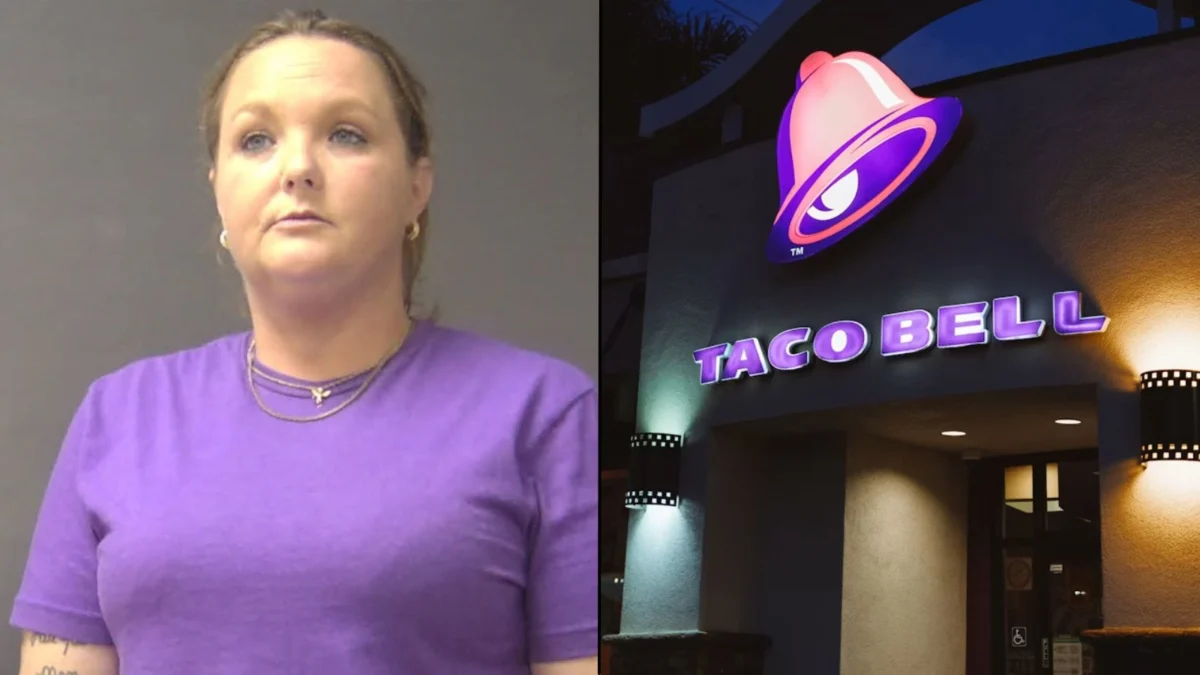
In a disturbing incident that underscores the growing tension within the service industry, a routine visit to a fast-food establishment in Maryland spiraled into a criminal investigation on June 18. What began as a dispute over wait times at a Taco Bell in Queen Anne’s County concluded with the arrest of a 30-year-old woman, Ashley Andrews, who now faces a litany of serious charges after allegedly brandishing a firearm at employees.
The incident has reignited national discourse regarding the safety of retail and service workers, who increasingly find themselves on the front lines of volatile customer interactions. While patience is a virtue often tested by the realities of modern supply chain delays and staffing shortages, law enforcement officials emphasize that there is no grievance, however frustrating, that justifies the use of intimidation or the display of a deadly weapon.
Main Facts of the Case
On the afternoon of June 18, local law enforcement received a distress call from the staff of a Taco Bell location in Queen Anne’s County. The report detailed an aggressive verbal altercation that had escalated beyond typical customer dissatisfaction. According to the Queen Anne’s County Office of the Sheriff, the suspect, identified as Ashley Andrews, had become incensed by the duration of her wait for a food order.
The confrontation quickly moved from a complaint regarding service speed to a series of direct threats. Andrews allegedly challenged staff members to meet her in the parking lot—a common precursor to physical violence—before escalating the situation further. Witnesses reported that Andrews lifted her shirt, revealing a handgun tucked into her waistband. Surveillance footage provided to the authorities by the restaurant management allegedly captured the moment Andrews placed her hand on the grip of the weapon while continuing to berate the employees.
Following the arrival of deputies, the situation was neutralized. Andrews was taken into custody without further incident, and the firearm was recovered from her person. She was subsequently charged with several offenses, including second-degree assault, the display of a handgun to a person, reckless endangerment, and disturbing the peace.
Chronology of the Incident
The events of June 18 were captured in part by the restaurant’s security system, which provided investigators with a clear timeline of the escalation:
- Arrival and Initial Complaint: Andrews entered the establishment and placed an order. As the wait time extended—a frustration familiar to many in the post-pandemic fast-food landscape—she approached the service counter to express her discontent.
- Verbal Escalation: The interaction shifted from a civil inquiry to a verbal confrontation. According to investigators, Andrews began using threatening language directed at the employees behind the counter.
- The Threat of Violence: The situation reached a critical point when Andrews explicitly directed staff to exit the building and meet her in the parking lot, effectively challenging them to a physical altercation.
- Brandishing of the Weapon: As the argument intensified, Andrews reportedly lifted her garment to expose a handgun. The physical act of placing her hand on the weapon’s grip served as an implicit threat, instilling fear in the employees.
- Police Intervention: Deputies from the Queen Anne’s County Sheriff’s Office arrived on the scene promptly. Upon assessing the threat, they successfully detained Andrews and secured the firearm.
- Booking and Release: Andrews was processed at the county facility. On June 19, she was released after posting a $5,000 bond.
- Future Proceedings: A court date has been scheduled for July 23, where she will formally answer to the charges. As a condition of her release and a standard safety measure for the business, she has been issued a formal trespass notice, barring her from returning to the restaurant.
Supporting Data and Context
The incident at this Taco Bell location serves as a microcosm of a broader issue affecting the American service sector. In recent years, the "Fast Food Frustration" phenomenon has been exacerbated by labor shortages, which often lead to longer wait times and reduced service speeds.
Industry analysts note that since 2020, reports of "customer rage" have spiked. A study by the Customer Rage Survey found that over 60% of customers have experienced a service failure, and an increasing percentage are resorting to aggressive behavior when those expectations are not met.
The social media reaction to the Queen Anne’s County incident has been particularly telling. Public comments on the Sheriff’s official Facebook page highlight a shared disbelief regarding the severity of the reaction. One commenter noted, "I was there; to be fair, it was a 30-minute wait." While acknowledging the reality of the service delay, the overwhelming consensus from the community was captured by another user who stated, "There is nothing at Taco Bell worth catching a felony charge for."
Official Responses and Legal Implications
The Queen Anne’s County Office of the Sheriff has taken a firm stance on the matter, utilizing social media and public press releases to detail the gravity of the charges. By highlighting the surveillance footage, the authorities have signaled that they have substantial evidence to support the prosecution’s case.
Legal Breakdown of Charges:
- Second-Degree Assault: This charge suggests that the suspect’s actions caused the victims to fear for their immediate physical safety.
- Displaying a Handgun to a Person: This is a specific statute aimed at preventing the use of firearms as tools of intimidation.
- Reckless Endangerment: This charge reflects the danger posed to both the employees and other patrons in the restaurant during the confrontation.
- Disturbing the Peace/Disorderly Conduct: A baseline charge for the disruption caused to the public order.
Legal experts suggest that because Andrews allegedly made physical contact with the weapon while threatening staff, the prosecution is well-positioned to pursue these charges vigorously. The $5,000 bond, while standard for some non-violent offenses, is seen by many as a warning of the seriousness with which the judiciary views threats involving firearms in public spaces.
Societal Implications: The Erosion of Decorum
The implications of this event extend far beyond a single restaurant in Maryland. The incident raises profound questions about the social contract in public spaces. As society grapples with the lingering effects of high-stress environments, the threshold for aggression appears to be lowering.
The Impact on Service Workers
For the employees at the center of this storm, the event represents a traumatic breach of safety. Fast-food work is inherently fast-paced and high-pressure; adding the fear of gun violence to this environment creates an unsustainable workplace. Retail and food service unions have long argued for better security measures, but as this case demonstrates, no amount of physical security can fully mitigate the impact of an irrational actor.
The Role of Conflict Resolution
Public health experts and psychologists have begun to study the "post-pandemic impatience" that seems to plague consumers. The expectation of immediate gratification, combined with the anonymity of modern transactions, has eroded the barriers that typically prevent people from escalating a minor annoyance into a life-altering legal crisis.
The Queen Anne’s County incident stands as a cautionary tale. While the wait for a meal may be frustrating, the transition from a dissatisfied customer to a criminal defendant can happen in seconds. The fact that the suspect, a 30-year-old adult, is now facing a future that may include imprisonment and a permanent criminal record serves as a stark reminder of the consequences of impulsive, violent behavior.
As July 23 approaches, the community of Queen Anne’s County will be watching the court proceedings closely. The case serves as a litmus test for how local authorities intend to handle the rising tide of customer-driven violence. For now, the Taco Bell in question continues to operate, but the incident has left a lasting mark on both the employees involved and the local community’s perception of safety in everyday public settings.
The lesson is clear: patience is not merely a courtesy; in an increasingly volatile world, it is a survival skill. Those who cannot exercise it risk losing far more than just their time.

 Reynand Wu
 Evan Lee Salim